Get Full Government Meeting Transcripts, Videos, & Alerts Forever!
Get email alerts on the Transit Funding topic
No spam. Unsubscribe anytime.
Senate Transportation hears GMT say H.944’s Section 30 would let hospitals, school districts pay directly for route changes
Summary
Green Mountain Transit told the Senate Transportation Committee that Section 30 of H.944 would let the agency negotiate service agreements outside its eight-member assessment formula so large institutions could directly fund route changes that otherwise add to GMT's deficit.
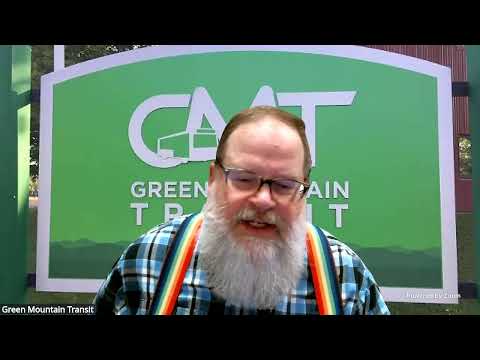
Clayton Clark, general manager of Green Mountain Transit (GMT), told the Senate Transportation Committee on April 17 that Section 30 of H.944 would allow GMT to accept direct service agreements with hospitals, school districts and other partners so those requesters could pay for route changes without spreading the cost across all eight municipal members.
Clark outlined why the change matters: GMT currently collects roughly $4,000,000 a year from its eight local members through a long-standing assessment formula. That formula is difficult to change — it now requires a 75% vote and has not been updated in about 20 years — and it spreads costs across members so targeted additions can force GMT into a deficit. "Approximately 20% of the cost of a service will end up, I had on 1 of the members' bills. But the 80% then ends up coming out of local state and federal, existing funds," Clark said, describing how fares and institutional unlimited-access agreements generate only a fraction of total service costs.
As an example, Clark said routing the No. 11 route to serve the front door of the UVM Medical Center — a five-minute pull-in and pull-out — would add about $110,000 a year. Under the assessment formula, only about 20% of that new cost would be assigned to Burlington, leaving GMT to absorb the remainder. "If they were to change the service, we would end up with about 20% of new revenue from that change coming from Burlington ... and the other 80% of the costs would not be generated," Clark said.
Clark said Section 30 would not replace the existing assessment formula but would create an exception that allows GMT to negotiate side agreements with a requester so that the requester "doesn't have to go into the formula and then be spread across all of the members." He framed the change as a tool to preserve low-performing-but-critical services (he cited the Essex/Essex Junction circulator as economically inefficient but locally vital) and to enable modest, sustainable additions in the future.
Committee members expressed general support and cautioned that creating multiple, overlapping service agreements could complicate route management and require clear definitions of who pays for what. One member suggested hospitals "for sure, should be paying" for service improvements that primarily benefit them; Clark agreed but warned the mechanics would be complex. Clark also said GMT plans proactive outreach to schools, hospitals and regional partners, and that the agency will bring on Chris Cole (previously GMT acting general manager and a former secretary of transportation) part time to help design agreements and partnerships.
Committee members asked about other funding avenues, including rural health-care transformation funds. Clark said his understanding was that the University of Vermont Medical Center would be unlikely to qualify for that pot of funding, but he flagged commuter and regional services that connect towns such as Montpelier and St. Albans to Burlington as possible revenue or coordination opportunities.
The committee heard the testimony and thanked Clark. There was no formal vote recorded in the transcript; committee members said they would follow up and continue conversations with GMT and potential partners.