Lifetime Citizen Portal Access — AI Briefings, Alerts & Unlimited Follows
Topeka committee hears strong public pushback on plan to allow duplexes, triplexes and quads by conditional use permit
Loading...
Summary
At a city policy-and-finance committee meeting, planning staff described a text amendment to the development code that would permit duplexes, triplexes and quads in single-family districts by conditional use permit (CUP). Dozens of residents urged protections for historic neighborhoods, criticized notice and enforcement, and a law professor called for inclusionary zoning.
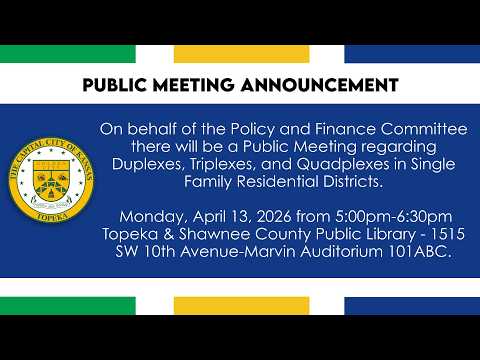
The Policy and Finance Committee of the City of Topeka heard a Planning Department presentation and more than an hour of public comment on a proposed text amendment that would allow duplexes, triplexes and quads in single‑family zoning districts through a conditional use permit process.
Dan Warner of the Planning Department explained the item is a code text amendment, not a rezoning, and reviewed process steps including neighborhood information meetings (notice to at least 300 feet) and a 200‑foot legal notice for public hearings. Warner said the Planning Commission ultimately recommended allowing duplexes, triplexes and quads by CUP, subject to additional CUP guidelines addressing concentration, design and paving of front yards.
The meeting drew large turnout from residents of historic neighborhoods. Alice Anne Oliver of Potlin said she organized neighbors and objected to what she called limited outreach and the 200‑foot notice radius, arguing that "Upzoning ... will leave vulnerable our neighborhoods with some of the richest history in the city of Topeka and the very neighborhoods that accommodate affordable housing." Oliver asked the city to include residents in any solution.
Several speakers cited neighborhood conservation districts and asked for explicit protections. Cliff Davis, a Westborough resident, said the proposed CUP approach seemed to have the same practical effect as rezoning and worried it would conflict with Westborough's conservation district. Jack Calcutt, an owner who invests in Westborough properties, asked planning staff to detail what protections a neighborhood conservation district would receive under the proposal.
Other public commenters raised concerns about parking, paving front yards to create required parking, and property maintenance. A speaker identifying themselves as president of the Rolling Meadows Neighborhood Association summarized widespread opposition in that neighborhood and warned of increased traffic, utility demand and pressure on emergency services. Terry Hobbs, a longtime local landlord, pressed to see the proposed CUP standards — including the paving provisions — and asked who would manage and enforce rental conversions.
Not all public comment opposed greater housing capacity. Michelle Ewart, a Westborough homeowner and law professor who litigates fair housing cases, said she "strongly, strongly support[s] inclusionary zoning" and urged the city to consider the long history of racial discrimination in housing when weighing options to increase supply.
Several speakers cited national examples and research when questioning expected gains. Mark Galbraith referenced studies and Minneapolis' experience to suggest upzoning alone may produce only a small number of additional units per year and urged targeting dilapidated housing and using financial assistance to make rehab viable.
Multiple residents said notice of the proposal was insufficient. Susan Duffy of College Hill said many recognized neighborhoods did not receive direct notice and urged stronger outreach and enforcement against absentee landlords before broad code changes. Peter Bonnell described a neighbor property that became an Airbnb without neighborhood notice, saying it created recurring parking and disturbance problems and warning similar surprises could follow speculative conversions.
One attendee noted recent state action and urged caution. A speaker said the state legislature had passed its own upzoning legislation and suggested the city consider tabling its local proposal to see how the state pilot operates and what unintended consequences emerge.
Chair Marcus Miller closed the hearing portion of the meeting, invited attendees to the next Policy and Finance Committee meeting (scheduled for May 7 at the Holiday Building) for further public input, and moved to adjourn. The motion was seconded by Councilwoman Bradbury and the meeting ended.
What happens next: Planning staff presented the code amendment and the Planning Commission recommendation; the council's Policy and Finance Committee will continue consideration at an upcoming meeting where residents were encouraged to return. The proposal's major outstanding issues in public testimony were notice procedures, protections for neighborhood conservation districts, standards to limit paving of front yards for parking, and enforcement against poorly maintained rentals.
Sources: Presentation and public comment at the Policy and Finance Committee meeting. Direct quotes are attributed to the speakers who made them at the meeting.