Lifetime Citizen Portal Access — AI Briefings, Alerts & Unlimited Follows
Senate committee hears wide support for SB 9 creating state freshwater wetlands program
Loading...
Summary
Sen. Stephanie Hanson told the Environment, Energy and Transportation Committee that SB 9 would create a state non-tidal (freshwater) wetlands program to replace protections lost after recent federal court decisions; supporters from conservation, farming and building sectors praised the stakeholder process and urged the committee to advance the bill.
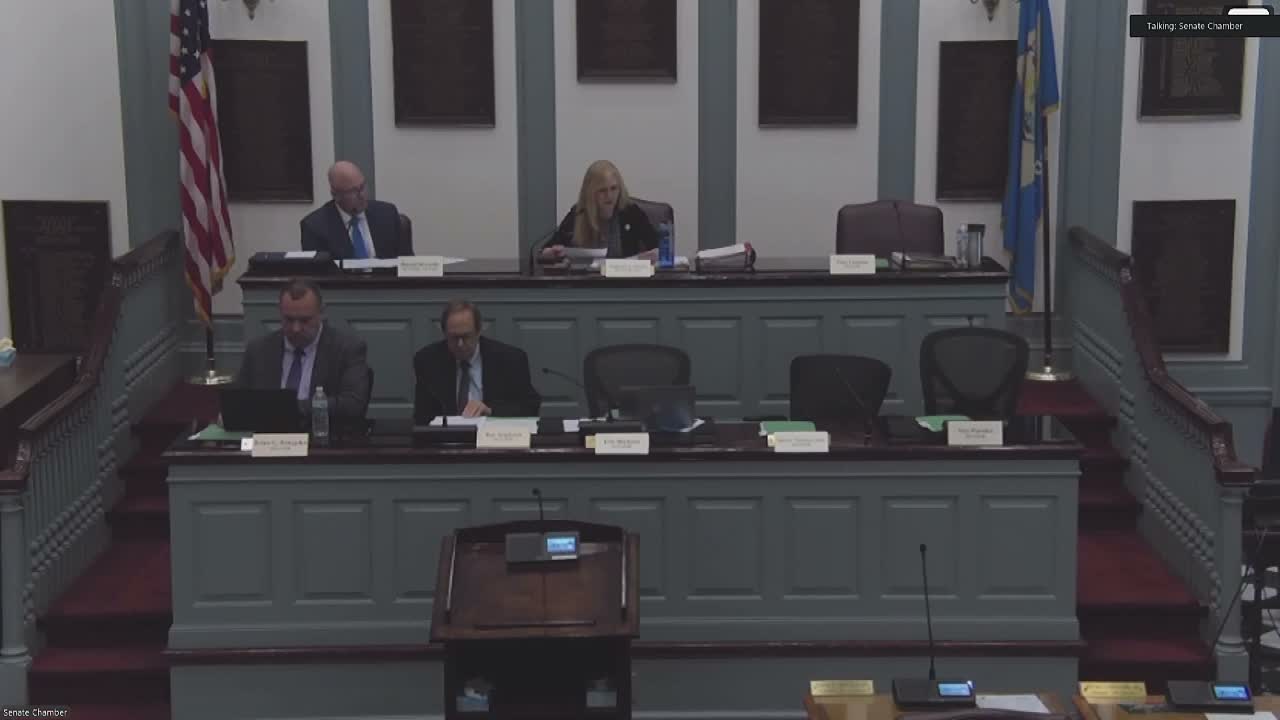
Senator Stephanie Hanson, chair of the Senate Environment, Energy and Transportation Committee, opened a hybrid committee hearing on April 15, 2026, to consider Senate Bill 9, the Wetland Stewardship Act. Hanson said the bill would establish a combined state program covering both title and non-title (freshwater) wetlands and argued the law is needed after successive federal decisions narrowed Clean Water Act protections.
"We have about 300,000 acres of wetlands in the state of Delaware," Hanson told the committee, saying roughly half are under federal/title jurisdiction and half are not. She traced the need for state action to courtroom and administrative rollbacks, including earlier Rapanos-era guidance, changes in 2020, and the Sackett decision, which she said removed protection for tens of thousands of acres.
The bill organizes activities into four tracks: exempt, conditionally exempt, eligible for general permit, or requiring an individual DNREC permit. Hanson listed common exemptions (routine farming, silviculture, hunting, lawn and landscape maintenance and small footbridges) and described seven categories of general permits (including linear utility projects, pilings, educational signage, walkways and a default permit covering the half-acre conditional exemption). She also outlined deadlines for permit processing: 30 days to determine administrative completeness, a 30-day applicant response window, and 120 days for DNREC to act after a complete application (except where a hearing is required).
DNREC—xecutive testimony stressed permitting reforms. "We have...permitting reforms and the work that we are putting in to do permitting better and quicker," said Secretary Mansavides, who told the committee DNREC has built timelines and tools into the bill to streamline common assessments while keeping oversight.
A central structural feature is a 25-member Wetland Regulatory Advisory Committee (RAC) that Hanson said will develop implementing regulations. The RAC will include county representation, farm bureau seats, conservation districts, environmental organizations, a builders nd realty representative, academia and at least one private wetlands consultant; Hanson said the RAC must organize by Aug. 1, 2026, and submit regulations for the secretary—y Aug. 1, 2027. "Whatever product, consensus product, approved product comes out of the regulatory advisory committee, that is what we are going to promulgate as a department," Secretary Mansavides said in committee exchange describing DNREC's commitment to adopt the RAC consensus so long as it does not violate state law.
Committee members pressed on balance and process. Senator Eric Buxton, an early sponsor, asked whether the bill would create onerous new permitting burdens; he and others said they supported the stakeholder approach. Senator Patty John asked why the bill uses a half-acre threshold for a conditional exemption; Hanson said the half-acre number emerged from negotiations as a compromise acceptable to landowners and environmental groups.
More than a dozen organizations and individual landowners gave public comment. Conservation groups such as the Delaware Nature Society, Ducks Unlimited, the Sierra Club and The Nature Conservancy urged passage, citing habitat protection, groundwater recharge, carbon storage and flood mitigation. "Protecting them is consistent with the aims of the State's wildlife action plan," said Mark Nardone of the Delaware Nature Society. Environmental witnesses cited a DNREC economic analysis they said estimated high costs from inaction; the Sierra Club irector referenced a 2022 DNREC figure that projected multi‑billion‑dollar costs to the state from flood and water-quality impacts by the end of the decade.
Representatives of the building and agricultural sectors, including the Home Builders Association and individual farmers, said the stakeholder process produced meaningful changes. "This bill delivers greater predictability, defined timelines and meaningful checks on the process while also providing a path to continue improving the system," said Mike Reiman, a civil engineer representing the Home Builders Association. Farmers urged clear maintenance rules and emphasized the need to avoid unintentionally curtailing routine drainage and farm operations.
Public commenters and some committee members also pressed for incentives and funding to encourage private landowners to conserve exceptional-value wetlands; several urged the RAC and DNREC to consider incentive programs during regulatory development.
Hanson told the committee she had circulated the bill and that "there are seven votes to release it to a committee," saying circulation had been favorable and that several previously skeptical stakeholders were now comfortable with the approach. The committee approved the March 25 minutes and continued on to the next agenda items; the record shows SB 9 advanced from this hearing with supportive committee circulation.
What happens next: the bill's regulations will be developed by the RAC and submitted to the DNREC secretary by Aug. 1, 2027, if the committee advances the bill; the committee did not take a formal floor vote on the bill's final text during this hearing.