Get Full Government Meeting Transcripts, Videos, & Alerts Forever!
Get email alerts on the Cannabis Permitting topic
No spam. Unsubscribe anytime.
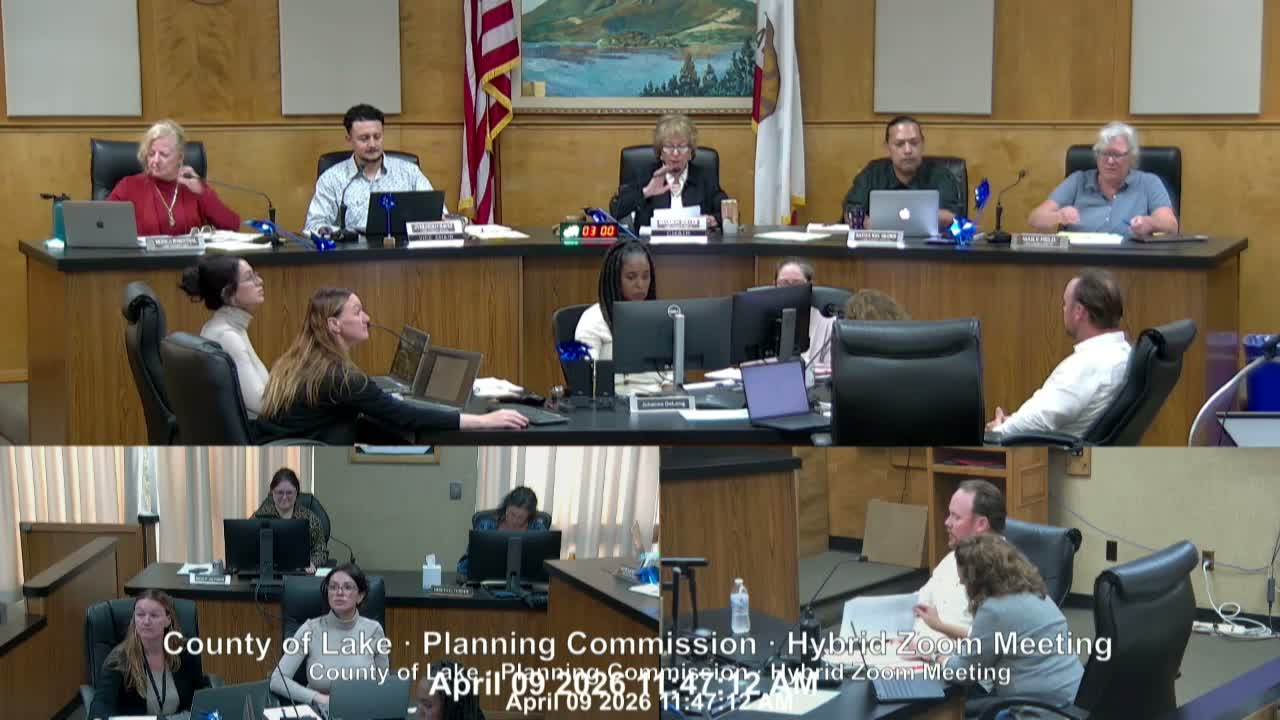
Planning Commission approves larger Clearpath Canyon cannabis project with strict water-monitoring conditions
Summary
After a detailed hydrology presentation and extended public comment, the commission unanimously approved Clearpath Canyon (up to 15 acres outdoor canopy) with added groundwater monitoring, drought-reduction triggers and fire-suppression requirements.
The Planning Commission unanimously approved Clearpath Canyon LLC's major use permit (PL-25-492) on April 9, 2026, granting authority for up to 15 acres of outdoor commercial cannabis cultivation across five fenced gardens on a roughly 302-acre site south of Clear Lake.
Staff and consultant findings: Associate Planner Trish Turner (speaker 21) presented staff's recommendation to adopt a mitigated negative declaration (IS/MND) and approve the permit subject to conditions. The project includes irrigation wells, approximately forty-six 5,000-gallon water storage tanks distributed across cultivation areas, and 15,000 gallons dedicated to fire suppression. Consultant hydrology (speaker 15) described a conservative water-use analysis based on canopy area that compared historic hops-farm use to proposed cannabis demand and concluded available recharge and storage could meet proposed demand with monitoring, seasonal reporting and drought-triggered acreage reductions.
Public concerns and responses: Neighbors raised a range of issues including groundwater impacts in the Burns Valley basin, historic precedent from earlier proposals on the parcel, and biological concerns flagged by local conservation groups. The consultant addressed these concerns with a site-specific review of well completion reports, a conservative cumulative-demand analysis and a demonstration that the deeper wells used by the project are hydraulically distinct from the shallow alluvial wells relied on by some Burns Valley residents.
Added conditions: Staff amended the recommended conditions to add a groundwater monitoring and reporting program (including spring/fall baseline measurements and in-season twice-weekly monitoring), drought-management triggers that reduce permitted canopy in moderate/extreme drought, and wildfire-related mitigation measures; staff also recommended a 2.5-inch fire-district connector on suppression tanks.
Decision and next steps: The commission voted 5-0 to adopt the IS/MND and approve the permit with the amended conditions. The decision includes standard annual compliance monitoring site visits and a seven-calendar-day appeal period. Staff said AB 52 tribal notices had been sent and Koi Nation had engaged in consultation that resulted in a tribal monitoring/mitigation agreement in the project record.
Why it matters: The project is one of the larger pending outdoor cannabis projects in the Clear Lake area; the commission'required monitoring and drought triggers make the approval an example of how Lake County is treating groundwater risk and cumulative cannabis demand in the regulatory record.
Sources: Staff report and presentation by Associate Planner Trish Turner; consultant hydrology presentation and Q&A on April 9, 2026.