Lifetime Citizen Portal Access — AI Briefings, Alerts & Unlimited Follows
Charter commission hears heated debate over appointed vs. elected boards; party leaders outline appointment process
Loading...
Summary
The CRC heard divergent views on whether town boards should be appointed or elected and received detailed presentations from Republican and Democratic town committees on how appointments are vetted. Planning and Zoning chair Dan Radman asked that Commissioner Jennifer Holmes recuse herself from P&Z-related matters, prompting pushback and a scheduled CRC legal review of conflicts.
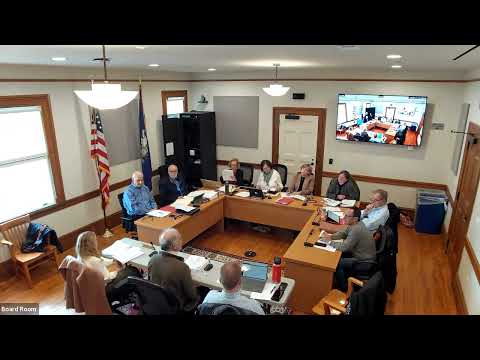
The Charter Revisit Revision Commission on March 17 heard a sprawling debate over whether New Canaan should retain appointed boards and commissions or move to elected bodies, and invited both party organizations to explain how appointment processes work.
Dan Radman, chairman of the Planning and Zoning Commission, urged the CRC to treat survey results cautiously and asked the commission to consider recusals: "I respectfully ask that Jennifer Holmes recuse herself from anything to do with the PNZ discussion...due to her ongoing and current litigation against the ZBA and the planning department," Radman said. Members responded in the meeting: one commissioner said they disagreed with Radman's characterization and others noted legal guidance will govern recusal decisions.
The CRC then heard detailed process descriptions from Melanie Hearn, introduced as the head of the Republican Town Committee, and Tim Klimpel of the Democratic Town Committee. Hearn said the RTC uses outreach, resumes and interviews, shares candidate packages with the First Selectman, and that appointments are ultimately voted at a public Board of Selectmen meeting. She called the RTC’s open-caucus model a way to vet candidates while creating access for new volunteers.
Klimpel described the DTC’s nominating committee and year-round vetting; he said many appointment roles are nonpolitical and that both parties try to include unaffiliated residents in service. Both party representatives said they would welcome a central, public posting of upcoming vacancies to expand the candidate pipeline.
Commissioners and party leaders discussed practical trade-offs: appointed positions allow targeted skill recruitment and multi-layer vetting, while elected roles can increase direct accountability but raise barriers of campaign cost and incumbency advantage. Hearn and Klimpel both emphasized the parties’ efforts to recruit unaffiliated residents and said party endorsement can reduce the direct financial burden on candidates.
The commission agreed to review a December 28 memo on financial conflict-of-interest rules, requested a copy of a Bertram Moses recusal decision for the record, and scheduled a focused discussion of appointed vs. elected PNC positions at an upcoming meeting. No charter change was adopted at the session.
The meeting also included an administrative note from a commissioner about a prior ballot amendment that allowed voters to "vote for up to 6" candidates while a separate line limited same-party representation to no more than four; the speaker warned that mismatch caused confusion in the last election and asked the CRC to research statutory language and propose clarifying ballot text.