Lifetime Citizen Portal Access — AI Briefings, Alerts & Unlimited Follows
Pitkin County planning commission continues airport location-and-extent review, seeks more air-quality and visual data
Loading...
Summary
The Pitkin County Planning & Zoning Commission voted to continue its review of the Aspen/Pitkin County Airport modernization to April 28, requesting more specific terminal dimensions, noise and air-quality monitoring results and visual simulations after residents and commissioners raised concerns about ultrafine particles, noise and project scale.
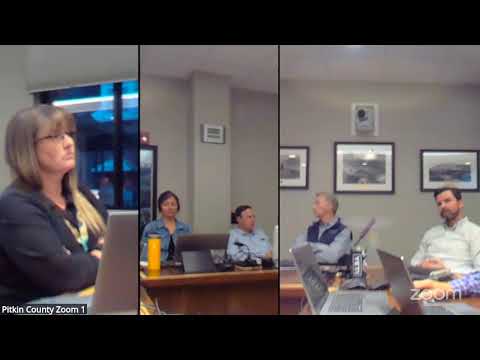
The Pitkin County Planning & Zoning Commission on April 14 continued its review of the county’s location-and-extent application for the Aspen/Pitkin County Airport modernization, asking staff and the applicant for more detailed information on terminal size, noise and air-quality monitoring before it renders a final finding.
Commissioners heard presentations from J. R. Fielding, an airfield program manager with Jacobs and Daniels, and Diane Jackson, the airport director, who described the project’s long public process, the airport advisory board’s year-round sound monitoring program and a parallel emissions-monitoring effort coordinated with consultants. Charles Cunniffe of CCA outlined current schematic terminal plans and noted the Airport Layout Plan allows up to 140,000 square feet; the design team described a roughly 128,000-square-foot scheme with about 33% below grade and a target of seven “flex” gates.
Why it matters: Commissioners said they must decide whether the proposed location and extent — defined under local code as size, scale, intensity and visual impact — conform to the Aspen Area Community Plan and other local guidance. Several members said the record lacks year‑long, community-facing air-quality data, precise square footage and clear visual simulations to assess whether the project will preserve the corridor’s low-profile character.
Residents and technical participants offered sharply different perspectives. Ellen Anderson, an Aspen Village resident representing local monitors, said brief ultrafine-particle data gathered by a community group showed particulate spikes aligned with airport operations and called for at least a year of longitudinal monitoring before approval. “We cannot move ahead until we know where we stand right now,” Anderson said, urging the county to share monitoring results and mitigation plans.
By contrast, Tony Cronenberg, a former FBO manager who said he worked at the airport for more than 25 years, urged the commission to approve the conceptual review so the county can modernize the facility for safety and passenger flow. “We’re modernizing the airport. We’re not expanding the airport,” Cronenberg said, adding that much of the new terminal is intended to be below grade and low profile.
Technical committee leaders also urged context. Mike Solons, co‑chair of the terminal design task force and a long‑time technical participant, said operational limits (about 36 operations per hour) constrain how many flights the airport can handle and that newer, more efficient aircraft can reduce per‑passenger emissions over time. He recommended using the existing technical analyses and community outreach work already performed.
Commissioners pressed staff and consultants on key unknowns. They asked for clear numbers on above‑grade square footage and story height, historic and current noise and particulate monitoring data (including the county’s stations and any community-supplied data), details of the Mead & Hunt contract status and any mitigation plans, and renderings or visual simulations showing the terminal from Highway 82 and adjacent neighborhoods. Staff said they had invested “well over $1,000,000” in initial monitoring work and that some monitoring equipment and modeling remain in progress.
Process and law: Staff reminded the commission of a 30‑day statutory review clock that began with the application’s April 7 submission; commissioners can request an extension from the Board of County Commissioners or continue the hearing within that window. The commission voted to continue the location-and-extent review to April 28 and ask the applicant to return with the additional materials the commission listed.
What’s next: The commission’s April 28 session will revisit the application and the additional materials requested. If the commission cannot resolve conformance within the statutory window and does not obtain an extension, state law can deem the application approved; staff offered to request more time from the Board of County Commissioners if the commission wants it.
The record of the April 14 hearing shows deep division: residents and some commissioners want more comprehensive monitoring and mitigation commitments before approving an extent that some say could materially change the valley’s noise and air-quality profile; proponents emphasize FAA safety standards, the need for modernization, and the limits on operations that constrain growth. The commission’s continuing review will concentrate on the specific data and simulations it identified as necessary to complete its location-and-extent decision.