Lifetime Citizen Portal Access — AI Briefings, Alerts & Unlimited Follows
APS reports staffing gains, data tweaks and vape-detector rollout as part of opioid-settlement-funded prevention work
Loading...
Summary
Albuquerque Public Schools officials reported incremental staffing gains for Crossroads and school-based behavioral-health counselors, early outcome measures showing increased awareness of supports, and plans to deploy wireless vape detectors framed as a path to referrals and intervention, not punishment.
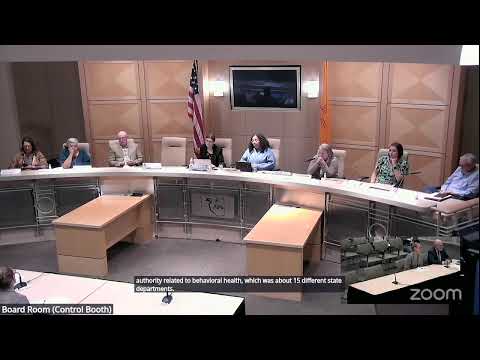
Albuquerque Public Schools (APS) officials told the Local Government Coordinating Commission that programs funded by opioid-settlement dollars are expanding but still facing staffing and measurement challenges.
Kylie Turner, APS director of prevention and intervention, said the district has filled 6 of 11 middle-school Crossroads counselor allocations and 10.5 of 14 behavioral-health counselor positions (a mix of 0.5 and 1.0 FTEs). Turner reported 249 individual Crossroads student contacts and 73 parent-involvement (PIP) sessions through Feb. 28, and 605 students served by behavioral-health therapists with 1,266 total contacts in the same period.
Turner said APS has adjusted surveys after low response rates from families and that the revised instrument is already generating more returns: “After doing this tweaking, we've already gotten more responses to the survey than we did for the entire first semester,” she said, adding the district will change how it pulls outcome data to better measure growth rather than throughput.
On school vaping, Turner described a wireless vape-detector pilot that will prioritize placement using principals’ local knowledge and two years of infraction data. She emphasized the devices are intended to lead to an intervention: “These are to be used as an intervention, a way for us to be able to offer an intervention,” she said, noting the program will pair detections with Crossroads referrals rather than solely punitive discipline.
Commissioners asked for clearer dashboards and day-in-the-life visuals showing how students flow through prevention, intervention and step-down services. On treatment length, Turner described an 8–15 session target that can be extended when clinically indicated and explained how step-downs to groups or school counselors are used as students stabilize.
Turner also described prevention-club staffing (16 of 20 allocated sponsor positions filled), a national conference for staff development, and purchased programming including Screenagers and Vibe 18 to support prevention messaging.
The commission pressed APS to show outcome measures tied to concrete results (for example, changes in suicide assessments or overdose responses) that would help justify continued funding when settlement dollars sunset. Turner said APS is working with partners to refine measurement and to present more outcome-focused reporting at future meetings.
The commission did not take formal action on the presentation; members requested follow-up materials and a visual dashboard at an upcoming meeting.