Get Full Government Meeting Transcripts, Videos, & Alerts Forever!
Get email alerts on the Dickerson Incinerator topic
No spam. Unsubscribe anytime.
Residents and advocates clash over future of Dickerson waste‑to‑energy facility
Summary
Speakers at the Montgomery County budget hearing offered starkly different accounts of the Dickerson incinerator’s environmental and economic costs — some urged upgrades and continued operation while others called for closure and transition off incineration, citing dioxin risks and environmental‑justice concerns.
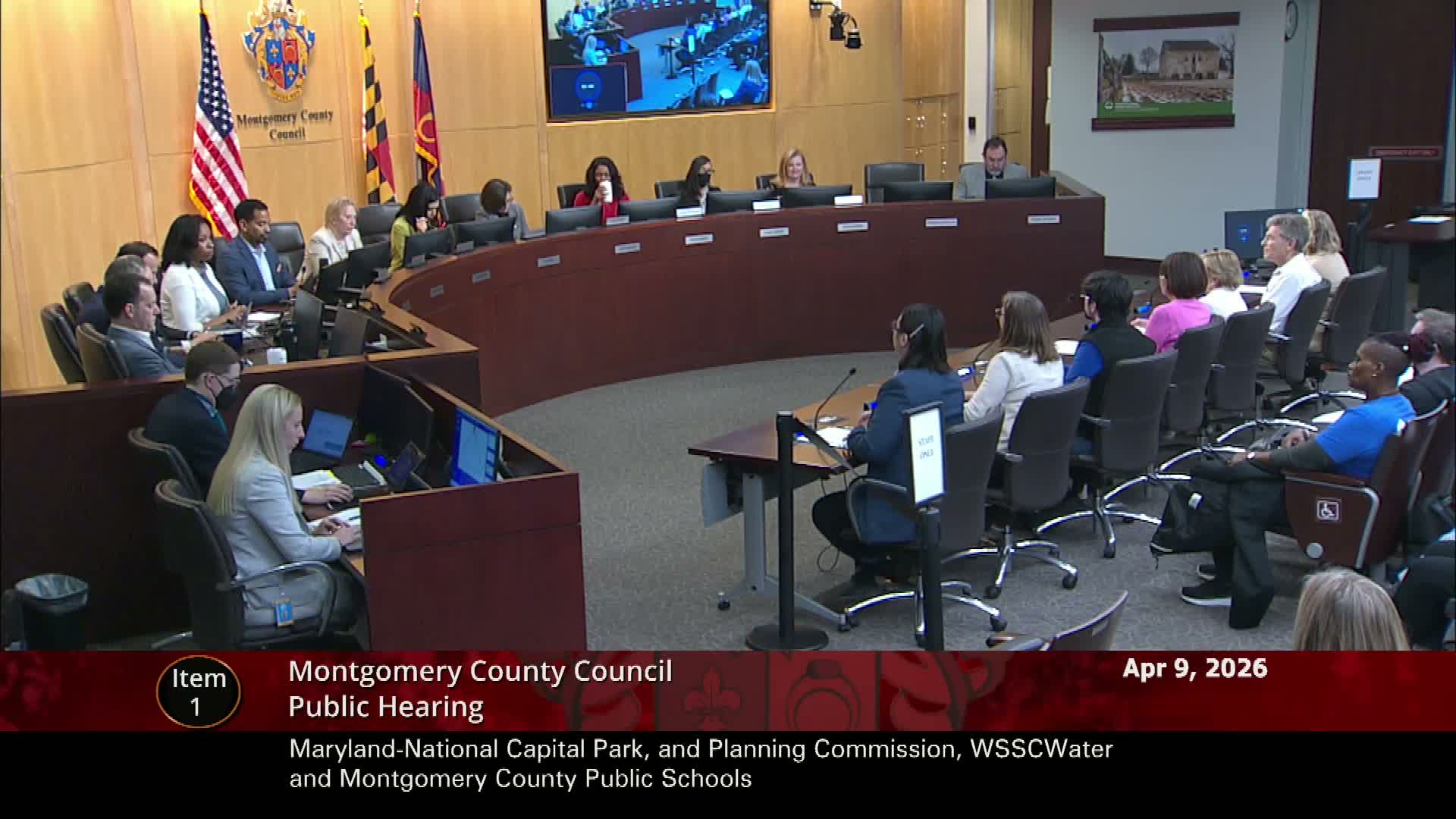
A large portion of testimony at the FY27 budget public hearing focused on the county’s municipal solid‑waste proposal and the future of the Dickerson waste‑to‑energy facility.
Proponents of maintaining or upgrading Dickerson — including reWorld representative Frasier Blaylock and union‑aligned witnesses — described the facility as an asset that processes county trash, generates renewable electricity (cited as enough to power roughly 28,000 homes), and provides local, well‑paying jobs. They warned that closing the plant and long‑hauling waste to distant landfills could increase greenhouse‑gas emissions from trucks, eliminate stable local jobs, and shift environmental burdens elsewhere.
Opponents urged the council to move away from incineration. Caroline Taylor of Montgomery Countryside Alliance and Mike Ewell of Energy Justice Network argued that incineration is more harmful to the climate and disproportionately burdens communities of color where ash is landfilled. Ewell testified about alleged recent dioxin exceedances at two burners and called the ash “far more toxic than trash,” citing the Beyond Incineration Report and urging the county to pursue alternatives, expanded composting, and waste‑volume reduction.
Labor and industry witnesses disputed some health and climate claims while acknowledging the need for a careful transition. David Pendleton (SMART) and others said Dickerson operates within environmental standards, recovers energy, and keeps carbon out of the air compared with certain long‑haul scenarios; they emphasized rail transport for ash and the local economic value of the facility.
No technical compliance or new monitoring data were introduced during the public hearing segments; council members were presented with contrasting stakeholder analyses and written materials promised by several groups. The debate centers on tradeoffs among public‑health concerns, climate impacts, cost of closure versus upgrade, landfill destinations, transport emissions, worker impacts, and environmental‑justice considerations.