Montgomery County public hearing draws more than 200 testifiers on FY27 budget
Loading...
Summary
Dozens of community leaders and residents testified at a Montgomery County Council public hearing on the proposed FY27 budget, urging increased funding for aging services, nonprofit contract COLAs, parks, affordable housing, mental‑health programs and debating the future of the county's trash incinerator.
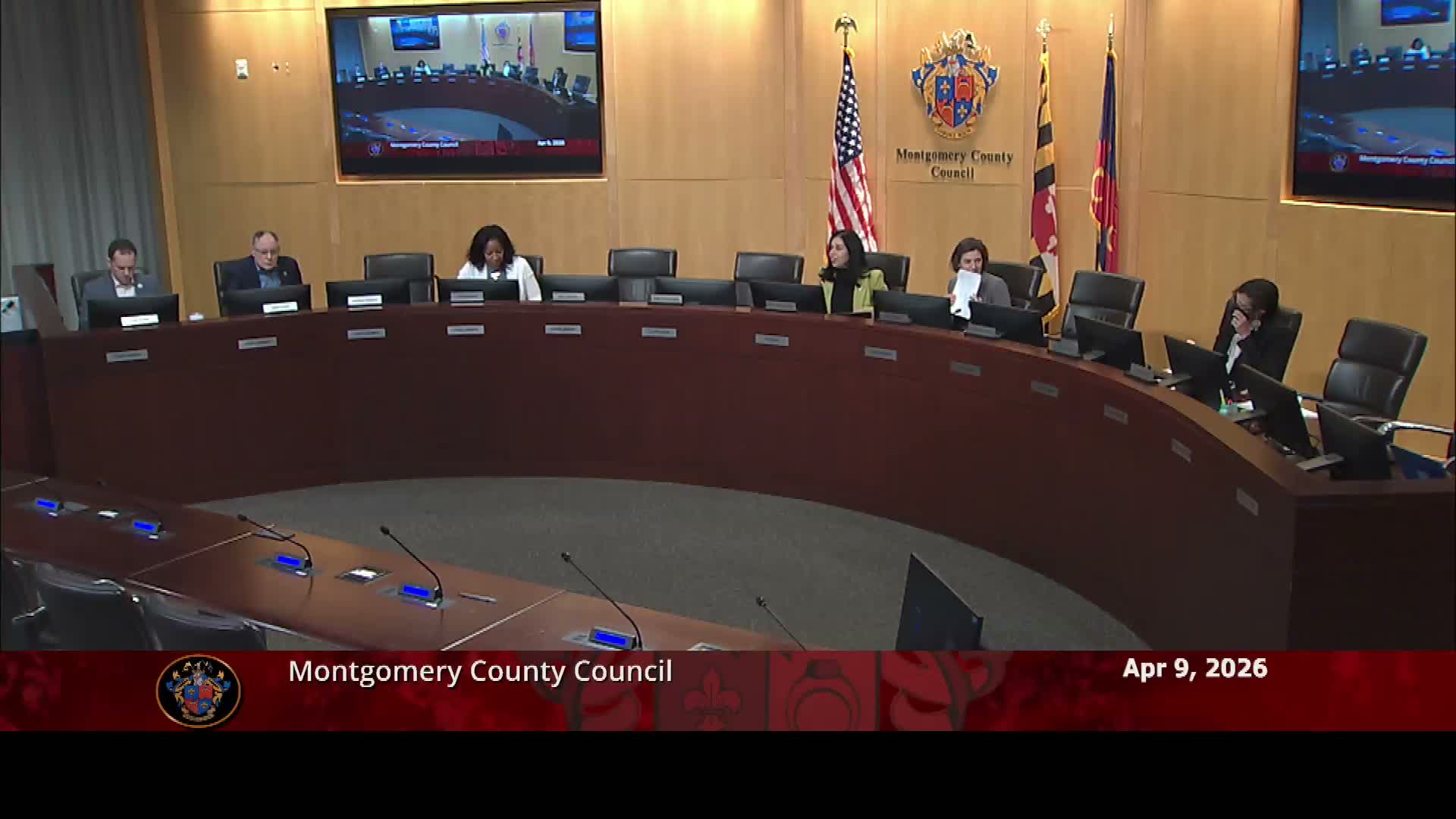
Council President Natalie Fanny Gonzalez opened a public hearing on the county executive’s proposed FY27 operating budget and FY27–32 public‑services policy, calling panels of residents and nonprofit leaders to testify.
Speakers across the afternoon pressed the council to add funding in several areas. Linda Brogofsky, co‑chair of the Montgomery County Commission on Aging, urged supplemental funds for in‑home respite and $60,000 in competitive grants to seed volunteer “villages” in underserved areas to help older residents remain at home. Several safety‑net providers — including Shannon Babe Thomas of Community Bridges and Amy Javed of A Wider Circle — urged the council to raise the nonprofit contract inflation adjustment from the executive’s proposed 2.5% to 8% to prevent service disruption and staff burnout.
Affordable‑housing advocates said the executive’s $100 million for housing preservation and production falls short of an estimated $169 million in pipeline needs. Housing Unlimited CEO Abe Shukman described a roughly $69 million gap in projects needing funding. Multiple speakers asked the council to restore prior funding levels or find one‑time resources to keep projects moving.
Public‑health and social‑service speakers asked the council to sustain programs that target racial and economic disparities. Donna Coley warned against reallocating the African American Health Program without stakeholder engagement; Nancy Ban of Mary’s Center said preserving Montgomery Cares reduces hospitalizations; advocates including NAMI and others urged investment in mobile crisis teams, certified peer specialists in jails, and staffing for new crisis stabilization centers.
Speakers also raised local priorities ranging from parks maintenance and trail stewardship to Poolesville community services, school arts funding, language‑access interpreter banks, and senior‑center support. Several town and civic speakers asked the council to fund parks at higher levels to avoid a $3.1 million shortfall and to preserve recreational and trail infrastructure.
The hearing closed after testimony from more than 200 speakers over multiple days; council members did not take formal votes at the session and invited further written comment and follow‑up meetings.