Lifetime Citizen Portal Access — AI Briefings, Alerts & Unlimited Follows
Norris School District presents $34.8 million bond package to address aging roofs, HVAC and security upgrades
Loading...
Summary
Norris School District leaders on Monday detailed a $34.8 million bond proposal derived from a community steering committee and a facilities audit, saying funds would replace aging HVAC and roofs, add secured entrances and improve traffic flow; residents pushed back over tax impacts and prior athletics spending.
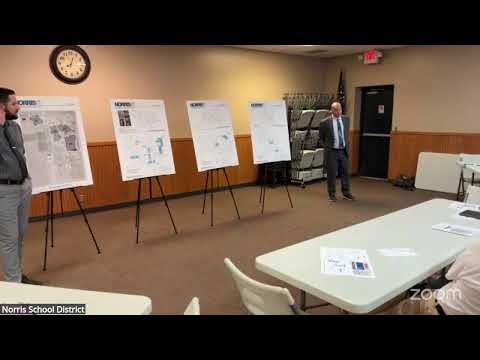
Superintendent Derek Joel presented a proposed $34,800,000 bond package and a timeline for construction, saying the plan came from a yearlong facilities audit and a community steering committee that prioritized the district's critical needs. "It will be a vote of our community to approve the investment of $34,800,000 to tackle what our critical needs are," Joel said.
The district traced the need back to a 2004 tornado, two subsequent bonds and steady facility aging. Joel said the steering committee reviewed roughly $40 million in identified needs, then prioritized projects to land at the $34.8 million figure and recommended a construction manager-at-risk (Hausman) to develop guaranteed-maximum pricing. The district said the package was built with soft costs and inflation factored in.
Why it matters: the bond is intended to fast-track replacements and safety upgrades that the district said would be more costly if done piecemeal over many years. Joel and the presenter (identified in the meeting as "Mister Malloy") said major work would be phased to limit classroom disruption, with preliminary outside and pedestrian-safety work possible the summer after an approved election and larger building projects beginning in 2027.
What the bond would cover: district materials and presenters identified several priorities included in the package: full HVAC and controls replacement at the high school, comprehensive roof replacement mapped by sections, new secured visitor entrances (single-point entries) at buildings, ADA upgrades to restrooms and circulation desks, locker-room renovations and targeted CTE (career and technical education) workspace updates. Malloy described campus circulation changes including moving the transportation department and adding parking south of the high school to reduce congestion and separate elementary drop-off flows.
Tax and timing: Joel outlined that the package was modeled on the district's current levy and would be spread over a 20-year bond term; the district's materials projected a bond levy impact of roughly 9.5 cents as presented in the public packet. Joel explained the bond would be funded in draws keyed to construction progress (example draws discussed: $10M, $20M, then remaining amounts), with taxes levied on the amounts actually called. He also said the 20-year repayment period begins with the district's first draw.
Community concerns: multiple residents pressed the board on costs, asking whether keeping levies higher and saving each year would have been cheaper than bonding. One participant asked, "Where are we supposed to get? I mean, we're the age. We're about to get to a fixed income," expressing fear about property-tax burdens on farmers and fixed-income households. Others criticized past district priorities, saying athletics investments (a $2.5M lease-purchase activity complex built recently with some private fundraising) appeared to precede classroom investments.
District response: Joel and board members said the athletics projects included substantial private fundraising and in-kind donations and that some work (for example, recent roof sections and COPS-grant-funded security upgrades) was paid from depreciation funds and grants. Joel emphasized that delaying large-scale replacements risks higher future costs and that the bond package aims to consolidate work now for market efficiencies.
Grants and audits: the district noted a recent COPS grant of about $328,000 that paid for visitor-management upgrades and bus cameras; it also cited annual safety audits performed by retired police chief Bruce Lang, which concluded the three main buildings "do not meet the modern standard" for secure entry and line-of-sight.
If the bond fails: Joel said the board will present scenarios to the community, including maximizing special-building funds and depreciation, lease-purchase options, and staged work over time; he also committed to running a detailed levy/forecast scenario for residents who requested comparative costs.
Next steps: district materials and the presenter said bond call language and voting information were posted on the bond website and absentee ballots were already available; the board will continue outreach and promised follow-up tax-impact breakdowns. The final decision rests with voters.
Ending: The meeting closed after residents and board members exchanged additional questions about project scope, timing, and priorities; staff said they would provide follow-up numbers on historical district spending, granular tax-impact examples and continued design refinements.