Lifetime Citizen Portal Access — AI Briefings, Alerts & Unlimited Follows
Kennett board sends SRO memorandum back for negotiation after members press for clearer limits
Loading...
Summary
Board members asked administration to refine a draft MOU governing school resource officers—seeking clearer definitions of "safety," limits on discipline involvement, and a removal mechanism—and approved a motion to return the document to staff for negotiation with the two police chiefs.
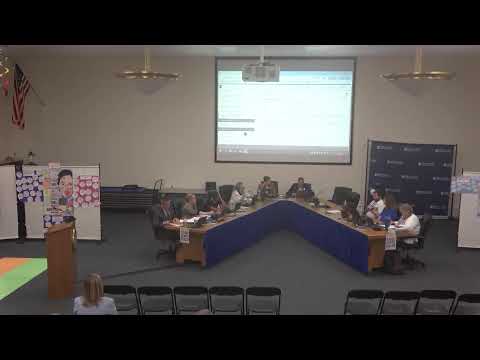
The Kennett Consolidated School District board on April 13 voted to send a draft memorandum of understanding (MOU) for its school resource officer (SRO) program back to administration for further negotiation with the two police departments that provide SROs.
Superintendent Dr. Rizzo Saunders introduced the MOU and said she had worked with the chiefs from both agencies on a final document. Several board members raised substantive language questions, seeking to ensure the agreement clearly limits the SRO role to safety and community-oriented work and keeps regular school disciplinary matters under school control.
Miss Myers pressed for precise language in multiple sections, proposing edits to change singular department names to "police department" to cover both agencies, to clarify that private "interview space" is for community-oriented conversations rather than criminal interrogation, and to add language that the SRO should "avoid involvement in all school discipline matters." At one point Myers stressed the board needed a concrete definition: "law enforcement intervention is a last resort and should occur only when required for safety," and she proposed adding "as defined by policy" to reduce ambiguity.
Dr. Rizzo Saunders responded that administrators would be responsible for discretionary notifications to police and that she would discuss the proposed clarifications with the chiefs, noting some operational concerns (for example, police training vs. policy details) would require negotiation with the departments. Several board members said they expected not all suggested edits would be accepted by the police but that the administration should return with the chiefs' responses and recommended language.
Miss Myers moved—and the board seconded and approved—a motion to "commit this to administration to continue discussions with the police chiefs or their departments, and then bring any updates back to the board." The motion passed by voice vote.
What changed: the board did not adopt the MOU as written. Instead, it asked the superintendent to pursue the specific clarifications discussed in public, including: standardizing references to the police parties, specifying the intended use of private interview spaces, documenting that building administrators make discretionary notification decisions, adding language to limit SRO involvement in discipline, and building an explicit process for annual review and public availability of the MOU.
Next steps: Dr. Rizzo Saunders will negotiate with the two police chiefs and return to the board with updated draft language and the chiefs' recommended changes. The board's vote to commit was procedural; no final approval of the MOU occurred on April 13.