Lifetime Citizen Portal Access — AI Briefings, Alerts & Unlimited Follows
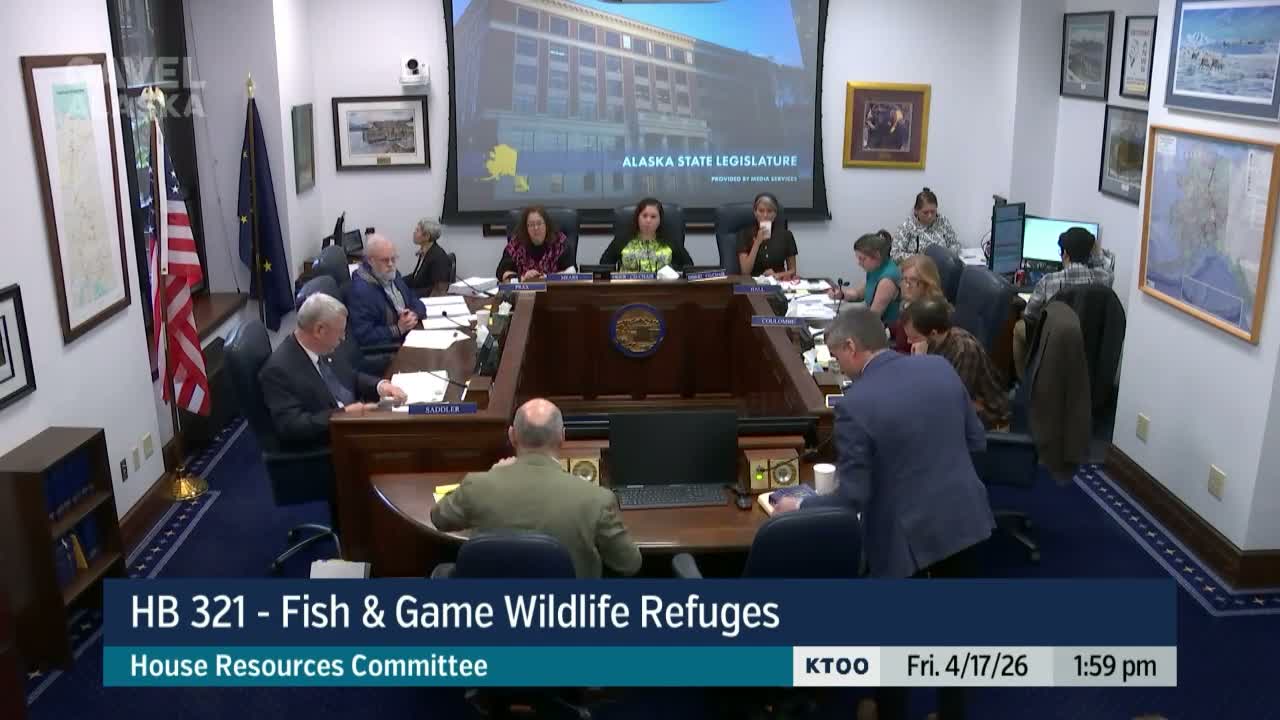
House Resources Committee reports HB 321 out of committee after hours of debate on watercraft, firearms and land‑use language
Loading...
Summary
After nearly five hours of amendment debate on April 17, 2026, the Alaska House Resources Committee voted 5–3 to report House Bill 321 (a rewrite of refuge/critical‑habitat statutes) out of committee as amended; members repeatedly clashed over personal watercraft rules, firearms/target‑shooting authority, and the role of the Board of Game versus the Legislature.
The House Resources Committee voted on April 17 to move House Bill 321 out of committee as amended after an extended debate and a sequence of roll‑call votes on amendments touching wildlife refuge boundaries, personal watercraft, firearms restrictions and the role of agency authority versus legislative mandates.
Representative Andy Josephson, the bill sponsor, told the committee HB 321 recasts several existing statutory categories—refuges, sanctuaries and critical habitat areas—as "wildlife refuges and sanctuaries," consolidating language about boundaries and use. "We're providing more access" in some places while clarifying regulatory authority in others, he said, defending changes that staff described as resolving inconsistent statutory language.
Representative Elam led the first major amendment (No. 23), which would have stripped the bill back to map corrections only. The amendment failed on a roll call of 4 yeas and 5 nays. Subsequent amendments proposing to preserve existing agency discretion over personal watercraft in Kachemak Bay (amendments 1, 2 and 3) and to remove new department authority to restrict discharge of firearms or close designated areas for public safety (amendments 5–7) were debated at length and likewise failed by 4–5 vote margins recorded in committee.
Opponents of the bill’s new firearms language warned it could be used to close established ranges such as the Rabbit Creek Shooting Park, curbing hunter education and youth shooting programs; committee staff and the sponsor said the language would instead give the department tools to narrow makeshift target‑shooting sites, reduce contamination and address public safety through a regulatory process with public comment.
Members also disputed whether certain closures and hunting restrictions should be set by the Board of Game or by statute. Amendments that would have returned closure authority to the Board (including proposals affecting McNeil River and Kamishak bay areas) were not adopted.
The committee took up questions about private inholdings and whether newly acquired state lands should automatically be included in refuges; an amendment to require legislative review before newly acquired state parcels are folded in failed, while a technical amendment clarifying that Mendenhall Wetlands language applies to state lands was adopted.
Representative Colom successfully offered an amendment (No. 25) clarifying that nothing in the section prohibits operation of a shooting range or shooting park operated or sanctioned by the department; sponsors accepted the language and the amendment was adopted.
Final action: Co‑chair Representative Divert moved HB 321 out of committee as amended with technical and conforming changes. After short remarks and recorded objections, the committee voted 5 yeas, 3 nays and the bill was reported out of committee with individual recommendations and attached fiscal notes.
Why it matters: HB 321 consolidates and alters how the state defines and manages refuges and critical habitat areas; the bill’s changes affect access, hunting regulations, agency permitting authority and how private and state land within refuge boundaries will be managed. Several members said the bill contains important cleanups, while others argued it contains major policy shifts better addressed as separate bills.
What’s next: The committee signed the report after adjournment; the bill will proceed according to the legislature’s committee and floor schedule with the changes adopted in committee.