Lifetime Citizen Portal Access — AI Briefings, Alerts & Unlimited Follows
Property tax committee backs substitute for Senate bills 1066 and 1088 after amendments
Loading...
Summary
The Special Committee on Property Tax Reform voted 11–5 to recommend a House committee substitute for Senate bills 1066 and 1088, rolling in multiple amendments that address levy classifications, a 15% commercial-protection provision, ballot-language rules and treatment of tax abatements. Members debated "siloing" and the auditor's multi-rate calculator.
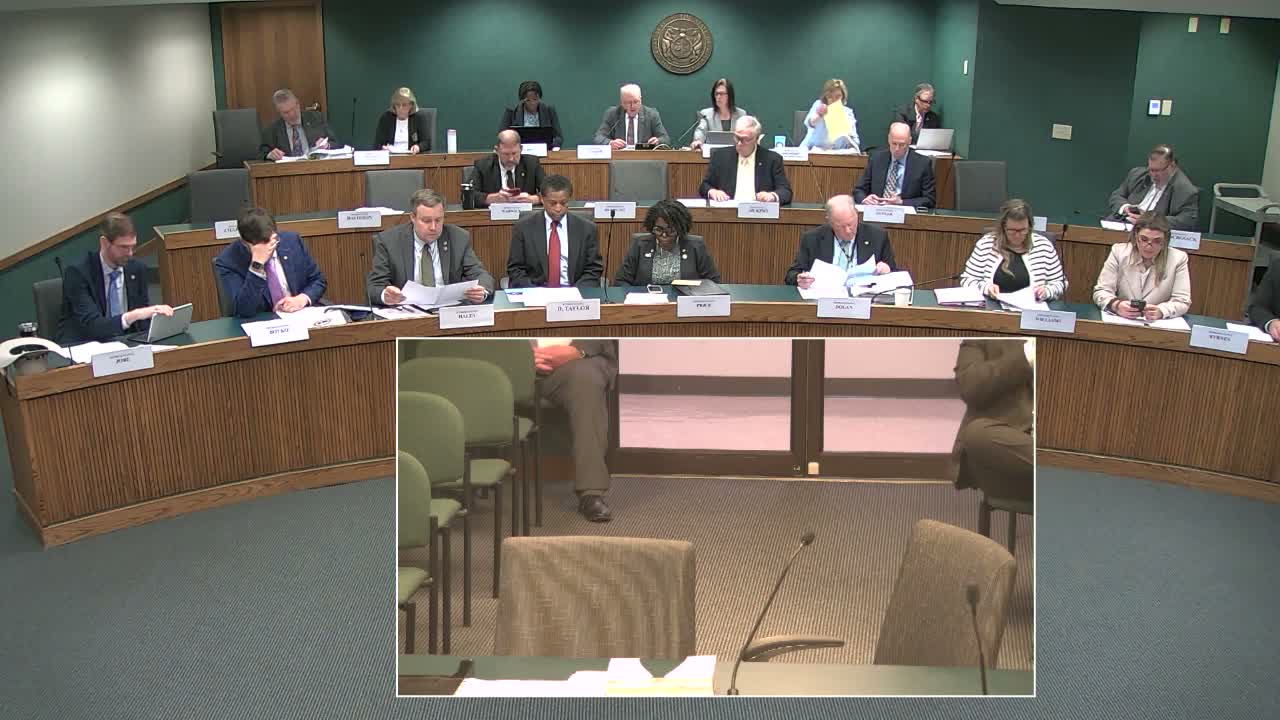
The Special Committee on Property Tax Reform voted 11–5 to recommend a House committee substitute for Senate committee substitutes for Senate bills 1066 and 1088 after adopting several amendments, the committee chair said.
Chair Taylor told members the principal amendment (ending in 0.05H) bundles several previously discussed measures into a single substitute, including provisions from HB 2780 on levies by subclass and the so-called Murphy fix, a 15% commercial-protection provision, school-levy language without a 2.20 rollback, a countywide levy freeze tied to senior exemptions, restrictions on ballot advertising language and an abatement provision offered by Senator Washington.
"This amendment represents the work between the two parties who are involved in this, the hotels, the VROs, to try to get the base language in the base bill where they can agree on it," Chair Taylor said. "It more specifically defines the 15." The chair said the change clarifies that ownership interests, direct or indirect, are counted in the aggregate when determining the threshold.
The committee debated a separate, unsuccessful amendment to the amendment offered by Representative Steinhoff aimed at restoring language that preserves a single-rate comparison in the auditor's multi-rate calculator. Steinhoff said removing that comparison could reduce projected revenue for taxing districts under a "siloing" approach that separates levy calculations by subclass. "It is going to result in less revenue than what is projected for our taxing districts," she said, urging further study.
Representative Murphy disputed that outcome, saying school district finance officials consistently avoid losing revenue when they set rates. "They're not gonna lose any money. Trust me," Murphy said. Representative Job and others warned the way the amendment was drafted could prevent taxing districts from using the auditor's existing multi-rate calculator.
Representative Fowler offered and the committee adopted an amendment to the amendment (06H) carrying shortened ballot-language requirements previously used in HB 2925 and an amendment to HB 2178. Members approved the House Committee amendment to committee amendment number 2 by voice vote.
On a final roll call the committee recorded 11 ayes and 5 noes and voted that the House committee substitute for the Senate committee substitute for Senate bills 1066 and 1088 do pass. The chair then adjourned the meeting.
Why it matters: The substitute packages multiple policy changes to how property taxes and levy calculations operate for single-family housing, commercial protections and school levies. Provisions about how tax abatements are accounted for could materially affect revenues for local taxing jurisdictions; members asked for clarifying language and said they would continue to study technical impacts on auditor tools and levy calculations.
Votes at a glance - House committee substitute for Senate committee substitute for SB 1066 and SB 1088: committee recommendation "do pass" (11–5).
What's next: The committee recommended the substitute for floor consideration; sponsors and staff said they would continue to refine technical language and review how abatements and auditor tools interact with the adopted siloing approach.
(Quotes above are drawn directly from committee proceedings and attributed to the speakers who made them.)