Get Full Government Meeting Transcripts, Videos, & Alerts Forever!
Get email alerts on the Zoning Table Of Uses topic
No spam. Unsubscribe anytime.
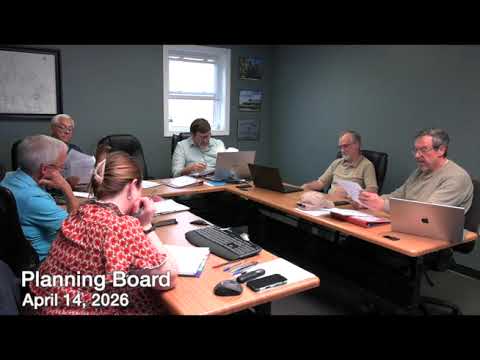
Planning Board reviews draft Article 4 table-of-uses, flags footnote and BESS issues ahead of April 30 hearing
Summary
Albertson Planning Board reviewed a conversion of zoning Article 4 from narrative to a table of uses, identified duplicate entries and unclear warrant language, and asked staff to clarify penalty language, footnotes and battery-storage/solar tiers before a public hearing set for April 30.
The Albertson Planning Board spent the bulk of its meeting reviewing a proposed conversion of zoning Article 4 from a narrative format into a table of uses and agreed to send clarified language and renumbered footnotes to the warrant for a public hearing scheduled for April 30. Chair opened the discussion, stressing that "the purpose of this table is not to make substantive changes," but warned that some prior Dover Amendment items must be reflected correctly.
Why it matters: The table-of-uses rewrite is intended to make the town's zoning rules easier to read and to surface inconsistencies across zones; board members said the table also revealed duplications, contradictory permissions across zones and internal cross-reference problems that would confuse voters unless fixed before the warrant goes to Town Meeting.
What the board discussed: Members identified three categories of work the draft requires before the public hearing. First, consolidation: several uses (for example, library, individual retail, professional offices and certain health-care entries) appeared multiple times and should be combined into single rows with consistent footnotes and zone-by-zone allowances. Second, scope and renumbering: the draft as circulated appears to strike sections 4.1–4.7 of the existing bylaw and insert a new 4.1; members asked staff to make the warrant language explicit about what is being stricken, what is inserted, and whether the penalty section remains in the final text. Third, footnotes and references: footnotes that point to other articles or state law (including Dover protections and M.G.L. c.94G references for marijuana establishments) must be renumbered and clarified so the table and the narrative cross-references remain consistent.
Energy and utilities: The board spent substantial time on public-utility language and battery energy storage systems (BESS). Members noted that prior Attorney General edits had affected how BESS and solar photovoltaic installations were treated and discussed splitting BESS into tiers so that small (tier 1) systems remain allowed by right while larger, grid-scale installations would require special permit review and explicit linkage to Articles 20 and 23. One member summarized the drafting tension: placing batteries under solar can create unintended 'by-right' permissions that the town did not intend when voters previously considered related articles.
Marijuana provisions and ADUs: Members agreed to keep marijuana-related lines consistent with M.G.L. c.94G while explicitly excluding certain tier 1 and tier 2 outdoor cultivation from commercial-only limits so the table matches the town's prior intent. A separate cross-reference issue was flagged for accessory dwelling units (ADUs): the Article 4 draft omits or relocates language related to ADU allowances that must match Article 24 and recent state changes (members noted the state's minimum square-foot thresholds in passing).
Process and next steps: Staff said they will circulate a redlined v2 with the board's edits and corrected footnotes by the end of the week for board review ahead of a virtual check-in scheduled for the week of the 23rd and the public hearing on April 30. The board recorded a procedural motion to move forward with the revisions and instructed staff to prepare warrant text that clearly states the strikes, insertions and renumbered references.
Quotes: Chair: "The purpose of this table is not to make substantive changes." Staff member (on timing): "The public hearing is scheduled for April 30, which is our next meeting, so we need to have it prepared for then." A board member on battery systems: "We should split batteries into tiers so tier 1 is allowed everywhere and higher tiers require special permit."
What was not decided: The board did not take a final vote adopting the draft table at this meeting; instead, members instructed staff to incorporate the clarifications and return a cleaned redline. No zoning changes are final until the article appears on the warrant, is discussed at the public hearing and, if required, voted at Town Meeting.
The Planning Board set a virtual working session the week of the 23rd to review revisions and confirmed staff will provide updated redlines and footnote renumbering before the April 30 public hearing.