Get AI Briefings, Transcripts & Alerts on Local & National Government Meetings — Forever.
City planning director lays out where thousands of new homes could go; school board asks for aggregated student‑impact data
Summary
Michael Alfano of the City of Tallahassee told the Leon County School Board that since the 2020 census the community grew by roughly 13,000 people and outlined dozens of planned or permitted developments that could yield thousands of residential units; board members asked staff to produce aggregated PUD student projections and a corrected map within two weeks.
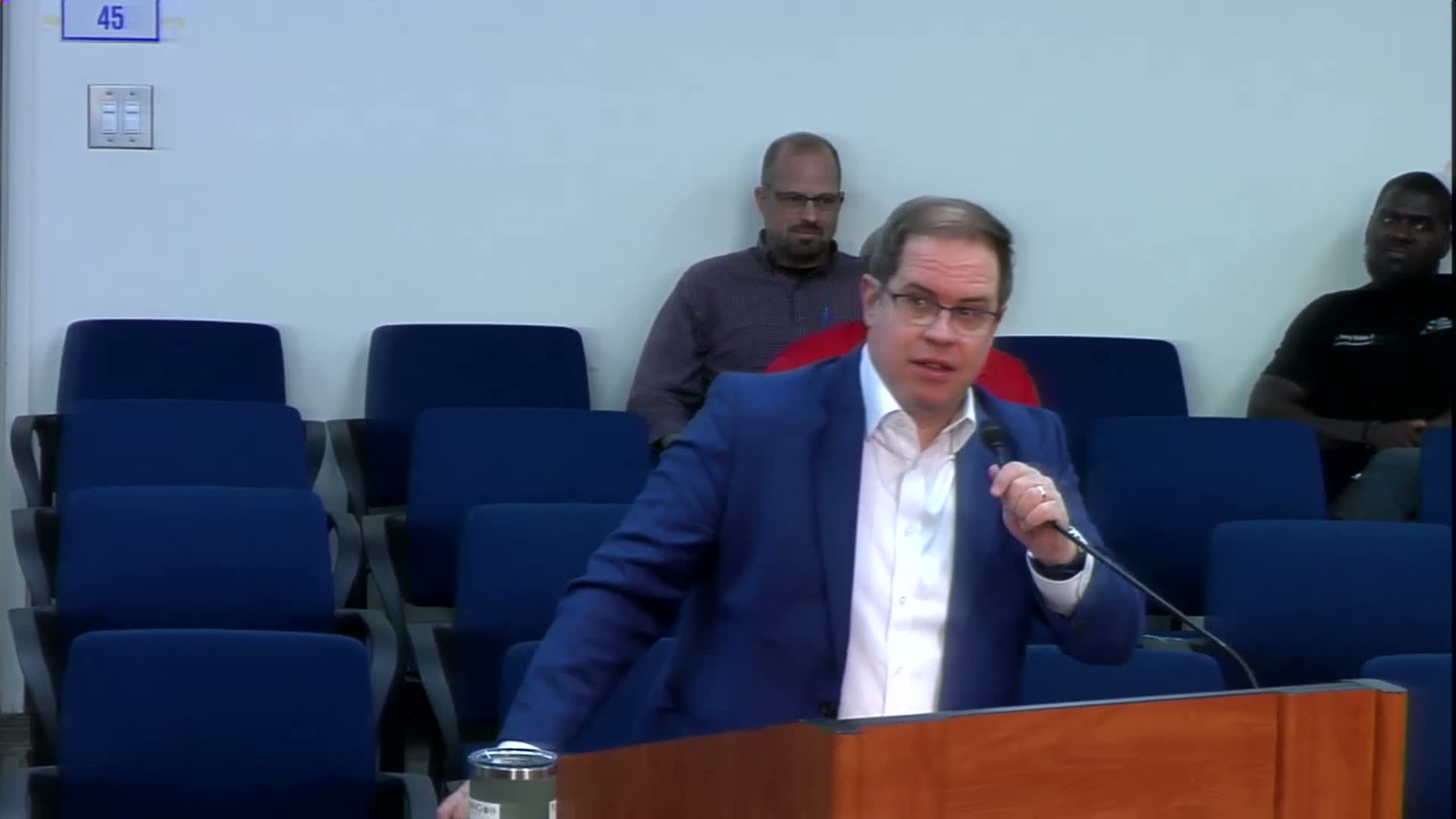
Michael Alfano, director of the City of Tallahassee planning department, told the Leon County School Board on April 13 that the community has grown since the 2020 census and that a group of planned developments could supply a substantial share of future housing.
Alfano said the county has added "a little over 13,000 people" since 2020 and that median projections used for planning point to roughly 335,000 residents by 2050. He told the board that the planning department identified about 21,000 acres of vacant land with development potential and — after removing low‑density, flood‑constrained and environmentally limited parcels — roughly 10,000 acres that are truly developable.
Why it matters: the presentation flagged areas where new housing is concentrated (including Southwood, Falls Chase, Canopy, and multiple master‑planned and PUD sites) and showed how residential build‑out could affect school capacity. Board members repeatedly asked staff to translate unit counts into likely student generation so the district can plan school sites, additions and boundaries.
Alfano walked the board through district‑level totals he used in the slide deck: about 3,600 new single‑family residential units countywide since 2020, roughly 2,600 multifamily units built and another ~1,200 under construction or approved. He also described major future opportunities — from smaller infill projects to very large, conceptual sites (the English property, which Alfano said could range dramatically in scale depending on market decisions).
Board members questioned whether the packet maps included county land and how the county and city maps align with school planning. Alfano said the urban services area clip in the slides intentionally includes both city and county lands that the comp plan directs to receive urban services and supports higher density; lands outside that area have much lower development allowances (for example, one unit per three acres or one unit per 10 acres in some rural designations).
Several trustees requested concrete student‑impact data tied to PUDs and asked staff to combine the PUD unit counts with PUD estimates of student generation by grade band. Rod McQueen, the district’s assistant superintendent, and Alfano agreed to provide corrected maps and an aggregated analysis tying PUD totals to school overage/underage estimates and to return with that work at a workshop in two weeks.
Board members also sought clarity on master‑plan conditions that set aside acreage for schools (the Waiolani master plan contains a provision to set aside 10 acres when the fifth‑hundredth residential unit is approved). Alfano said that requirement is part of the adopted master plan and can be renegotiated through the PUD/master‑plan amendment process, which is a public negotiation among landowners, developers and the school district.
The board asked staff to correct numbering errors that had been introduced in the packet’s maps (Citrus Grove, Park Place PUD, lands outside the DRI) and Alfano said staff would follow up with corrected figures and map pages.
Next steps: the district and planning staff will compile PUD unit counts, project stage (permitted/entitled/ conceptual) and school‑impact estimates by school zone and return with a consolidated packet at the next workshop.