Get Full Government Meeting Transcripts, Videos, & Alerts Forever!
Get email alerts on the Rv Program topic
No spam. Unsubscribe anytime.
Loxahatchee Groves council debates narrower RV rules, caretaker exemptions
Summary
Council members and residents debated revisions to the town's RV program, weighing a simplified acreage-based cap, caretaker exemptions for bona fide agricultural operations, an affidavit/sticker compliance approach, proposed $50 processing fees per rented slip and enforcement limits after staff said the program cost more to run than it brought in.
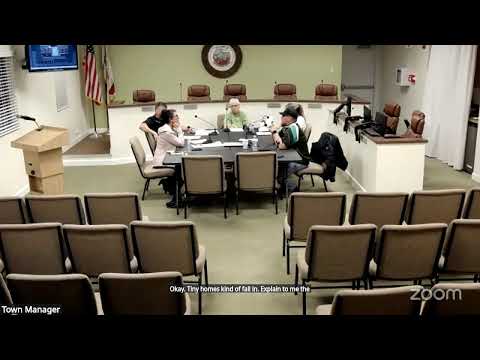
The Town of Loxahatchee Groves council spent most of the meeting reviewing proposed changes to the town's recreational-vehicle program and directing staff to return with a revised ordinance.
The Chair opened the discussion by describing a staff proposal that would split RV use into categories such as personal unoccupied and occupied storage; the plan would allow one RV per parcel for personal storage under a signed affidavit and an annually renewing sticker and would reserve routine inspections for complaint-driven cases.
The proposal triggered extended debate over enforcement, public-safety safeguards and economic impacts. Committee member S6 told colleagues the existing permitting process is expensive, saying the town was spending roughly $80,000 to administer the program while collecting about $20,000 in fees, and urged a simpler rule-based approach with targeted enforcement. "We're spending $80,000 administering, collecting $20,000 in fees," S6 said, arguing for lower administrative burden and focused action against egregious violators.
Residents and several council members pushed back on the idea of inspection only after complaints. The Chair and others raised health and safety concerns, recommending affidavit language require details about sewage disposal and hookups so the town has a sworn record even if staff do not inspect every unit.
Council members also debated how to distinguish personal use from commercial renting. Several speakers said advertising or repeatedly hosting out-of-area occupants points to commercial activity that should be regulated separately; one resident said the existing arrangements have, at times, resembled "a hotel disguised as ag." The council discussed limiting RV counts by parcel size as a straightforward rule: less than 2 acres = 1 RV; 2–5 acres = 2 RVs; larger parcels would allow more, with different allowances if a property qualifies as a bona fide agricultural operation.
How to treat vacant parcels drew sustained attention. Multiple members supported requiring a permanent residential structure on a property before allowing multiple RVs; vacant parcels without a residence would be limited to one caretaker/groom's quarter and would need permitted septic and temporary power where the caretaker is year-round.
On seasonality, a member proposed dates for rented slots roughly from Nov. 1 to April 30 as the equestrian/winter season framework; the council did not adopt fixed dates but used the suggestion to guide discussion.
To encourage compliance, several council members favored a low initial processing fee and a short affidavit form. A working figure of $50 per rented slip was discussed as a starting point to cover staff processing time while keeping the bar low to draw honest participants into compliance.
After hearing residents' concerns and debating enforcement trade-offs, the council directed staff to redraft the ordinance and return with formal language and implementation details. No ordinance adoption vote occurred at the meeting.
The next steps are a staff-prepared ordinance incorporating clarified caretaker exemptions, affidavit language on waste and hookups, proposed season dates and a fee structure; the council also discussed improving code enforcement targeting of large or repeatedly noncompliant sites.
The meeting closed with a motion to adjourn that passed by voice vote.