Lifetime Citizen Portal Access — AI Briefings, Alerts & Unlimited Follows
Senate advances bill limiting employer and school medical requirements over public health objections
Loading...
Summary
The Arizona Senate passed House Bill 22-48, which restricts employers, schools and medical providers from requiring certain medical interventions; supporters framed the change as individual liberty, while opponents said it would weaken disease control and endanger vulnerable people.
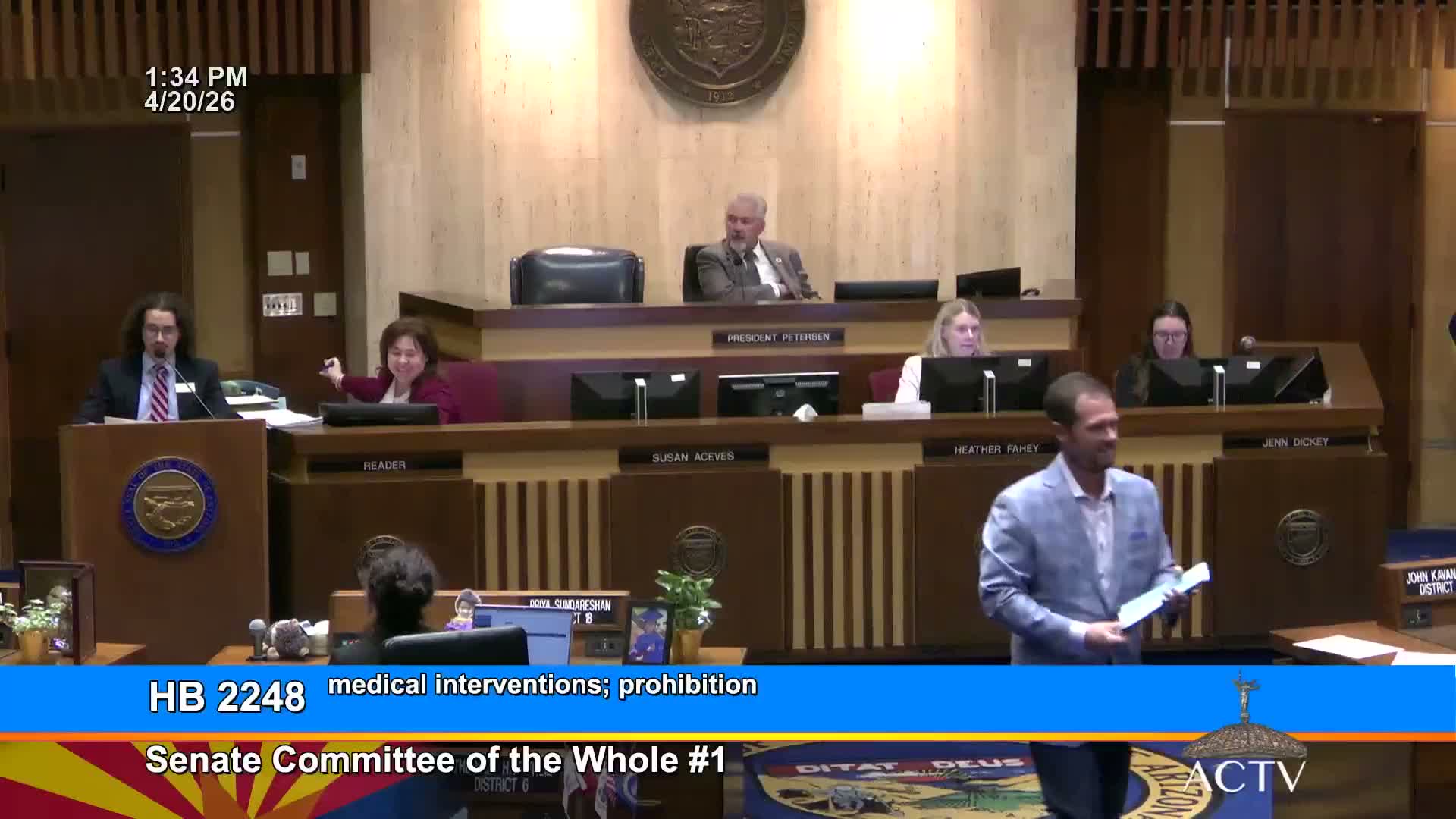
The Arizona Senate voted to pass House Bill 22-48, a measure that adds a new section to Title 36 governing public health mandates and limits employers’ and schools’ ability to require medical interventions. Supporters said the measure protects individual medical choice; critics warned it would make workplaces and classrooms less able to prevent outbreaks.
Senators debated the bill during Committee of the Whole and again on third reading. Sponsor advocates moved committee and floor amendments before the committee recommended the bill "do pass" as amended. "This amendment makes this bill even further worse than it already is," Senator Gonzales said during committee debate, expressing opposition to changes that would broaden prohibitions on routine public-health measures.
Opponents emphasized risks to people who are immunocompromised, infants and residents of healthcare facilities. "Prohibiting employers, medical facilities, and school from requiring medical intervention creates dangerous environments and increases the risk of disease outbreak," Senator Gonzales said in floor remarks explaining her vote. Senators who supported the bill framed it as preserving individual liberty and parental authority over medical decisions.
After floor explanations of vote from several members on both sides, the Senate recorded the final vote and passed the bill as amended; the Senate Clerk instructed that the action be recorded and the bill transmitted to the House.
The committee and floor amendments narrowed and revised the bill's definitions and language governing what constitutes a permissible medical intervention; the record shows sponsors argued the changes were intended to refine the bill's scope. Opponents countered that the measure remains broad and could hamper employers, hospitals and schools that set safety policies.
Next steps: The bill was signed in open session for transmission to the House, where further action may follow.