Lifetime Citizen Portal Access — AI Briefings, Alerts & Unlimited Follows
Covina planners outline final zoning code study session, including gated-community standards and new specific-use rules
Loading...
Summary
City planning staff presented the sixth study session on a comprehensive zoning code modernization, detailing revisions and new sections for specific uses (massage, gated-community design, short-term rentals reserved) and said the full draft will go to a city council study session followed by public hearings.
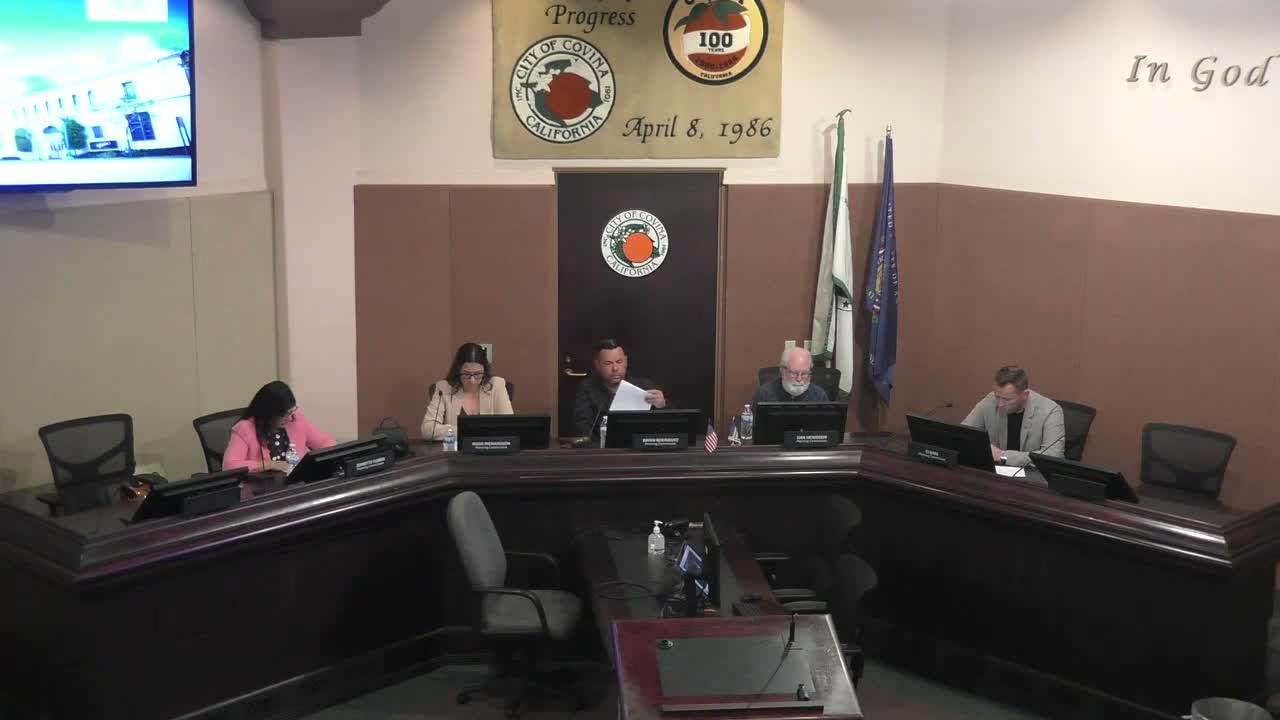
City planning staff presented the sixth and final study session on Covina’s comprehensive zoning code update at the Planning Commission meeting on March 10, 2026, outlining revisions to existing sections and several new specific-use regulations.
Staff said the update reviews roughly 14 chapters and includes changes to readability and organization as well as substantive revisions in six areas, including adult-oriented businesses, hotels and motels, service stations, trailer/mobile-home parks and temporary uses. Staff also described four new sections: massage facilities, gated-community design regulations, a public-convenience-and-necessity finding codification, and a reserved section for short-term rentals while those rules are finalized.
“This is our last study session,” a planning staff presenter said, noting the drafts remain under refinement and review by the city attorney and that the city will proceed with a city council study session and subsequent public hearings before adoption. Staff identified Ms. Nancy Fong and Ms. Chantal Power as presenters for the zoning-code materials.
On specific-use details, planners said they added development-standard matrices for hotels and trailer parks, clarified which temporary uses require an administrative use permit, and established an administrative-use-permit process for accessory massage services limited to no more than 30 percent of the primary floor area and requiring compliance with Municipal Code chapter 5.36. The short-term rental rules are being handled in a separate adoption process and were reserved in the current draft.
Staff also described a new gated-community design section developed with public works and the Transportation and Mobility Technical Committee to address traffic and public-safety concerns for gated entries. The new standards include a standard drawing and stacking/turnaround expectations intended to prevent vehicles from backing up into main streets.
Commissioners asked whether the standards would address existing communities with gates installed without permits. Staff said some illegal gates have been removed by code enforcement; in many retrofit situations, the original project was not designed to accommodate gates and therefore may not be able to meet the new standards without redesign. “If they really want to have [a gated community], they need to design it that way,” staff said.
Commissioners and staff also discussed outreach and adoption strategy. Staff said all draft chapters have been posted to the city’s website and that the outreach plan includes posting a social-media flyer with a QR code, contacting the Covina Chamber of Commerce, and holding a City Council study session followed by Plan Commission and City Council public hearings. Staff noted that, because chapters cross-reference one another, the city expects to adopt the code as one consolidated document, with the possibility of minor cleanups after adoption.
Staff recommended the Planning Commission open the public meeting, receive and close public comments on the draft chapters, provide input to staff, and direct staff to proceed with the code amendment through the public-hearing process and related zone changes. The commission did not take a formal vote on adoption at the March 10 meeting; the next procedural step is the City Council study session and then the statutory public-hearing process.