Get Full Government Meeting Transcripts, Videos, & Alerts Forever!
Get email alerts on the Local History topic
No spam. Unsubscribe anytime.
Presenter traces Washtenaw County's Indigenous roots and role in abolitionist activity
Summary
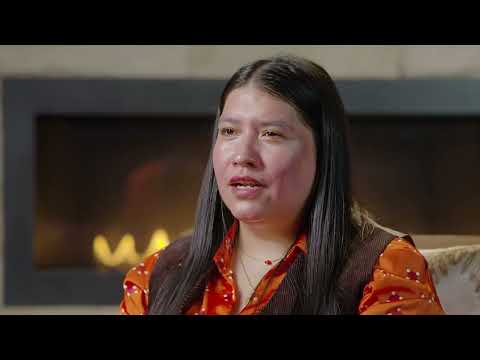
A presenter recounted Washtenaw County’s history, saying the land was long part of an Anishinaabe world, later followed by French traders who used Indigenous trails, and that the county became a center of abolitionist organizing by the 1830s.
A presenter outlined the early history of what is now Washtenaw County, saying the land long belonged to Anishinaabe peoples and “was not empty,” but “alive with movement, trade, and deep environmental knowledge.”
The presenter said Indigenous Potawatomi communities lived across the area that became Ann Arbor, Ypsilanti and Saline, cultivating crops and harvesting maple sugar. The talk connected those communities’ trails and routes to the region’s later roads, noting that French traders followed Indigenous paths that became routes such as US 12 and Michigan Avenue.
“In 1807, the Treaty of Detroit transferred vast tracts of land to the United States,” the presenter said, describing the treaty as a turning point that, in practice, “opened the door to settlement and displacement.” The presenter also noted an early American trading post established about 1823 by Benjamin Woodruff, called Woodruff Grove, near present-day Ypsilanti along the Huron River.
The presenter identified early settlement milestones: Ann Arbor’s founding in 1824 by John Allen and Alicia Walker Ramsey, Ypsilanti in 1825, and the formal establishment of Washtenaw County in 1826, after which courthouses, roads and institutions were built.
Turning to mid-19th century civic life, the presenter said Washtenaw County was a center of organized abolitionist activity. The Michigan Anti-Slavery Society was founded in Ann Arbor in 1836 at the First Presbyterian Church, and residents including Asher O'Ray, who settled in Pittsfield Township in 1827, helped lead Underground Railroad efforts that made the county a pathway for people seeking freedom in Canada.
The presenter framed the county’s history as centrally concerned with questions of belonging and rights, and noted the growth of institutions such as the University of Michigan and Eastern Michigan University as part of that arc. The talk closed by emphasizing that the county’s history was shaped by many hands, voices and stories across generations.
The presentation did not propose policy or report formal actions; it presented historical context and local milestones.