Lifetime Citizen Portal Access — AI Briefings, Alerts & Unlimited Follows
Sagadahoc County commissioners advance preliminary $14.2 million budget after debate over EMA vehicles and drone software
Loading...
Summary
Commissioners voted to move a preliminary $14,218,165 budget to public hearing — a 9.84% increase in expenditures — after approving several cuts and keeping $20,000 for outfitting an EMA vehicle contingent on grant funds. They also discussed a $6,000 annual drone-management subscription for the county's two drones.
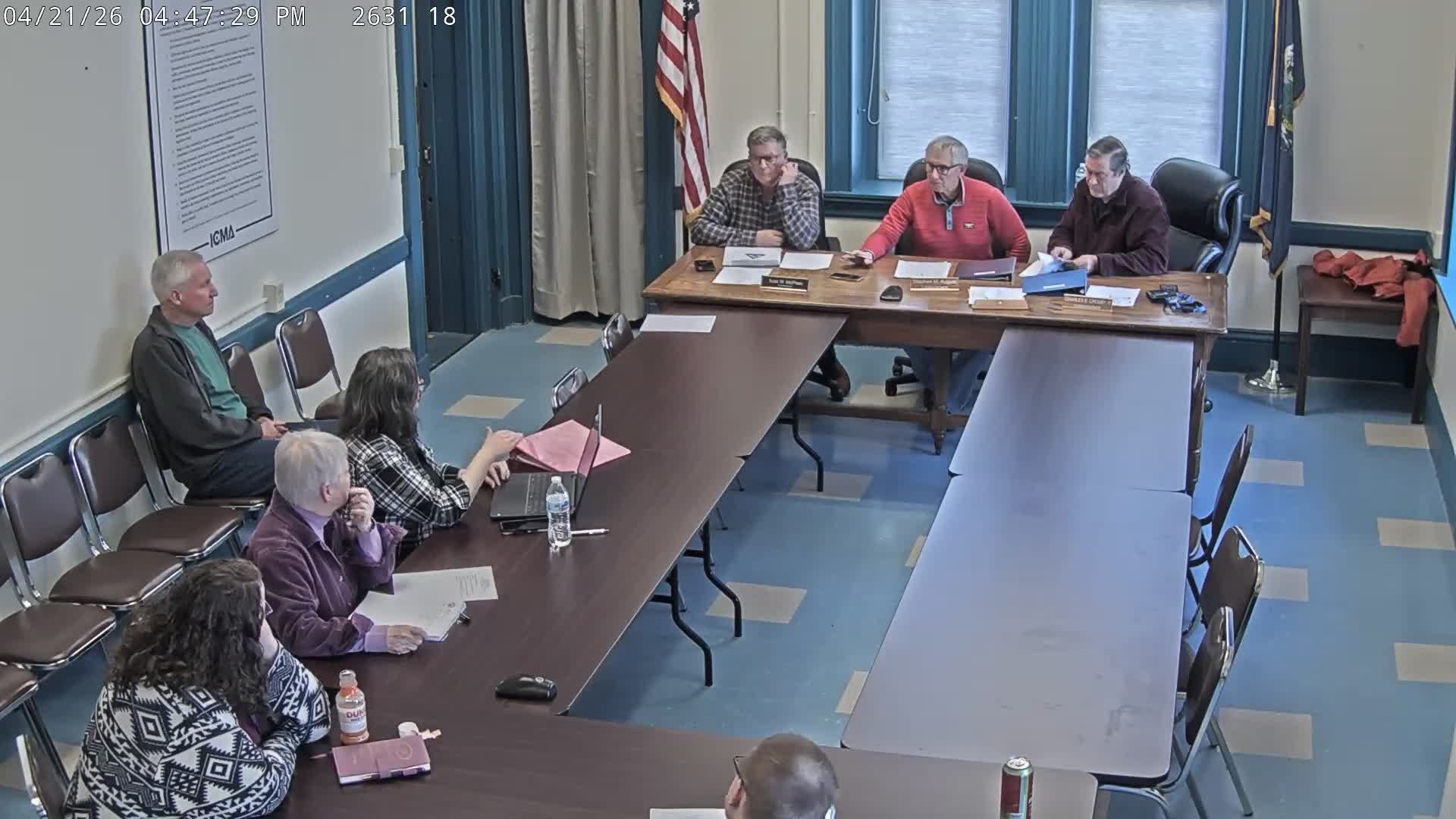
Sagadahoc County commissioners voted to advance a preliminary $14,218,165 spending plan to public hearing on April 21, representing a 9.84% increase in expenditures from the prior year.
The discussion centered on recommended cuts from the Budget Advisory Committee and several operational questions. A staff member said the committee reduced administrative legal fees by $15,000 and trimmed multiple facilities reserves, including $10,000 each from roof and brick repointing reserves and $5,000 each from elevator and wall/ceiling reserves. "That would make the request for next year a $110,000," the staff member said of the revised legal-fees line.
Committee members debated technology and fleet lines. The staff member reported a $9,000 reduction to the managed service provider line by prioritizing cloud backups over on-site backup, and a $1,000 cut to the computer reserve, bringing it to $9,000. One committee member objected to choosing one backup method over another.
Emergency management funding drew prolonged attention. A committee member urged the commission to keep $20,000 in the director's vehicle line to outfit an existing vehicle rather than purchase a new one, noting an anticipated $25,000 grant that could be paired with county funds. "I'm prepared to put some money towards the grant we've already received to outfit one vehicle," the committee member said, adding that outfitting would include command-and-control equipment and first-aid supplies. Staff confirmed the $20,000 would not be spent unless matching grant funds were received.
On the deputy director vehicle line, staff described a proposed reduction of $13,000 and said the BAC recommendation would remove the deputy-car allocation entirely; commissioners discussed whether to keep the line and options to repurpose or obtain a replacement vehicle through fleet surplus or leasing. The Chair said he would pursue Enterprise leasing discussions with Joel to explore options before next year's purchases.
Public-safety technology was also debated. An agency official described a proposed $6,000 annual subscription for drone-management software that would allow multiple drone feeds, maintenance scheduling, flight logs and shared live video among response partners. The county currently owns two drones and the task force includes about 10 members; with the software, multiple operators' feeds could be viewed simultaneously on multiple screens. "This is a small investment to make," a committee member said, arguing that shared live feeds could improve response for missing-person searches and active incidents. Other commissioners suggested treating the software as a shared service with nearby departments and asked for a usage report after a year.
On benefits and contingency funding, staff said the BAC had recommended funding the full $700,000 for the county's self-funded medical program as a worst-case reserve. Staff also reported the budget changes lowered an earlier 11.64% projected increase down to 9.84% in the current iteration.
The commission approved (by voice assent) the motion to move the revised budget forward to the public hearing. The meeting record shows staff will publish the revised allocation and move the budget to public notice; commissioners said further small adjustments could occur after the public hearing.
The hearing also included a brief reference to recent state action to allocate $44 million for jails; staff said the county's share would likely be small and would function as a pass-through to jail debt service rather than changing county operating lines.
The county's next procedural step is the public hearing on the budget; staff said they will post the revised numbers to the county website and circulate allocation details to the towns.