Lifetime Citizen Portal Access — AI Briefings, Alerts & Unlimited Follows
Committee advances bill to expand state voting‑rights protections and preapproval authority
Loading...
Summary
SB 1164, described by its author as the California Voting Rights Act of 2026, would codify federal Voting Rights Act protections into state law, expand remedies against vote dilution and voter suppression and create a limited preapproval mechanism; supporters say it codifies existing case law, while cities and some members urged care around pending litigation.
Senator Cervantes presented SB 1164 as part of a legislative package to strengthen voting rights in California in response to federal rollbacks. The author said the bill would "codify many of the provisions of the federal voting rights act into state law" to preserve protections against vote dilution, voter suppression and discrimination and would give the California attorney general and private litigants additional enforcement tools.
Civil‑rights witnesses spoke in strong support. Kristen Nemmers of the California Black Power Network described longstanding barriers to participation for Black voters and urged the committee to adopt measures that strengthen protections. Adam Liaz of the NAACP Legal Defense Fund said state voting rights acts enacted since 2021 have expanded remedies and that SB 1164 would extend protections for district‑based systems, prohibit discriminatory barriers to the ballot, introduce a limited preapproval process for jurisdictions with repeat violations and direct courts to interpret election laws in favor of access.
The City of Santa Monica registered concerns about how the legislation could interact with pending litigation under the California Voting Rights Act; Senator Cervantes and supporters said the bill's intent is to codify current standards and case law, such as the court's reasoning in the Pico/Santa Monica decisions, and to clarify benchmarks rather than change legal tests. Committee questioning focused on concrete examples of vote dilution and the bill's scope; supporters offered examples from Los Angeles and Huntington Beach when explaining how at‑large systems and certain rules can dilute minority voting power.
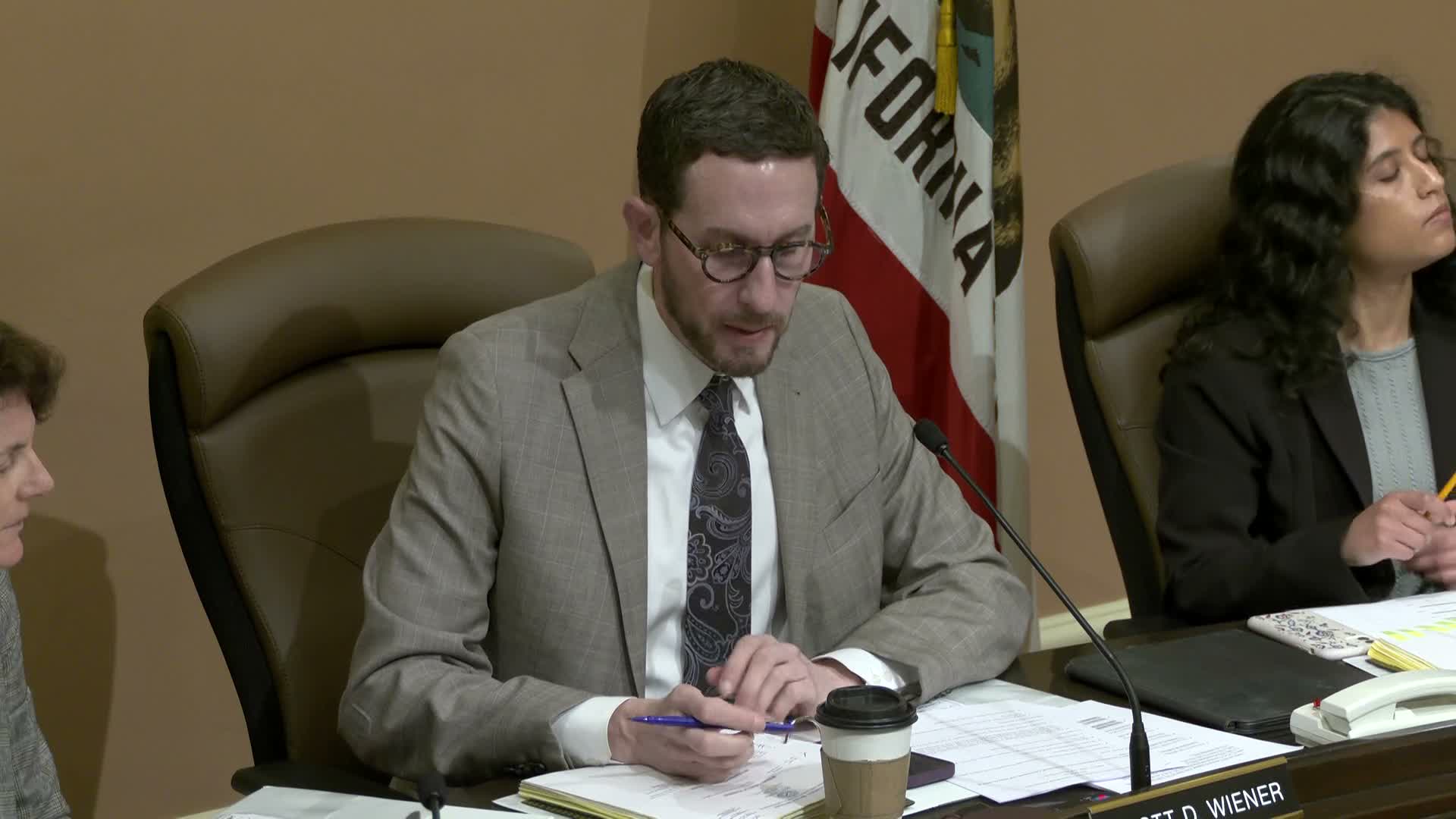
Procedural confusion briefly delayed an immediate motion (the chair noted rules about who may make motions), but the committee ultimately moved to refer SB 1164 to the Senate Judiciary Committee for further consideration; the transcript records the committee placing the bill "on call" with the committee intending to refer it.
Supporters emphasized that SB 1164 is designed to protect communities facing discriminatory barriers to participation and to provide clearer remedies at the state level should federal protections be weakened.