Get Full Government Meeting Transcripts, Videos, & Alerts Forever!
Get email alerts on the Public Health Recovery topic
No spam. Unsubscribe anytime.
Sacred Heart outlines local recovery services, opens 7‑bed men’s recovery house in Bay City
Summary
A Sacred Heart prevention specialist described Bay City's recovery continuum — prevention programs, treatment services, naloxone distribution and peer recovery coaching — and announced a newly opened, structured seven‑bed recovery house (men only) with limited subsidized stays and a contact number for referrals.
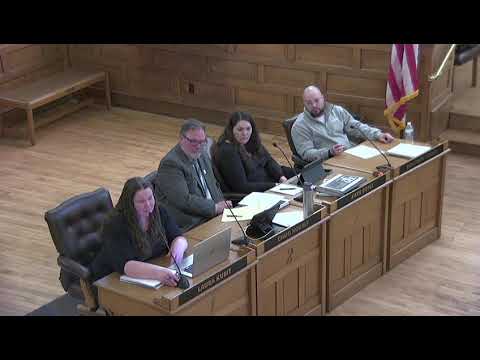
A prevention specialist from Sacred Heart Rehabilitation told the Bay City Commission on April 20 that the city has a growing array of recovery supports and that recovery housing has returned to the community after a long gap. "Recovery is not linear," the presenter said, urging commissioners to help publicize available resources.
The presenter walked the commission through prevention work in schools, evidence‑based programs (citing Bay County Prevention Network and a TAP youth leadership program), and the full continuum of care available locally: outpatient and inpatient treatment options, medication‑assisted treatment, behavioral health referrals, peer recovery coaching, and transportation supports for people who need help reaching care.
The speaker described naloxone distribution and training available to anyone in Bay City: "You do not have to know that it's an opioid overdose. If a person is unconscious ... you can give Narcan," the presenter said, adding she is available to provide public training.
On recovery housing, the presenter said Sacred Heart has opened a structured house with capacity for seven men. Staff described rules and requirements—residents must be in treatment, attend meetings and work with peer supports and therapists—and said the house aims to find housing solutions for residents within roughly three months where possible. Sacred Heart staff (introduced at the meeting) said the house was not full at the time of the presentation and organizers expected to fill it within weeks.
A Sacred Heart staff member who addressed the commission provided operational details: the house charges $20 per day, cameras and safety items were being finalized, and limited subsidy funds are available on a case‑by‑case basis; organizers are seeking additional funding (including opioid settlement funds) to extend support beyond one month for people who cannot pay. The staff member gave a contact number for referrals and questions: (989) 894-2991 and asked callers to ask for Renee or Adam.
Commissioners described personal and community experience with recovery and asked practical questions. The presenter confirmed scheduled transportation is available to other treatment sites (for example, Memphis) when beds are available, and said opioid settlement funds designated for local response remain in a city account with Public Safety oversight. Commissioners praised the outreach and encouraged partnership and continued focus on stigma reduction.
The commission took no formal vote on program funding at the meeting; Sacred Heart staff requested help publicizing the resources and asked the commission to consider how existing settlement and local funds might support recovery housing and longer stays.