Lifetime Citizen Portal Access — AI Briefings, Alerts & Unlimited Follows
Hutchinson council debates moratorium on data centers and battery storage; staff to craft zoning options
Loading...
Summary
Council discussed draft moratoriums to pause negotiations and incentive talks with data centers and battery energy storage companies so the city can develop zoning, setback, and safety rules; no moratorium vote was taken and staff were asked to coordinate with county and planning commission.
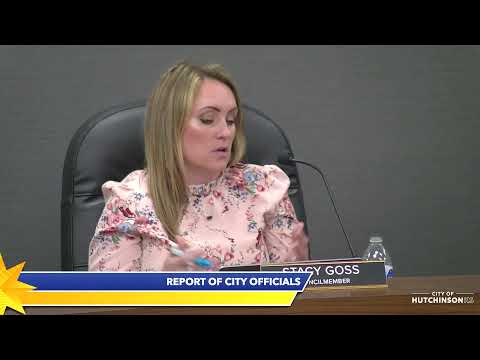
The Hutchinson City Council on April 21 held an extended discussion about two draft moratorium ordinances that would temporarily prohibit negotiations, incentive agreements, land sales and other actions tied to data centers, hyperscalers and battery energy storage systems while staff and planning commissions craft zoning and regulatory safeguards.
The proposed moratoria are narrowly framed procedural tools: they would pause incentive conversations and related contract negotiations for a short period while the city examines zoning classifications, conditional‑use options and public‑safety rules. "The main goal of the moratorium is essentially a short ban to prohibit negotiations and agreements — letters of intent, contracts, sales of land — with any entity associated with these defined activities," the sponsoring council member said, emphasizing the drafts were intended to protect public notice and participation.
City planners explained why staff recommended careful study before adopting permanent regulations. Matt Williams, the city’s director of community development, said the city currently lacks a specific land‑use classification for data centers; depending on scale, a facility could be treated as an office, storage/warehouse or outdoor storage and might be allowed in several commercial or industrial districts by right. "We don't have anything specific to data centers, and we definitely could," Williams said, listing options including conditional‑use requirements, overlay districts that mandate setbacks from residences, and adding NFPA standards for battery installations.
City engineer Evan Patterson noted utility connections — water and power — and their planning processes would materially slow large data‑center builds, while staff acknowledged battery energy storage poses different fire‑safety risks and may require NFPA‑based code updates.
Public comment was divided. Deborah Tufel, president of the Hutchinson‑Reno County Chamber of Commerce, reported the Chamber’s outreach to state economic development and utility partners and relayed their advice that moratoria can sometimes signal weakness and dissuade potential investors; she urged the council to instead expedite thoughtful zoning changes. Other residents urged a pause to ensure public input, citing examples where projects elsewhere advanced under secrecy or NDAs.
Council members raised two practical jurisdictional concerns: because city code applies only inside city limits, county and neighboring municipalities would have to coordinate any regional approach to moratoria or consistent zoning; and if the city waited until an application was filed, holding permits selectively could expose the city to legal challenges and undermine public trust.
No vote was taken. Council instructed staff and planning to continue researching potential regulations, to consult county and neighboring jurisdictions about coordinated approaches, and to return with proposals (including possible NFPA references for battery storage) and an estimated timeline for public hearings.
Next steps: staff to draft zoning amendments, consider conditional‑use triggers for data centers, and discuss a regional task force with county and neighboring municipalities. The council indicated it would revisit the moratorium question and possible ordinance language at a subsequent meeting.