Lifetime Citizen Portal Access — AI Briefings, Alerts & Unlimited Follows
Dickson County advances zoning amendment to set 250-acre minimums and 2,000-foot buffers for landfills and quarries
Loading...
Summary
After a citizen request and a unanimous planning commission recommendation, Dickson County commissioners moved an amendment forward that would require a 250-acre minimum lot size and a 2,000-foot buffer from residentially zoned parcels for new sanitary landfills, hazardous-waste facilities and mining special exceptions.
The Dickson County Commission on April 20 advanced a citizen-initiated amendment to the county zoning resolution that would require new sanitary landfills, hazardous-waste facilities and mining activities to be sited on lots of at least 250 acres and at least 2,000 feet from any parcel zoned R-1, R-2 or R-3.
Mills, the county presenter, told commissioners the change was recommended unanimously by the planning commission and is intended to create a protective buffer between high-impact uses and nearby residential neighborhoods. "The minimum lot size shall be 250 acres," Mills said while outlining the two-paragraph amendment and the parallel change to the special-exception procedure for mining activities to make the terms "mining" and "mining activities" synonymous.
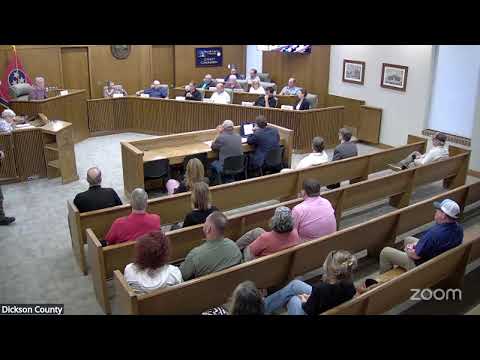
The amendment drew a pair of public remarks at the hearing. Attorney Jason Holloman, speaking on behalf of clients concerned about growth on the western fringe of the Nashville region, said the proposal is a proactive effort to protect residential property owners from unexpected quarrying or landfill operations and noted state property-law rules can limit a county's tools if operations vest rights early. "These ordinances are really just designed to be proactive about having reasonable regulation on those types of entities," Holloman said.
Resident Ellen Yancey, who said she lives about 2,000 feet from an existing rock quarry, told the commission she supports taking a "proactive stance" so new mining or landfill uses do not unexpectedly appear next to newly developed homes. "I hope I'm all for making a proposal where we have some limitations on what can happen," Yancey said.
During follow-up discussion, commissioners and members of the public asked whether existing quarries and landfills would be grandfathered and how the amendment would interact with current zone allowances. Mills and other staff clarified the amendment applies to new operations; quarries remain permitted in certain agricultural zoning districts (A-1, A-2) and may still come forward via special exception processes in those zones. The mayor and staff also noted that siting a large-scale landfill requires state-level approvals and processes (including TDEC and the state solid waste board), meaning regional and state coordination is necessary for comprehensive waste planning.
A motion by Commissioner Williams, seconded by Commissioner Grove, moved the zoning amendment on to a regular session for first reading; the motion passed by voice vote. The commission said the item will return for a vote on the third Monday in May (about 30 days).
Next steps: staff and the county attorney were asked to collect outstanding questions from commissioners and perform additional legal research before the May hearing so the commission will have clarifications available at first reading.