Lifetime Citizen Portal Access — AI Briefings, Alerts & Unlimited Follows
Fire Chief Mallinger outlines enforcement steps as city tackles tall grass, rental compliance
Loading...
Summary
Fire Chief Mallinger briefed the North St. Paul City Council on 2025 code-enforcement activity, citing tall grass, front-yard parking and garbage as the most common issues; he described timelines for correction, abatement costs and legal options including citations and court orders.
Fire Chief Mallinger told the North St. Paul City Council that most of this year’s code-enforcement work has focused on tall grass and weeds, vehicles parked in front yards and garbage and debris.
"As you can see, the majority of what's being dealt with on this list has been related to tall grass and weeds," Mallinger said, outlining the types of violations entered by staff and how cases are categorized.
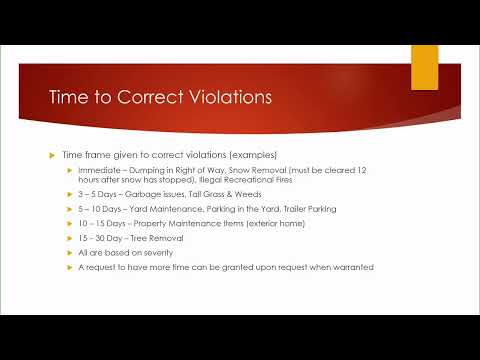
Mallinger gave specific counts and timelines: the city logged 33 snow-removal issues (since January), 18 garbage-and-debris cleanups, and 53 resident complaints submitted through OpenGov (24 of those tied to garbage). He said staff are aiming for quick correction windows—about three to five days for garbage and tall grass, five to 10 days for yard maintenance or parking-in-yard issues, 10 to 15 days for broader exterior property maintenance, and 15 to 30 days for tree removal, with extensions allowed when cost or contractor availability delay work.
When property owners fail to act, Mallinger described the city’s escalation tools. In some cases staff pursue a summary abatement order and have public works perform the work and bill the owner; Mallinger said the abatement charge covers "the cost of the correction and inspection, travel time, equipment, etc., and the rate is $240 an hour plus expenses for the abatement." He said the city sent four abatement notices this year and public works performed one cleanup.
Mallinger and city attorney Jack discussed the limits and trade-offs of legal remedies. Jack said many city code citations are handled as "payable offenses," where a person may pay a fine or appear in court, and cautioned that citations alone often do not resolve ongoing structural or safety hazards. For prolonged refusals, the city can seek an injunction or a court order, which is more powerful but requires more time and upfront legal investment.
The council asked several practical questions. Members and residents raised concerns about enforcement along rights-of-way (for example, a ditch along County/State Highway 120), whether rental properties are easier to enforce and how the city verifies progress. Mallinger said the city generally has stronger enforcement tools for registered rental properties and that staff are trying targeted block inspections—picking one or two blocks every few weeks—to proactively find recurring problems.
On trees, Mallinger said the recent increase in emerald ash borer damage has raised the number of dangerous or diseased-tree cases and sometimes requires contractor work (including cranes) when removals threaten structures. He added that abatement work estimated to cost more than $5,000 requires council approval under city code.
Mallinger proposed nonpunitive measures to reduce violations: a resident guide on property upkeep, code-compliance information in the city newsletter, how-to social media videos, seasonal spring-cleanup support and recognition programs for well-kept yards. He also suggested an official door-hanger notice for snow-removal and tall-grass violations to notify owners at the time inspectors visit.
The council adopted the meeting agenda at the opening and later approved a motion to adjourn; the presiding officer announced the council would reconvene at 6:30.
The presentation identified enforcement options, typical timelines and where legal and resource limits mean cases may require months to resolve or council-level approval for costly abatement work. Council members asked staff to continue refining ordinance language and outreach materials to help residents comply.