Lifetime Citizen Portal Access — AI Briefings, Alerts & Unlimited Follows
U.N. special representative says Haiti’s government aims for late‑year vote as international gang force begins deployments
Loading...
Summary
Carlos Ruiz Massieu told the Security Council that Haiti’s government plans to revise its election calendar and is aiming for a first round at the end of the year, but that security improvements and international support for a Gang Suppression Force are prerequisites.
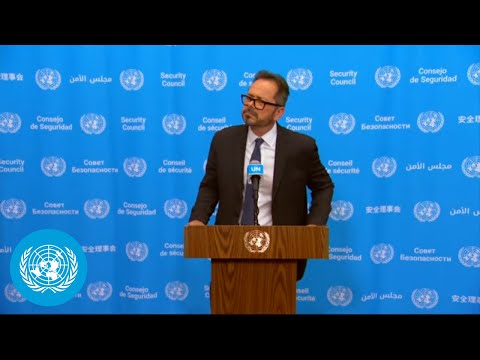
Carlos Ruiz Massieu, the U.N. Secretary‑General’s special representative for Haiti, told the Security Council that Haiti’s government intends to revise its election calendar and is aiming for a first round of voting at the end of this year, but he said improved security is essential before elections can be viable.
"The idea of the government is to have elections…this is the first round, at the end of the year," Ruiz Massieu said, adding that a planned additional ballot — described as a referendum to be presented to the population — would likely push the schedule and that a second round could follow early next year. He emphasized that candidates must be able to campaign and voters must be able to exercise their rights in a safe, free environment.
The special representative linked the timing for elections directly to security conditions. "All this evidently, has to be in an environment that security has improved," he said, noting neighborhoods under gang influence must be "freed up" for elections to be viable.
Journalist Guy Rosanna of Al Jazeera English asked who would lead efforts to curtail the illicit flow of weapons and ammunition into Haiti. Ruiz Massieu responded that enforcement of the U.N. arms embargo and action by the Security Council sanctions committee are critical. He said that when gangs obtain ammunition their violence increases and that seizures by the Gang Suppression Force (GSF) offer an opportunity to trace weapons back to their origins and provide that information to sanctions monitors.
Ruiz Massieu said partner pledges for the GSF exceed earlier expectations of about 5,500 personnel — military and police combined — and that deployments have already begun. "Their first country that is deploying…troops are from Chad," he said, adding the Chadian contingent is in Port‑au‑Prince and that the force expects to reach full strength between the fall and the end of the year through staggered arrivals.
He also described U.N. and Haitian programs intended to reduce violence and reintegrate vulnerable children, citing work on disengaging children from gangs and community violence‑reduction programs.
Ruiz Massieu urged the council and member states to follow up on weapons tracing and sanctions committee referrals: "It’s important that the embargo…is overseen and the sanctions committee evidently act upon it," he said.
The special representative closed by stressing the coming months will be key for sustained collective action among the Security Council, U.N. missions and partner forces to create conditions for elections and to reduce violence in Haiti.