Lifetime Citizen Portal Access — AI Briefings, Alerts & Unlimited Follows
Senate passes elections omnibus after hours of partisan debate over voter ID, privacy and disclosures
Loading...
Summary
After hours of floor debate and multiple roll-call fights over voter ID, candidate-address privacy and absentee-ballot checks, the Minnesota Senate passed the 2026 elections omnibus (Senate File 42-23) on April 23, 2026, by a 34–33 margin.
The Minnesota Senate passed Senate File 42-23, a broad elections omnibus that sponsors said strengthens protections for voters and election officials, in a 34–33 final vote on April 23.
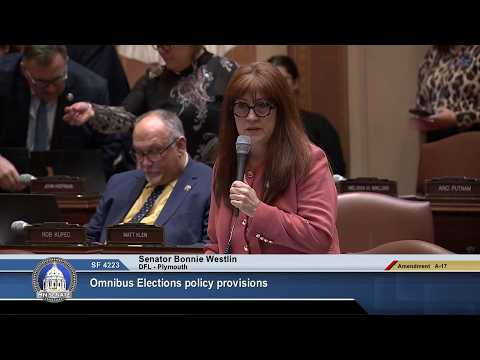
Senator Westland, the bill’s sponsor, said the measure "strengthens protections against election interference and intimidation" and includes provisions to protect addresses of candidates and donors and to codify advisory opinions allowing campaign funds to be used for security services. "This bill provides an opportunity for us to demonstrate to Minnesotans that we are standing with them in the fight for free and fair elections," she said.
The bill drew sustained floor debate and dozens of proposed amendments. Lawmakers tussled over whether local party leaders should have limited access to candidates’ private addresses for residency verification (A21), whether counties should be required to validate absentee-ballot applicants before mailing (A20), and whether deceased registrants should be removed from the statewide database (A19). Senator Koren urged amendments to increase verification and transparency for absentee ballots and voter rolls; opponents said the language risked privacy and would impose unfunded obligations on local officials.
A string of roll-call votes broke down largely along partisan lines. A technical-corrections amendment the sponsor offered as A27 passed on a recorded vote after floor discussion. A package of amendments to require additional absentee and registration verification was rejected in recorded roll calls. Senator Lisky’s amendment clarifying rules about members wagering on elections (A29) passed unanimously.
The chamber also debated an amendment offered by Senator Westrom that supporters labeled the "Save Minnesota Act," proposing voter ID, stricter proof-of-citizenship checks for new registrants and provisional ballots for same-day registration. Proponents framed it as restoring trust in the system; opponents warned it would create barriers for veterans, students and many married voters whose current IDs or name histories do not match their birth records. That amendment failed on a close roll call.
Senate leaders described other components as increases in transparency and protections for election workers, and the bill’s final sponsor statement said it would protect officials and candidates "so they can access the security that they need." The Secretary took the roll for final passage after debate; the clerk announced "There being 34 ayes and 33 nays" and the bill was passed and its title agreed to.
What happens next: The bill now proceeds to the enrollment and transmittal process and to the governor for signature or veto, and sponsors said additional technical and implementation work will proceed in committee and with relevant state offices.
Who said what: "We have strengthened protections against election interference and intimidation," said Senator Westland. Senator Koren said the measure still lacked certain verification processes for absentee ballots and candidate addresses. Senators on both sides repeatedly framed the dispute as one between bolstering integrity and protecting access. The Senate’s recorded roll calls and amendment history are part of the public record for the session.
The vote tally: SF 42-23 (as amended): 34 ayes, 33 nays.