Get Full Government Meeting Transcripts, Videos, & Alerts Forever!
Get email alerts on the HB 318 Social Media Minors topic
No spam. Unsubscribe anytime.
Tech trade groups oppose Alaska bill on minors and social media, citing First Amendment and privacy risks
Summary
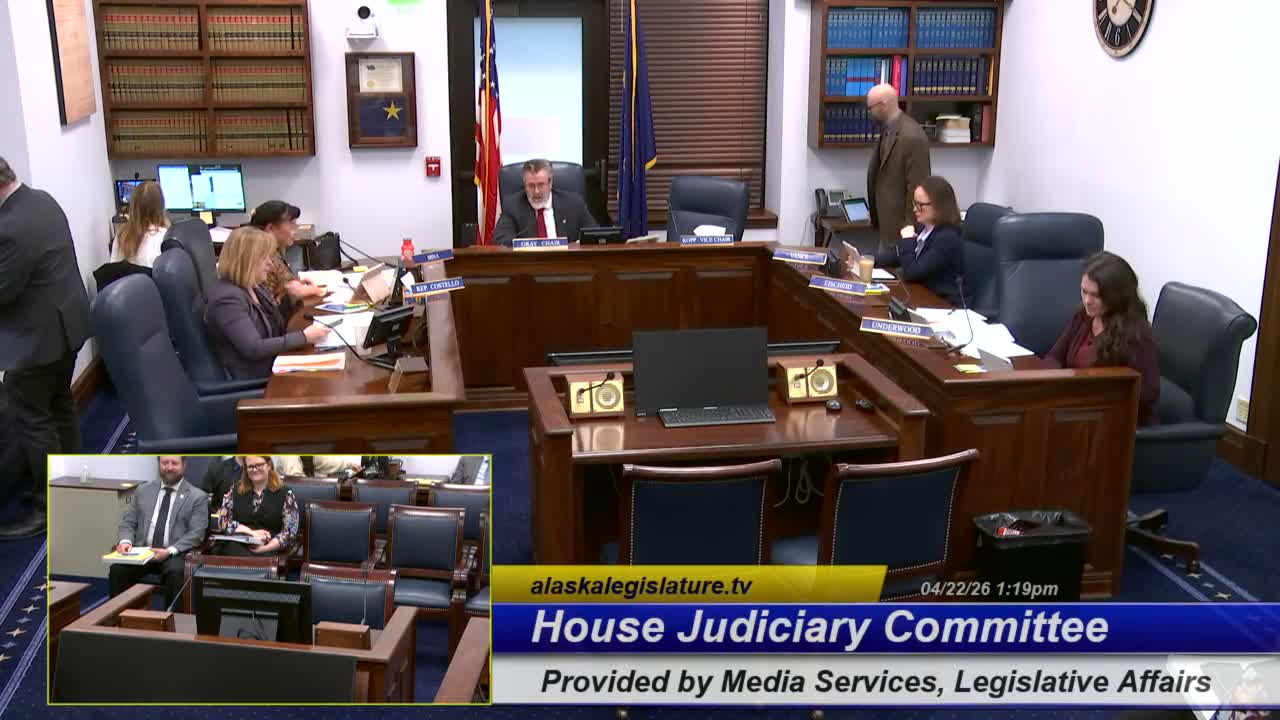
At a House Judiciary Committee hearing April 22, 2026, industry witnesses from the Computer & Communications Industry Association and NetChoice urged lawmakers to reconsider House Bill 318, warning it could raise First Amendment and privacy concerns, require coercive age verification, and give the attorney general broad authority to ban features deemed 'addictive.'
Industry witnesses told the House Judiciary Committee on April 22 that House Bill 318, the social-media-minors measure, raises constitutional and privacy problems and would require further refinement before lawmakers adopt it. Representative Elam, the bill’s sponsor, framed the proposal as a response to "addictive algorithms" and said the bill seeks to protect children, parents and community life.
Aden (Aiden) Downey, representing the Computer and Communications Industry Association, testified in opposition. He argued the bill would introduce "significant constitutional and operational concerns," including likely First Amendment problems for mandatory company disclosures to the attorney general and privacy risks from age-verification systems that could force collection of government IDs or biometrics. Downey said the bill’s standards—phrases such as "addictive design features" and whether a controller "reasonably should know" a user is a minor—are vague and risk arbitrary application.
Zach Lilly, director of government affairs at NetChoice, also opposed the bill on First Amendment grounds and warned HB 318 would establish "coerced identity surveillance" if platforms were required to offer different experiences for users they "should know are minors." Lilly cited litigation over similar laws in other states and said courts have often struck down age-verification provisions while noting the Supreme Court has allowed narrow age-verification in some contexts. He warned the measure would give the attorney general broad authority to determine what is "addictive" and to ban features on that basis: "This bill sets the dangerous precedent that all the government has to do is label speech as addictive so that it can be regulated."
Representative Elam said the bill is intended to address behaviors such as "doomscrolling" and the "microdosing of dopamine" on platforms that interrupt classrooms and family time; he said he is open to amendments to clarify definitions and to consider input from the Department of Law or other agencies. Representative Mena asked how the bill compares to federal proposals such as the Kids Online Safety Act and pressed whether checks on the attorney general’s authority (for instance involving Commerce or the Department of Health) should be added; Rep. Elam said he would consider suggested amendments.
The chair set an amendment deadline for HB 318 for Wednesday, April 29, 2026 at 11:59 PM, and the committee set the bill aside for further work. Public testimony at the hearing came from industry groups opposed to the measure; no proponents testified at this session.