Get Full Government Meeting Transcripts, Videos, & Alerts Forever!
Get email alerts on the Immigration Processing Site topic
No spam. Unsubscribe anytime.
Broadview leaders, residents decry nearby ICE processing site; mayor proposes 'Broadview Justice Corridor'
Summary
Mayor Katrina Thompson and local officials described disruption after federal immigration processing operations began Sept. 7, 2025, and urged transforming the site into a 'Broadview Justice Corridor' focused on community resources, while the fire department demanded removal of a fence it says blocks emergency access.
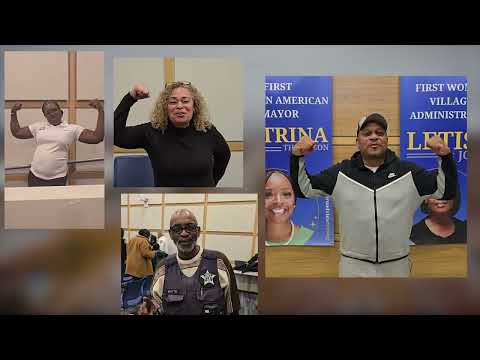
Mayor Katrina Thompson opened by identifying herself as leader of the Village of Broadview and said the small Chicago-area community "became the center of national attention" after federal immigration processing operations began on Sept. 7, 2025. She called on residents and officials to turn a moment of conflict into opportunity and proposed a "Broadview Justice Corridor" to replace a detention-focused site with community resources and economic development.
"The Broadview Justice Corridor is about transforming a moment of conflict into a pathway for community investment, education, economic development, and restorative justice," Thompson said, urging that the site reflect "dignity, opportunity, and hope." She noted Broadview is home to about 8,000 residents and said leaders must protect residents' safety while preserving First Amendment rights during protests that followed the facility's opening.
Residents and elected officials described repeated disruptions near homes. Von Traore, a Broadview resident, said the operations have been disruptive to daily life: "We have strictly lost our weekends because it brings so many people over here, and it's loud and it's police every day." An unidentified speaker reported some protest days exceeded 1,000 people and located large gatherings near 1930 B Street and around 25th Avenue in Harvard.
Trustee Akisha Winfrey, a 25-year resident, said protesters' use of tear gas affected residents and disrupted parking and commutes in Broadview's approximately two-mile area, and she said schools were impacted by students' anxiety about the nearby operations.
The Broadview Fire Department demanded removal of a fence the department said ICE built on a village road, arguing it could block firefighter access during an emergency. Acting Fire Chief Martin said the department established a unified command during the increase in ICE operations to "make sure that we had continuity of essential services to protect our community neighbors, our law enforcement partners, and our own personnel, our firefighter paramedics." Chief Martin said the department's priority was ensuring emergency access and public safety.
Thompson framed the Justice Corridor proposal as a community-led alternative to detention: "Instead of a place defined by detention, we imagine a corridor that could include community resources, cultural education, workforce development, and economic opportunity for the residents of Broadview and the greater region." She concluded by emphasizing Broadview's resilience, as several speakers and attendees chanted "Broadview strong."
No formal vote or ordinance was recorded in the transcript. Officials described ongoing safety and public-order concerns and asked federal authorities to address local access and community impacts; the village's next procedural steps were not specified in the transcript.