Get Full Government Meeting Transcripts, Videos, & Alerts Forever!
Get email alerts on the Sidewalks And Subdivision Waiver topic
No spam. Unsubscribe anytime.
Plan commission requires sidewalks for Albert's Subdivision after debate over 1974 vesting and safety
Summary
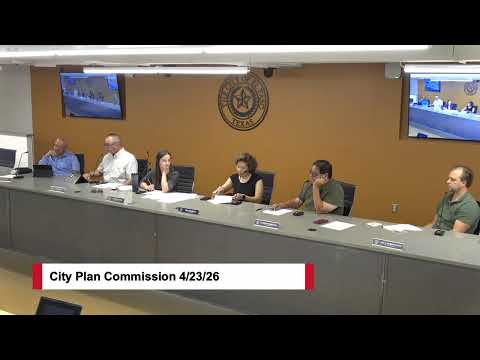
After extended debate about vested rights and child safety near a park, the El Paso City Plan Commission on April 23 denied a developer's sidewalk waiver under a 1974 ordinance and approved Albert's Subdivision on the condition that sidewalks be constructed.
The El Paso City Plan Commission on April 23 approved Albert's Subdivision with sidewalks after rejecting a developer's request to waive construction of 5-foot sidewalks under a 1974 subdivision ordinance.
The commission heard staff presentations that the subdivision (1.43 acres inside the city limits) meets the vesting criteria of the 1974 ordinance. Planning staff recommended approval of the waiver request, but commissioners pressed on safety near a nearby park and the broader implications of allowing repeated exceptions.
Alonso Hernandez, Planning & Inspections, described the application and said the surrounding area is largely industrial with no existing sidewalks, and that the request meets the criteria under the 1974 ordinance. Miles Segovia, the chief planner of subdivisions, told commissioners that even if a property is vested to the 1974 code, the applicant must come before the commission to request a waiver.
Commissioners raised several objections. One commissioner said the city should not keep reverting to 1974 standards and argued that sidewalks should be required now to ensure safety as the area grows. In support of requiring sidewalks, a commissioner noted the site's proximity to Grama Vista Park and nearby residential subdivisions and said sidewalks help ensure consistent, safe pedestrian connections as development proceeds.
The applicant and owner urged the commission to allow the waiver. The owner argued industrial conditions make sidewalks unnecessary and hazardous, saying the industrial area hosts heavy truck traffic and sidewalks could attract children into unsafe areas: "we don't wanna encourage traffic, pedestrian traffic here in this area... we only have industrial buildings," the applicant said. The owner also stressed the legal concept of vested rights under state law and asked the commission to honor those rights.
Russell Abelin, assistant city attorney, advised the commission that the subdivision portion of the application is ministerial and that if the plat meets the requirements of the applicable ordinance the commission is required to approve the subdivision; the exception for the sidewalk is discretionary and requires separate action.
The commission first considered a motion to approve the plat together with the sidewalk exception; a roll-call vote on that motion failed. After discussion, a subsequent motion to approve the subdivision without the exception (i.e., requiring sidewalks) passed and the plat was approved with sidewalks required per the commission's action.
The commission did not specify a full roll-call tally for the final vote in the record; transcript excerpts show named votes for the failed motion (Badillo recorded as "nay," Masood recorded as "yes," Borrego recorded as "nay"). The final action was recorded as "motion carries," and the commission moved on to later agenda items.
The commission's decision balances the staff recommendation based on vesting with commissioners' stated priorities for pedestrian safety and consistency in imposing sidewalk requirements. The applicant may pursue any lawful post-approval steps available under city procedure.