Get AI Briefings, Transcripts & Alerts on Local & National Government Meetings — Forever.
Committee adopts narrow electronic-monitoring authority and temporary five-permit cap in HB 117
Loading...
Summary
The Senate Resources Committee on April 21 adopted two amendments to House Bill 117 that (1) allow the Department of Fish and Game commissioner to implement optional electronic monitoring for state trawl fisheries on vessels already carrying federally-required systems and (2) cap cooperative limited-entry permits at five per group until the Board of Fisheries sets area-specific limits.
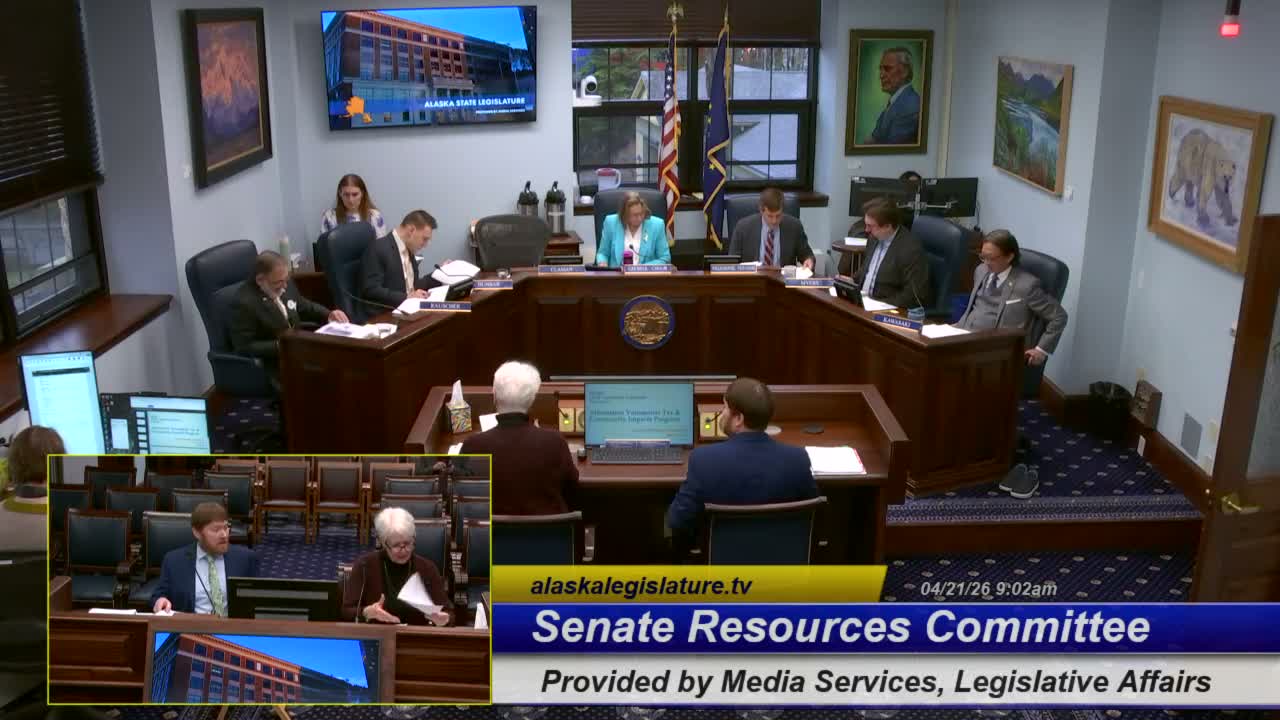
The Alaska Senate Resources Committee on April 21 adopted two amendments to House Bill 117, the bill that would permit limited-entry set-net and gillnet cooperatives in state fisheries, and voted the bill out of committee. Chair Senator Giesel said the amendments and the committee substitute would be transmitted following the meeting.
Senator Wilkowsky moved the first amendment (I.1) to authorize the Department of Fish and Game commissioner to establish an electronic monitoring program for vessels participating in state trawl fisheries but limited to vessels that already participate in federally managed trawl fisheries and that already have electronic monitoring equipment on board. "This amendment…gives the Department of Fish and Game the ability to establish and manage an electronic monitoring program for vessels participating in state commercial trawl fishery," Wilkowsky said during debate. The amendment would not require owners to purchase or install new equipment and would take effect Jan. 1, 2027.
Doug Vincent-Lang, commissioner of the Department of Fish and Game, told the committee the department supports the option. "In summary, the department supports adding the option for electronic monitoring in statute," he said, noting the amendment narrows prior proposals and requires the commissioner to make findings that electronic monitoring is a practical, cost-reasonable data-gathering or enforcement tool and can be coordinated with federal programs such as the National Marine Fisheries Service.
Representative Louise Stutes, the bill sponsor, told the committee she "certainly support[s] this amendment" and described it as "specifically tailored" to trawl fishing in state waters and limited to vessels that already carry electronic monitoring equipment. Stutes said the amendment will provide data to the Department of Fish and Game and the Board of Fisheries to inform decisions on bycatch and related management questions.
Senator Wilkowsky then moved a second amendment (I.2) adding transition language that caps the maximum number of limited-entry permits per cooperative at five in each administrative area until the Board of Fisheries establishes a maximum cooperative size by regulation. Proponents said the temporary cap responds to testimony—especially from Bristol Bay—raising concern that very large cooperatives could consolidate access. Commissioner Vincent-Lang described a five-permit interim cap as "a reasonable approach" until area-specific Board of Fisheries meetings occur.
Major Aaron Bridal of the Alaska Wildlife Troopers warned of potential unintended consequences, including fraud risks, that had been raised in prior testimony. Committee members asked staff and the sponsor’s office whether many existing cooperatives already have five permits; staff to the sponsor, Matt Greening, said most are five or under and that the amendment preserves local input through the board process.
Chair Giesel removed her objections and the committee adopted both amendments by voice; no roll-call tallies were recorded in the hearing transcript. Senator Wilkowsky moved the committee substitute for HB 117 out of committee as amended; Giesel announced transmittal documents would be signed at the end of the meeting.
The committee left public testimony open for HB 117 but reported no speakers were signed up online or in the room.
What’s next: The committee transmitted HB 117 as amended and will continue follow-up on implementation details as the bill moves through the process.