Get AI Briefings, Transcripts & Alerts on Local & National Government Meetings — Forever.
House committee hears bipartisan bills to clarify property-tax exemption for continuing care retirement communities
Loading...
Summary
Supporters told the House Committee on Finance that inconsistent local interpretations of the Michigan General Property Tax Act are threatening nonprofit continuing care retirement communities (CCRCs) and diverting resources into litigation; municipal officials warned the bills could erode local tax bases and shift costs for emergency services and schools to other taxpayers.
Lansing — The House Committee on Finance heard bipartisan testimony April 21 on House Bills 5572 and 5573, legislation sponsors say would clarify that nonprofit continuing care retirement communities (CCRCs) qualify for property-tax exemption under Michigan law and reduce inconsistent local assessments.
The bills’ sponsors, Representative Harris and Representative Will Snyder, told committee members that differing interpretations of the Michigan General Property Tax Act have produced parcel splits and assessments that threaten the tax-exempt status of long-established CCRCs, leading to costly appeals. “There is no statewide consistency in the assessment process, and the lack of clarity creates opportunities for misinterpretation of the law,” Representative Harris told the committee.
Why it matters: Sponsors and industry advocates said the bills would protect nonprofit CCRCs’ charitable status when they renovate or reinvest in campuses, preventing resources from being diverted to litigation and preserving care for seniors. Dalton Herbal of LeadingAge Michigan described CCRCs as a distinct long-term-care model and said his group counts roughly 27 registered nonprofit CCRC campuses in Michigan. A Holland Home representative said the organization pays a little over $2 million in property taxes across its facilities and delivers about $5 million a year in charitable care.
Local officials pushed back, citing the fiscal consequences for municipalities and school districts. John LaMacki of the Michigan Municipal League told the committee the measure would apply to a small number of large facilities that already dominate local tax rolls in some places. Marie Sherry, Dexter’s finance director and assessor, said Cedars of Dexter pays about $69,000 a year in city operating tax while accounting for roughly 18.8% of the city’s fire runs. “If you’re going to put their $70,000 towards fire, it’s about 5% of our fire budget,” Sherry said, urging the committee to consider the service-demand imbalance.
A local case: Rich Acho, president and CEO of Lord Senior Community in Waterford, described his facility’s pending tax-tribunal case after an assessor split a single campus into multiple parcels and taxed portions that had previously been treated as exempt. “We have spent over $100,000 to defend our position,” Acho said, calling the assessments “a shock” to the organization’s finances.
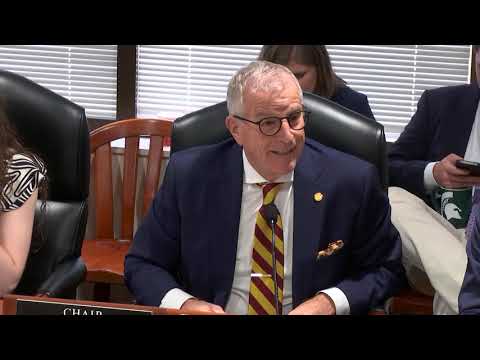
Fiscal trade-offs: Committee members noted competing fiscal views. Chair Tisdale referenced House Fiscal commentary, citing Treasury estimates that the bills could reduce revenue-sharing or state receipts by roughly $6 million to $8 million. Mayor Stephen Keppley of Kentwood warned the committee the 2018 precedent of expanded exemptions created large liabilities for school funding and said broad exemptions without replacement revenue could force cuts to emergency services; Keppley said his city’s exposures include several hundred thousand dollars in police and fire funding.
Possible compromise and next steps: Sponsors signaled openness to tightening statutory definitions and to a substitute amendment to clarify nonprofit and licensing requirements; Representative Snyder said he intends to propose a substitute next week to narrow the definition. Several municipal witnesses suggested the committee consider more surgical approaches — for example, allowing exemptions for parts of a campus (memory care or skilled nursing) while treating independent residential units differently — and emphasized the need for consistent, objective standards for assessors.
No formal action was taken on the bills during the hearing. The committee recorded opposition from municipal associations and some local governments and support from sector groups representing nonprofit CCRCs; follow-up conversations with the Department of Treasury and local stakeholders were expected.
The committee adjourned after testimony and indicated further hearings and drafting adjustments were likely as sponsors, municipal representatives and House Fiscal continue discussions.