Get AI Briefings, Transcripts & Alerts on Local & National Government Meetings — Forever.
Planning staff recommends — and commission adopts — golf-course PUD text amendment to allow limited 'business recreation' uses
Loading...
Summary
The commission voted to adopt text amendments creating a PUD approach for golf courses, allowing limited accessory commercial uses (event centers, driving ranges, restaurants) while capping building coverage at 1.75% of parcel area; the measure passed 6-1 amid debate over housing trade-offs.
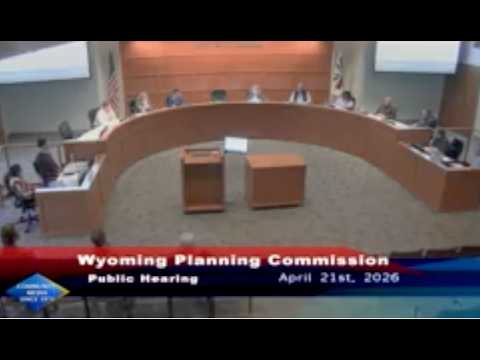
The Planning Commission adopted a set of zoning text amendments on April 21 that add a specialized planned-unit-district framework for golf courses, allowing specified low-impact commercial "business recreation" uses while setting strict limits on building coverage and building counts.
Staff said the measure addresses recurring zoning constraints for golf courses, which are commonly zoned residential and therefore limited in accessory building allowances. Under the adopted changes, a golf-course PUD would allow a maximum aggregate building lot coverage equal to 1.75% of the parcel, allocated among categories for business recreation, storage/maintenance and incidental structures. Staff presented an 85-acre illustrative example that equated the allowance to roughly 65,000 square feet of building area in that hypothetical.
"This allows golf courses to adapt with event centers, covered driving ranges or food and beverage services while maintaining the course as the primary use," staff said, explaining that the rules are designed to preserve green space and limit higher-intensity commercial development.
Several commissioners raised concerns that the new PUD could make it more difficult in practice for golf-course land to convert to housing later. Commissioner 16 said prohibiting housing within the PUD raised tensions with the city's housing-supply goals and warned the change could make future rezoning harder; staff replied that properties would need to rezone out of the PUD if an owner sought residential redevelopment.
A motion to adopt the proposed amendments was moved by Audrey and seconded by Rob; the motion passed on a roll call (tally: yes 6, no 1). The staff recommendation to forward the amendment to city council was approved.
Next steps: the commission's vote forwards the text amendments to city council for final action and implements the adopted PUD rules in staff guidance and future rezoning applications.