Get AI Briefings, Transcripts & Alerts on Local & National Government Meetings — Forever.
Bowie officials cite depleted reserves, propose 20¢ property tax increase to shore up FY2027 budget
Loading...
Summary
City staff presented a $98 million FY2027 budget that preserves current services but includes a proposed 20¢ per $100 assessed‑value property tax increase to offset a near‑exhausted fund balance; council and residents pressed staff on timing, alternatives and the scale of service cuts required.
City of Bowie officials on Tuesday outlined a proposed $98,000,000 fiscal 2027 budget that keeps staff and services intact but relies on a proposed 20¢ per $100 assessed‑value property tax increase to close a major gap caused by dwindling reserves.
Daniel Mears, acting city manager, told the listening session the city has steadily drawn on its fund balance in recent years and expects to use about $1.7 million of reserves next year. “This budget is presented with a property tax increase in it,” Mears said, adding that a 20¢ increase would generate roughly $20,000,000 in additional revenue because each penny yields about $1,000,000.
Interim Finance Director Bruce Miller walked through the handout showing personnel costs at about 52 percent of the budget and the three largest departments (public works 26 percent, police 21 percent, community services 19 percent). Miller and the manager emphasized that most revenue sources are outside the city’s direct control: uncontrollable sources represent about 62 percent of revenues while controllable fees, fines and local receipts are roughly 7.5 percent.
Residents used the session to press for alternatives to a large tax hike. “Are we getting the most out of potential revenue opportunities?” asked a resident who recommended evaluating the return on investment for city events and exploring new grant and partnership options. Council members and staff said they are pursuing federal and state funding, revisiting fees, and considering public‑private partnerships and long‑range economic development to diversify the tax base.
Council members repeatedly cautioned that changes such as redevelopment of Bowie Town Center, annexation or major commercial growth are long‑term solutions. One council member said such economic plays are “long plays” and will not erase the gap in the current budget cycle. Officials also noted that cutting popular seasonal services—citizens repeatedly named the twice‑yearly leaf collection—yields relatively small savings; staff estimated those seasonal cuts would save on the order of hundreds of thousands, while 1¢ on the tax rate equates to about $1,000,000.
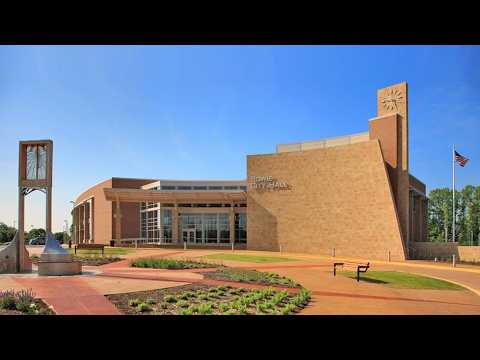
Officials stressed the city’s obligation to adopt a balanced budget and the limited options available without new revenue. “We are out of reserve money,” Mayor Mike Estev said. He and council members urged residents to complete the community survey and participate in upcoming work sessions; the next budget work session is scheduled for Monday at 7 p.m. at City Hall.
The council did not take a formal vote at the listening session. Next procedural steps include a staff presentation of potential service reductions at the council work session and the formal budget and tax‑rate decisions during the council’s May work and adoption process.