Get AI Briefings, Transcripts & Alerts on Local & National Government Meetings — Forever.
Forest Park town hall debates residential zoning rewrite amid flooding and process concerns
Loading...
Summary
At a Forest Park town hall, the village building director defended proposed residential zoning changes intended to bring older, nonconforming homes into compliance while residents and at least one commissioner pressed for data, environmental analysis and stronger protections for stormwater and neighborhood character.
Forest Park residents pressed village officials on a proposed rewrite of the residential zoning code Tuesday night, questioning whether restoring smaller lot standards and increasing lot coverage would worsen flooding, enable teardowns and proceed without sufficient data.
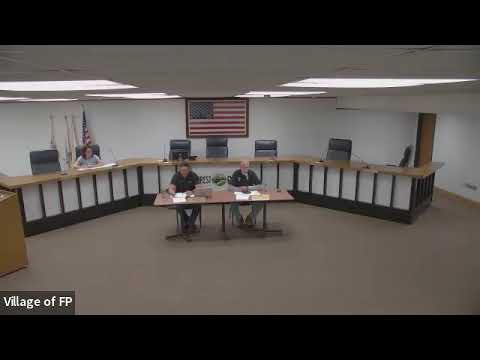
Steve Glinky, the village building department director, said the changes are meant to "harmonize" the village's patchwork of older lots and to return many preexisting smaller lots to conformity. "These changes are not gonna cause a massive uptick in development Forest Park," Glinky told about two hours of attendees, and he said the Planning & Zoning Commission approved the residential draft 6-0 before the ordinance reached council.
The draft would, by Glinky's count, make 803 25-foot lots conforming again and would raise allowable lot coverage in some zones; he argued permitting requirements, engineering reviews and Metropolitan Water Reclamation District (MWRD) oversight would still prevent projects that create runoff problems. "Permitting is the heavy lift," he said, and noted that larger projects require civil engineering review and MWRD sign-off.
But multiple residents, and one commissioner, pressed for quantified analysis. A commissioner said the village had spent at least $62,000 on the update and asked for audits and local data on stormwater and infrastructure impacts; another asked for environmental-impact modeling and revenue scenarios to compare a low and high development case. "There are no facts," one attendee said of the presentation's anecdotal examples; Commissioner (speaker) concerns focused on the absence of a formal audit and on whether the timing of changes is appropriate without a map amendment in hand.
Residents described specific worries about teardowns and lost sunlight, and several recounted personal flooding problems they linked to nearby redevelopment. Glinky acknowledged such cases and said the village will require civil-engineering plans for new single-family permits and that staff can follow up on individual complaints. "If you flood, if you really flood, you're gonna lose your furnace and your hot water heater," he said when describing historic storm impacts; he also pointed to previous sewer separation projects and to local detention strategies as mitigation.
The meeting also covered accessory dwelling units (ADUs) and two-flat conversions. Glinky called ADUs "wildly popular" and said they can help families age in place or provide separate office space; he cautioned many Forest Park lots and foundations make two-story ADUs expensive. Asked whether short-term rental licensing belongs in zoning, Glinky and others said Airbnb rules are more appropriately handled in the housing code and are under legal review.
Scott Sanders, who identified himself as a developer, told the audience that building in Forest Park is complicated, often costly and not necessarily highly profitable, and urged incremental code changes to increase housing variety. Several attendees asked the village to pursue grants or studies (for example, from CMAP) to fund an updated comprehensive plan or targeted environmental reviews.
The town hall ended without any council vote. Commissioner Nero thanked attendees and said officials would take comments into consideration and "circle back" as the draft moves through later phases, including a separate map amendment and planned work on business and industrial district housekeeping.
What comes next: the draft remains under local review. Officials said a map amendment and business-district changes are planned in later batches and that detailed permitting requirements and site-plan reviews will still apply to larger projects. Residents and at least one commissioner said the village should produce quantified engineering and fiscal analyses before adopting major code changes.