Get AI Briefings, Transcripts & Alerts on Local & National Government Meetings — Forever.
Tribal leaders, state and city officials raise flags at WIGA pavilion in Olympia
Loading...
Summary
Leaders from 23 tribal nations joined Washington Indian Gaming Association officials, state Rep. Chris Stearns and Olympia’s mayor pro tem to dedicate a flag pavilion in Olympia, saying the installation makes tribal sovereignty and presence visible in the state capital.
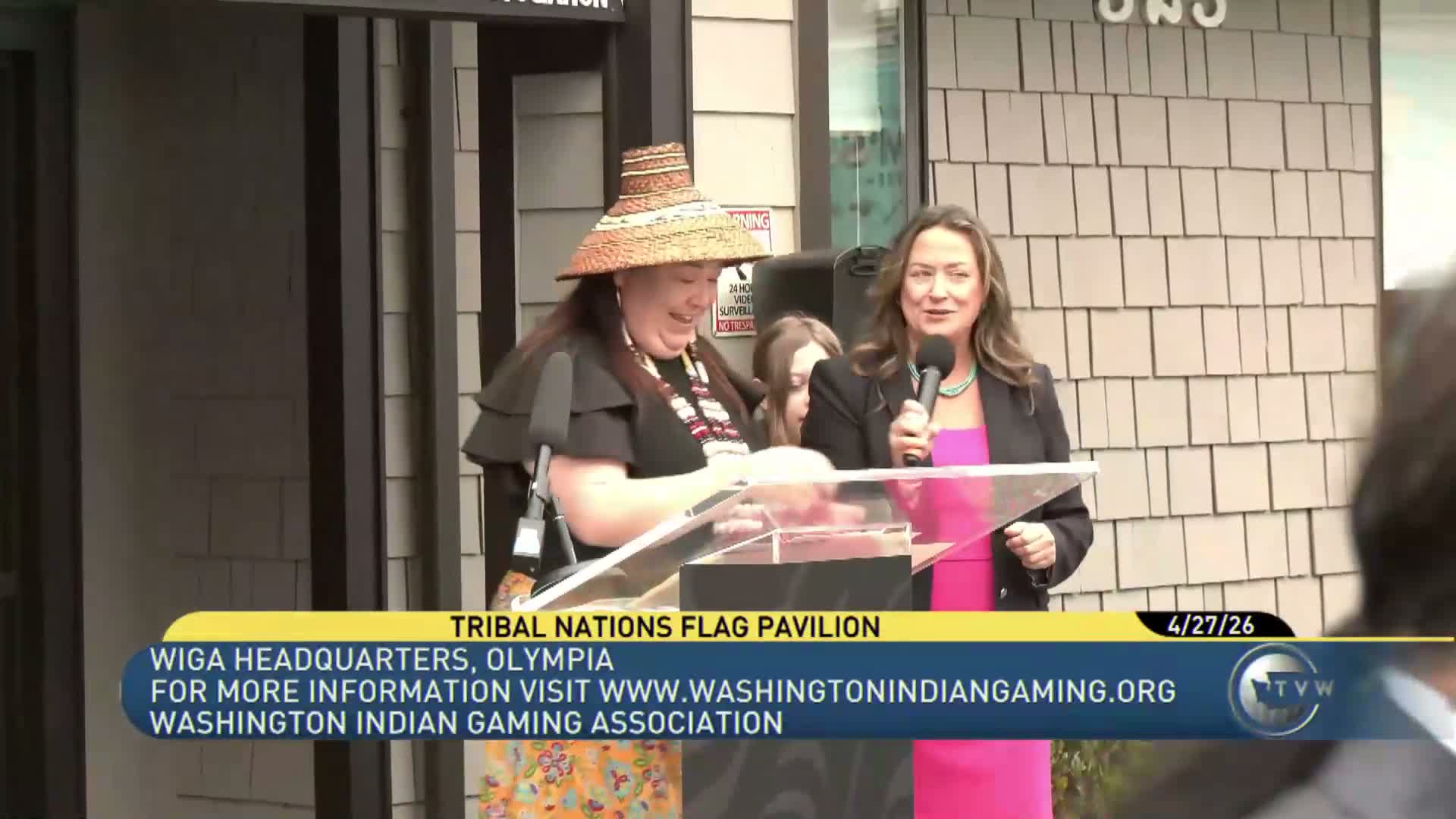
Olympia — Leaders of Washington tribal nations and state and local officials gathered Monday morning to dedicate a new flag pavilion at the Washington Indian Gaming Association’s offices in Olympia, raising 23 tribal flags to mark tribal sovereignty and strengthen government‑to‑government ties.
Rebecca George, executive director of the Washington Indian Gaming Association, told attendees the pavilion “is more than a space. It is a reflection of who we are as tribal nations, as sovereign governments,” and said the flags make tribal presence visible to decision‑makers in the state capital.
The ceremony opened with a blessing song from members of the Squaxin Island Tribe. Charlene Scribe, a Squaxin Island tribal member, recounted childhood memories of intertribal gatherings, drumming and traditional games and said the pavilion and the work done in the building will “help build a future” for tribal communities beyond immediate economic gains.
Ron Allen, introduced at the event as chairman, said the flags are “a presence to remind people who make decisions” that tribal governments exercise sovereign authority and deserve recognition in policymaking. Leonard Forsman, vice chairman of WIGA and chairman of the Suquamish Tribe, described decades of cultural rebuilding and credited events such as the canoe journey with fueling a broader revival of language and tradition.
State Rep. Chris Stearns, who was introduced as speaker pro tem, said the flags underscore tribes’ constitutional status as sovereigns and noted tribal governments’ role as major regional employers. Win Huen, Olympia’s mayor pro tem, highlighted municipal‑tribal partnerships including the Olympia Accord with the Squaxin Island Tribe, collaborative restoration of the Deschutes Estuary, the McAlester Well Field water project and the planned Nisqually Generations Healing Center.
Organizers thanked construction partners and volunteers, invited attendees to sign a guest book, and noted the Chehalis Tribe provided lunch for the event. Representatives from roughly two dozen tribes — including Chehalis, Makah, Nisqually, Suquamish and Squaxin Island — raised their flags together to conclude the program.
The pavilion and flag display, WIGA leaders said, are intended both to honor tribal history and to signal ongoing collaboration with state and local governments on health, education, housing and natural‑resource issues.