Get AI Briefings, Transcripts & Alerts on Local & National Government Meetings — Forever.
Webinar on Seattle University financial aid — not a civic meeting
Loading...
Summary
This transcript is a Seattle University admissions webinar explaining financial aid basics, payment plans, loan options and the Redhawk out-of-pocket worksheet for families; it is an informational university session, not a civic government meeting.
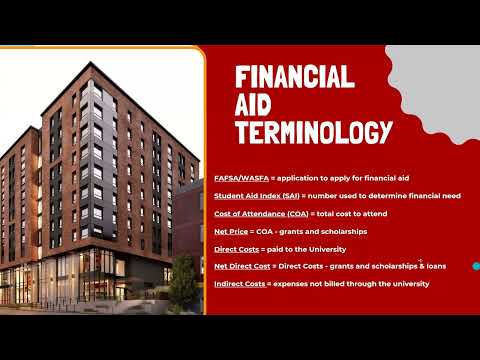
This transcript records a Seattle University webinar, "Funding Your Flight: A Financial Guide for Redhawk Families," presented by staff from the Undergraduate Office of Admissions and Student Financial Services. The session reviewed financial aid terminology (FAFSA/WASFA, Student Aid Index/SAI, cost of attendance, net price), distinctions between gift aid and self-help aid, and the university's policies on satisfactory academic progress (minimum 2.0 GPA, 67% pace, and a 150% maximum time frame).
Jennifer Young, assistant director of student contact and communications in Student Financial Services, demonstrated an out-of-pocket cost worksheet available in the Redhawk admissions portal for estimating direct university costs and modeling "what-if" scenarios such as living on or off campus, declining loans, adding private loans or outside scholarships, and calculating quarterly payment-plan amounts. She explained SU's quarterly billing cadence and described two payment-plan options: an annual plan with a $75 enrollment fee and a single-quarter plan with a $40 enrollment fee. The university recommends e-checks to avoid payment-processing fees and noted a 2.95% fee on debit or credit card transactions.
The panel reviewed funding options: family resources and 529 plans (which are submitted by paper check and should be requested about three weeks before a payment due date), federal Parent PLUS loans (post-legislative changes limit annual Parent PLUS borrowing to $20,000 with a $65,000 aggregate cap and use a tiered standard repayment plan), private educational loans (up to cost of attendance minus other aid; students should compare APR, origination fees and terms), work study and student employment, institutional and outside scholarships, and employer or sponsor payments. Young said SU maintains a preferred lender list as a reference but encouraged families to evaluate loan terms themselves.
On eligibility and timing, Young noted that international students have limited institutional funding beyond merit awards because they cannot file FAFSA/WASFA to produce an SAI used for need-based aid. Loan certification cannot be finalized until the student is enrolled; SU typically issues a pre-bill in July and posts official charges to the student account center around August. The panel advised students considering a gap year to consult admissions counselors regarding merit scholarships and to contact Student Financial Services for case-specific guidance.
The webinar closed with directions for one-on-one virtual appointments with Student Financial Services counselors, links and resources shared via the chat, and encouragement to use the Scholarship Universe database to find outside scholarship opportunities.
The session is informational and educational; no formal governmental actions, votes, ordinances, or civic decisions are recorded in this transcript.