Get AI Briefings, Transcripts & Alerts on Local & National Government Meetings — Forever.
Appeals court hears double‑jeopardy challenge to dual assault convictions in State v. Inman
Loading...
Summary
On April 27, the Washington Court of Appeals Division 2 heard arguments in State v. Inman over whether second‑degree sexual assault and second‑degree assault convictions unlawfully "merge" under double‑jeopardy principles; counsel disputed whether the State relied on the same act(s) or separate purposes supported both convictions.
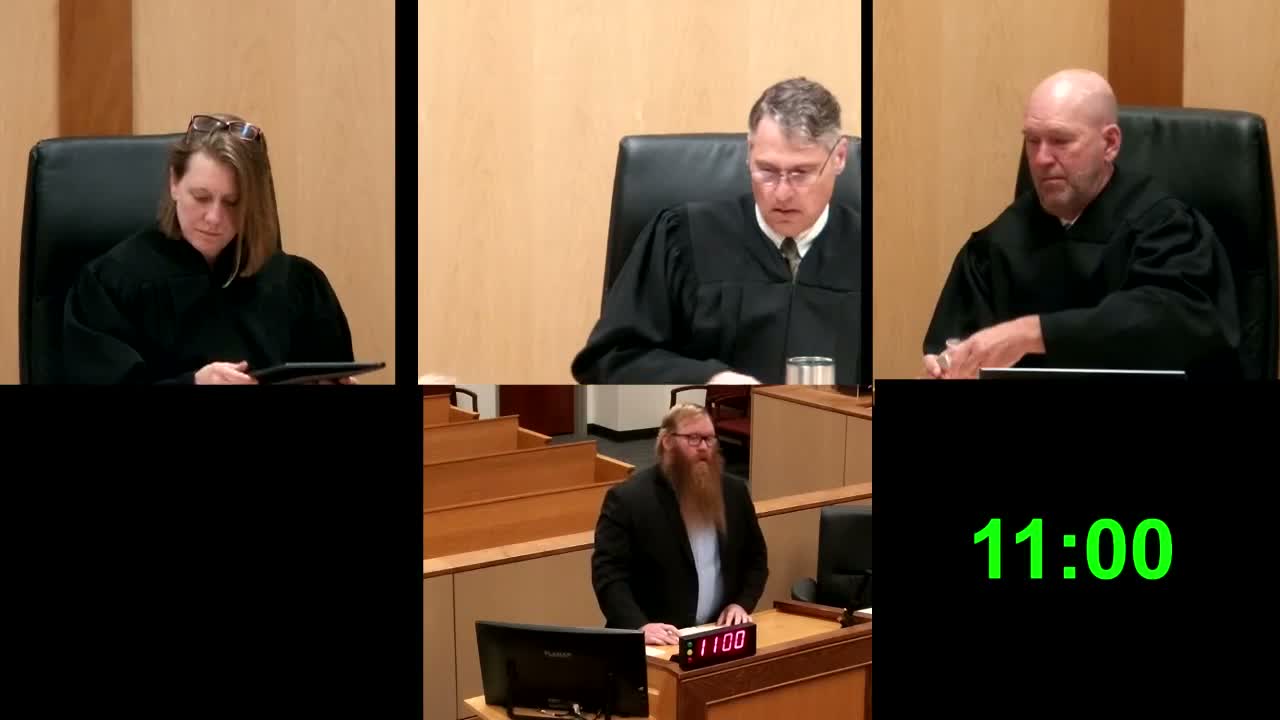
The Washington Court of Appeals Division 2 heard oral argument April 27 in State v. Inman on whether two convictions—second‑degree [sexual] by forcible compulsion and second‑degree assault—violate double‑jeopardy protections if both are imposed.
"May it please the court," appellant counsel Kyle Verde said, identifying himself for Addison and Inman, and framing the appeal around whether the two convictions are "the same in fact and the same in law," a question he said requires examination of the record, the elements of each offense, how the State argued the case and what the jury found.
Verde told the panel the State's closing and trial presentation treated the incident as a continuous course of conduct. He listed discrete acts the State referenced at trial—the tennis ball strike, pulling of a ponytail, restraint/handcuffing and alleged digital penetration—and said the jury could have relied on overlapping factual predicates for both convictions. Verde cited State v. Nista and a recent Division 2 opinion, State v. Humphrey, as authorities showing that when the jury necessarily relies on the same act for different offenses, merger may bar multiple convictions.
The State, represented by Colin Hayes, urged the court to affirm. "Today, the state is asking the court to uphold the convictions and deny the claims of error," Hayes said, arguing the two statutes protect different societal interests and are therefore not the same in law under the Blockburger test. Hayes told the court there was separate evidence available for each conviction: he said the jury could have found substantial bodily harm from the tennis ball (citing bruising visible days later) while also finding forcible compulsion based on restraint, handcuffing and forcible penetration.
Hayes acknowledged the State could have emphasized separate acts more clearly at closing but said multiple places in closing argument referenced different acts and that independent purposes (terrorizing the victim on entry versus conduct that effectuated the sexual assault) supported separate convictions.
Bench questions focused on whether the State had effectively elected a single factual basis at trial or instead advanced a continuing‑course theory, and how recent precedent (including a sentence in Ray and preexisting cases such as Keer) influences merger analysis. Counsel for both sides debated whether the rule of lenity applies when jury instructions allow multiple factual bases without an election and whether the jury "necessarily" relied on an overlapping act to find the motive enhancement.
The parties also disputed evidentiary issues preserved for appeal. Hayes told the court that the trial record included impeachment avenues and that video exhibits the defense referenced were not preserved in the record in a way that would alter the outcome; he noted two videos (a leaving video and a returning video) and the timeline that placed the incident on April 14 and the victim's hospital visit on April 18. Appellate counsel countered that exclusions of certain lay‑opinion testimony and the way exhibits were developed affected what the record shows.
A judge asked whether trial‑court impatience or demeanor rose to a violation of the appearance‑of‑fairness doctrine; Hayes replied that judicial frustration did not reach the high standard required for reversal and that the rulings were within the trial judge's discretion.
In rebuttal, Verde reiterated that the case could be decided on whether the convictions are the same in fact and pressed that factual ambiguities in the record counsel relied upon should preclude affirmance.
The court did not announce a ruling at the hearing; the panel thanked counsel and moved on to the second matter on the docket. The justices' decision on whether the convictions merge and whether any evidentiary or fairness errors require reversal will be set out in the written opinion to follow.