Get Full Government Meeting Transcripts, Videos, & Alerts Forever!
Get email alerts on the Tax Policy topic
No spam. Unsubscribe anytime.
Assessor: Bloomington's 2026 valuations show modest residential growth and lower new construction
Summary
City Assessor Tim Bulger told the council that 2026 assessments show residential values up modestly (median single-family ~$376,000, +2.9%) while condos fell and new construction value declined to $93M; combined commercial/industrial/apartment values were roughly flat, shifting a small portion of tax burden to residents.
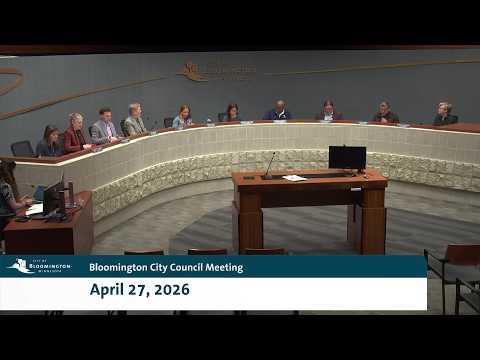
City Assessor Tim Bulger presented the 2026 assessment report at the April 27 meeting, summarizing methodology, timeline and market trends used to set values.
Bulger explained that assessors used a sales study period of Oct. 1, 2024 through Sept. 30, 2025, with the valuation date of Jan. 2, 2026. The assessor noted single-family residential values are up about 3.2% year over year (median home value ~$376,000), townhomes up 2.2% and condos down 4.2% (attributed in part to rising HOA and insurance costs). Commercial, industrial and apartment values combined were roughly flat once new construction was accounted for, producing a modest tax shift toward residents (residential up about 1.5% overall).
New-construction valuation totaled $93 million in 2026, down from $128M and $163M in prior years, reflecting the interest-rate environment and fewer completed projects. Bulger also highlighted apartment class stratification, noting Class A values were down modestly and that apartment new-construction has been strong in prior years but is easing.
Bulger detailed resident assistance programs: homestead market value exclusion (with caps), property tax refunds (income restricted), and senior deferral options that cap tax liability and defer the balance as a loan (up to 5% interest).
Council members asked for additional breakdowns (e.g., how many sub-$250,000 single-family homes are rentals vs. owner-occupied, and the share of unimproved or developable land). Bulger agreed to provide further analysis and net tax capacity projections to support budget planning.
The assessment informs tax shifts and preliminary levy work; council members asked staff to supply net tax capacity projections before budget deliberations.