Get AI Briefings, Transcripts & Alerts on Local & National Government Meetings — Forever.
Ombudsman report flags data gaps and communication snags; legislators press DCFS for remedial plan
Loading...
Summary
The State Child Ombudsman told the Select Committee on Women and Children that its first standalone annual report identified data weaknesses, an apparent unauthorized disclosure of mandatory reporters' identities, and gaps in notification of child fatality investigations; legislators pressed the Department of Children and Family Services for fixes, and DCFS said it is building an automated dashboard and reviewing policies.
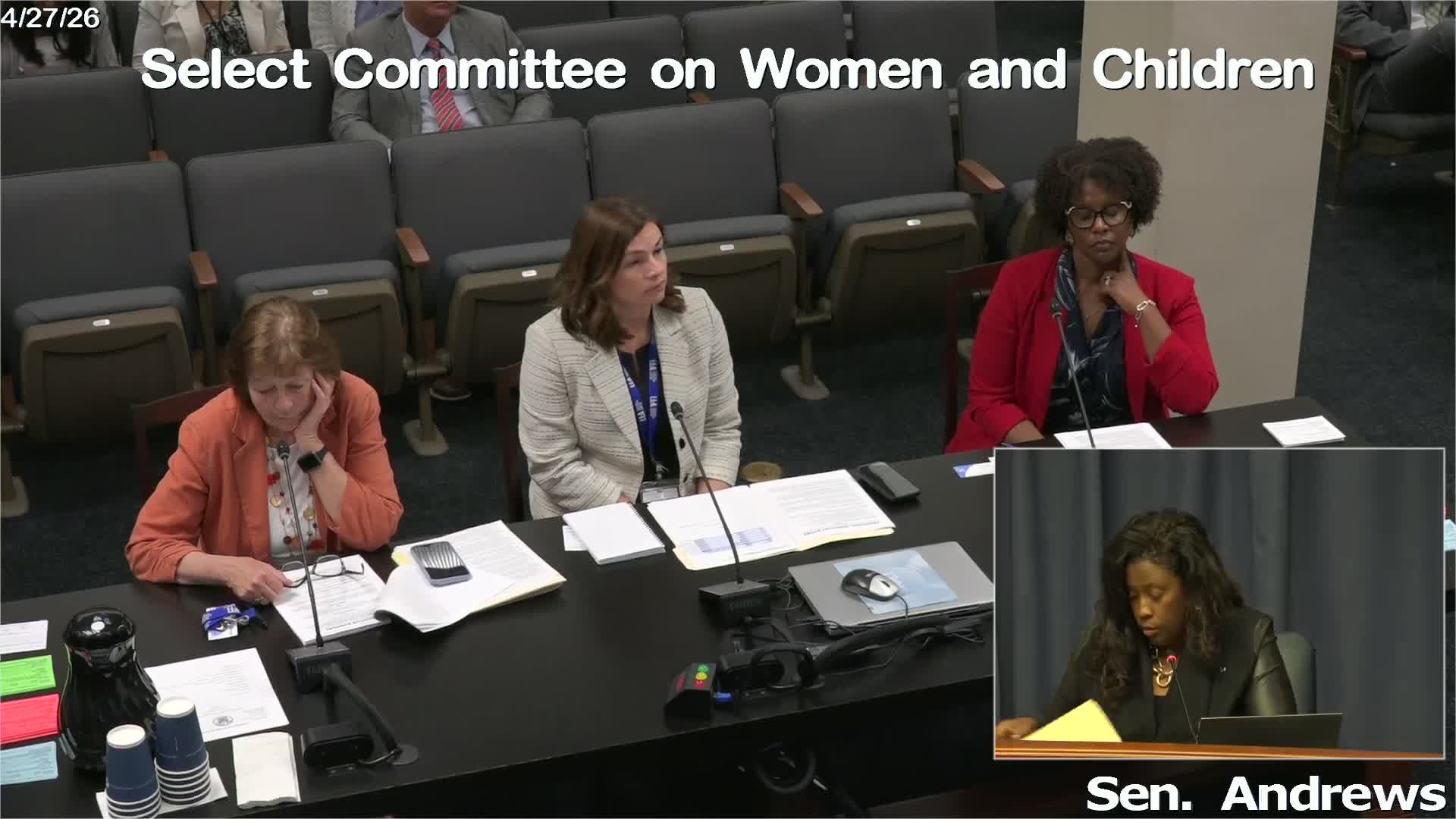
The State Child Ombudsman told the Select Committee on Women and Children on April 27 that its first standalone annual report documented hundreds of complaints, gaps in data tracking and a troubling disclosure of mandatory reporters' identities, and urged closer, faster communication with the Department of Children and Family Services to protect children.
Judge Ritchie, the state child ombudsman, said the office received "approximately 371" individual complaints that together involved several hundred children and that the agency began operating its case-management system in 2025. "There was a release of some number of reporters' identities by the department," she said, calling that release "a serious breach of federal and state law and agency policy."
The report and ensuing questioning focused on three cross-cutting concerns: whether DCFS is reliably notifying the ombudsman about fatality investigations, whether urgent case-specific communications are being routed through an impersonal email box rather than direct contacts, and whether case files track placement outcomes such as sibling separation and kinship placements.
Several senators, including Senator Barrow and Senator Mizell, said the ombudsman's findings matched constituents' reports and pressed for concrete remedies. Senator Mizell asked how many mandatory reporters' names were disclosed; Judge Ritchie said the department attributed the error to a computer system page-break design issue, had asked recipients to destroy the information, and had not supplied a definitive list of affected reporters, which limited the ombuds office's ability to follow up.
Senators also raised mismatched fatality counts. Judge Ritchie said the ombuds office had dispositions for 21 deaths that it had been notified about, while DCFS publicly stated it had received 53 fatalities reported in 2025. "According to current law, [DCFS] have three days to notify my office when they open an investigation," Ritchie said, adding that the ombuds office records only notifications tied to investigations that are substantiated as abuse or neglect and that some media-reported deaths did not arrive to the ombuds docket in the same way.
Rebecca Harris, the secretary of DCFS, acknowledged the problems and described steps the department is taking. "I am not comfortable with where the department is today," Harris said. She told the committee DCFS is reorganizing programs, updating technology and building a dashboard that will generate automated notifications to reduce missed items; she said the dashboard is built and the team is working to go live with automated subscriptions within roughly 30 days.
On placements, Dr. Rebecca Hook, DCFS medical director, confirmed that the ombuds report flagged 24 complaints about children cleared for discharge from psychiatric hospitals who lacked appropriate placements. Hook said the state's challenge is often clinical complexity and managed-care authorization rather than literal bed shortages, and she said DCFS staff plan to study out-of-state models and visit similar facilities.
Lawmakers asked for immediate, practical changes. The committee chair asked the ombudsman and DCFS to provide remedial measures and a joint status update by the September committee meeting; members also offered their cell numbers and urged DCFS to maintain direct, rapid lines for urgent safety concerns rather than relying solely on a shared mailbox.
The meeting recessed with members planning to resume follow-up questions after returning to the floor. The committee recorded no formal policy vote on the report itself; the only formal action before the ombudsman presentation was approval of two prior sets of minutes at the start of the session.
What happens next: DCFS told the committee it will continue its weekly internal fatality reviews, finalize the automated notification dashboard, and work with the ombuds office on improved case-level exchanges; the committee asked for a remedial plan and evidence of implementation at its September meeting.