Get AI Briefings, Transcripts & Alerts on Local & National Government Meetings — Forever.
Senate committee advances sweeping child‑welfare overhaul after contentious fiscal‑note debate
Loading...
Summary
Senate Bill 237, a comprehensive child‑welfare reform package that would expand reporting, mandate multidisciplinary reviews, establish law‑enforcement liaisons and change intake procedures, was reported as amended after extended questioning about a disputed fiscal note that department officials say reflects understaffing and changes to hotline intake policies.
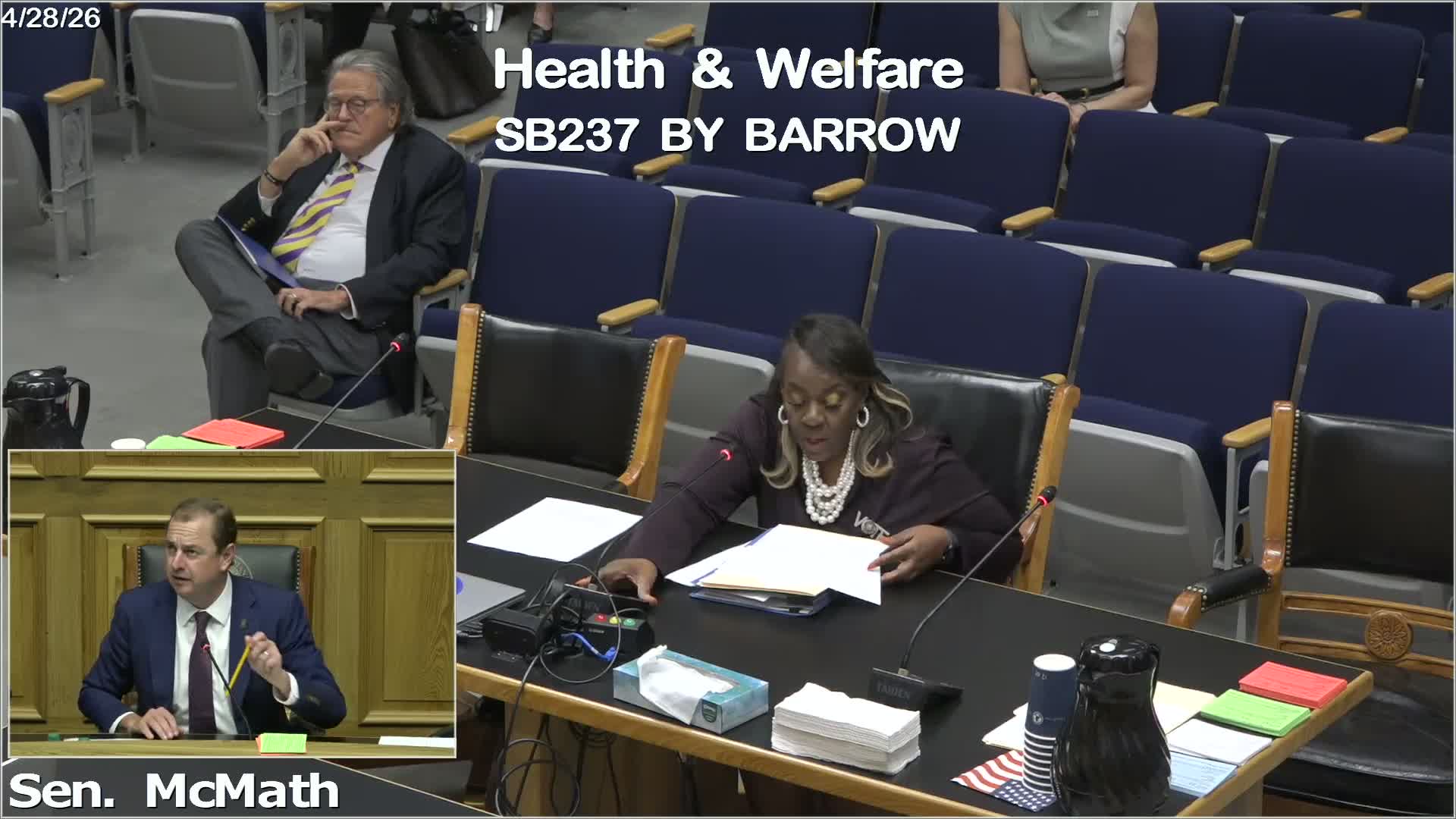
The Senate Health and Welfare Committee on Wednesday reported Senate Bill 237 as amended after hours of testimony and a contentious debate over the bill's fiscal note and staffing implications.
Senator Barrow, the bill's author, described SB 237 as a multi‑part reform targeting gaps identified in child‑welfare practice and earlier statutes (including provisions tied to prior Acts referenced in committee). "This is a comprehensive bill that addressed many aspects of issues we've seen in the child‑welfare system," Barrow said, listing measures to improve reporting by schools, expand information sharing with the state child ombudsman, require MOUs, allow executive sessions for sensitive testimony, create regional law‑enforcement liaisons, require referrals to Child Advocacy Centers (CACs) with specific notification timelines, and mandate annual training for mandatory reporters.
Several departmental officials and advocacy groups spoke in support. Kimberly Young of Hearts of Hope and the Louisiana Alliance of Children's Advocacy Centers said the alliance represents 14 CACs, serves all 64 parishes and helps coordinate multidisciplinary teams that include law enforcement, DCFS investigators and prosecutors.
The central dispute in committee was the fiscal note. Senator Luno and others questioned a five‑year fiscal estimate cited in committee — roughly $416,000,000 — and an associated estimate of hundreds of new positions (about 670) and 761 vehicles attributed to the implementation. "This fiscal note is inflated a lot," Senator Luno said, asking staff to bring the fiscal assumptions back for review. Senator Andrews pressed the department on why vehicle requests and other previously made departmental asks were attributed to this bill, urging DCFS and the legislative fiscal office to produce an alternative fiscal note that removes items not germane to the bill.
DCFS officials said the bill's amendments change intake routing so that the department would accept all reports through the hotline that previously may have been routed directly to local law enforcement; that change, they said, would increase the number of accepted intakes and require additional call‑center staff and investigators. "We are understaffed," said Connie Guillory, assistant secretary for child welfare, describing a backlog and the need for more boots on the ground to meet an "immediate" response standard in the amendments. Haley Williams, deputy secretary for DCFS, said the intake and hotline changes require additional call‑center staff to keep wait times low.
Committee members repeatedly urged collaboration to produce a realistic, germane fiscal note and to identify a "path to yes" by narrowing language or phasing implementation. Senator Andrews moved to report the bill as amended to set the legislative pace but asked DCFS to return an alternative fiscal estimate assuming "promptly" (a 24–72 hour triage window) rather than an "immediate" response standard that department witnesses said would require faster on‑site response and higher costs. Members also raised concerns about provisions that affect schools; representatives from the Department of Education and school groups asked the author to tidy language so allegations do not automatically result in public postings that could damage employment if allegations are unproven.
After discussion and staff work to scope and clean up language between committee and floor, committee members reported SB 237 as amended. Sponsors and department staff said they will work with the legislative fiscal office to produce a narrower fiscal estimate tied only to what the amendment imposes.