Get Full Government Meeting Transcripts, Videos, & Alerts Forever!
Get email alerts on the Corrections Policy topic
No spam. Unsubscribe anytime.
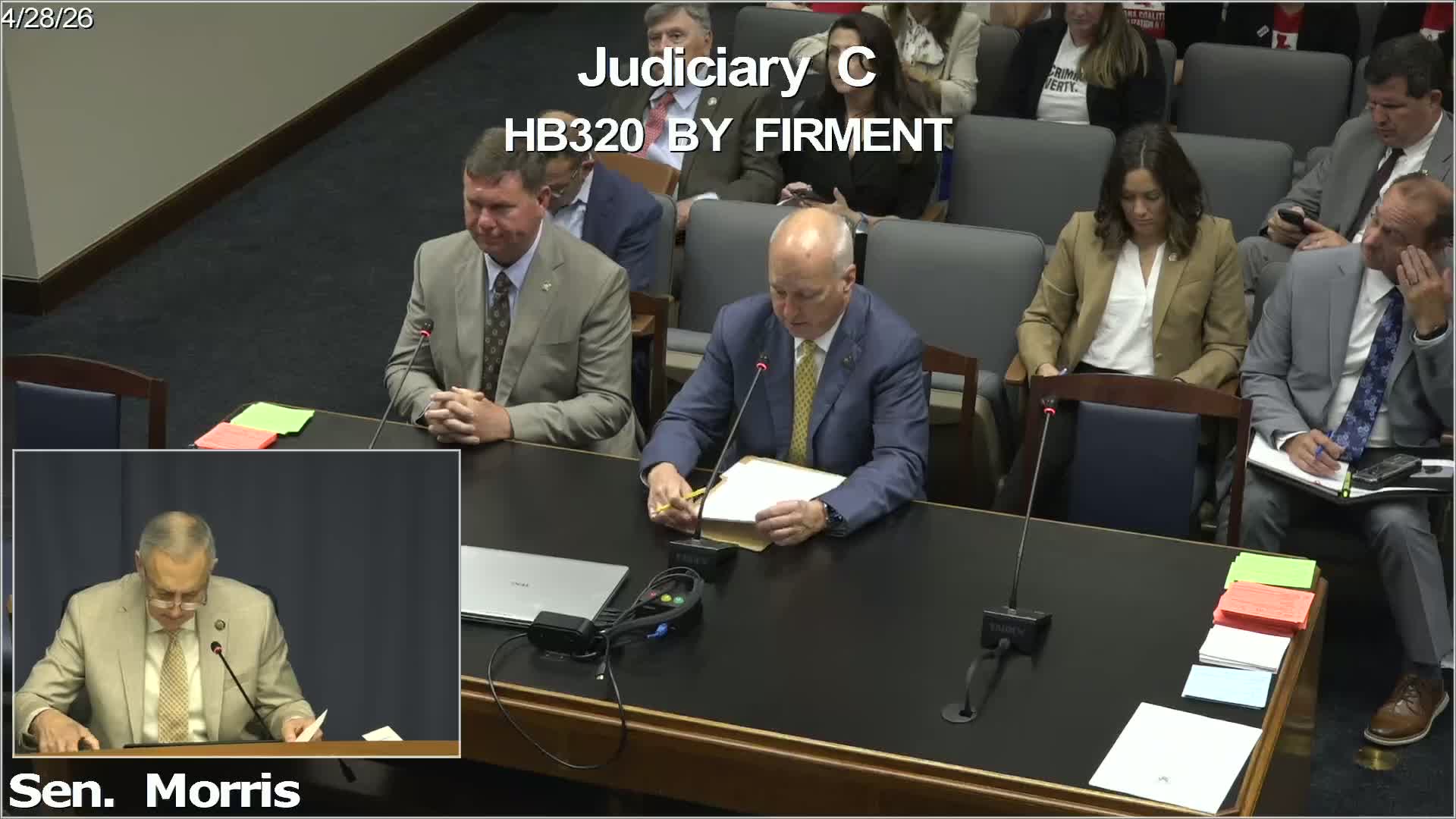
Committee moves bill that would require registry designation after in‑prison exposure of staff; senators debate scope
Summary
The committee reported House Bill 320 favorably after testimony from local sheriffs about intentional exposure incidents toward female correctional officers and questions from senators about whether first offenses should trigger lifetime registry designation.
A House committee advanced House Bill 320, a measure that would create the crime of ‘‘unlawful exposure by an inmate’’ and — on conviction — require registry as a sex offender for certain offenders.
Sheriff Stephen McCain, who described repeated intentional exposure incidents targeted at female correctional staff at a large federal facility in Grant Parish, told the committee the current statutory tools provide inadequate deterrence and that registration would be ‘‘a strong message’’ to potential offenders. ‘‘This was not boys cutting up,’’ McCain said, asking for a sufficient deterrent to protect correctional employees.
Several senators expressed concern about the bill’s reach. Senator Kleinpeter and others asked whether a single exposure incident — for example a one‑time act observed by a guard — should trigger lifetime registry status, and whether prosecutors would have discretion to charge under lesser offenses when intent to arouse or harass could not be proven.
The bill’s sponsor and supporters said the statute requires proof of intent to arouse or gratify sexual desires or to harass staff, which raises the bar for prosecution. Supporters also noted the behavior is typically intentional and targeted, occurring when female officers make their rounds.
Senators discussed possible middle grounds: limiting registry designation to repeat offenses or including a process to remove someone from the registry after a period of demonstrated rehabilitation. The committee ultimately voted to report the bill favorably following debate and a roll call.
The measure now moves to the House calendar; supporters said they would work with colleagues on clarifications to ensure proportionality while preserving a deterrent for targeted sexual harassment of correctional staff.