Get AI Briefings, Transcripts & Alerts on Local & National Government Meetings — Forever.
Montgomery County staff flags $54.4M in FY27 pay-and-benefits costs; council presses on pensions and sustainability
Loading...
Summary
County staff told the council the executive's FY27 compensation package would add about $54.4 million in pay-and-benefit changes (roughly $45 million tax‑supported) and highlighted multi‑year pension and retiree‑health obligations; council members pressed for actuarial analyses and alternatives before next week’s straw votes.
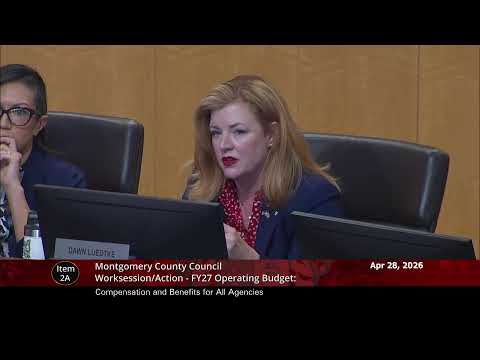
County staff briefed the Montgomery County Council on April 28 about the executive’s proposed FY27 compensation and benefits package and its multi‑year fiscal implications, prompting extended council questions about pension shifts, recruitment and long‑term budget sustainability.
Staff said the executive and agency budgets recommend roughly $4.9 billion in total compensation costs — a 4.5% increase from FY26 — and emphasized that compensation and benefits make up the majority of county government spending. Staff estimated the incremental FY27 cost of the proposed pay adjustments and benefit changes at about $54.4 million, with approximately $45 million of that tax‑supported; large additional obligations would roll into FY28 and FY29 under staged enhancements.
The briefing covered multiple negotiated and proposed changes: salary-schedule adjustments for deputy sheriffs and correctional officers (with one‑time salary‑schedule increases varying by role), proposed shifts to longevity increments for firefighters intended to incentivize retirement, and modifications to the RSP/GRIP retirement arrangements that would increase county contributions (to 9% and then 10%) and add a post‑retirement annuity option. Staff repeatedly noted several items require further actuarial analysis and that some costs would be annualized in subsequent years.
Office of Labor Relations Chief Jennifer Harley, who responded during Q&A, said the GRIP contribution increases came out of negotiations and represented a bargaining compromise; she noted that negotiators looked for ways to share costs and limited employer‑side increases where possible.
Union representative Gino Ren, president of UFCW Local 1994, urged the council to prioritize recruitment and retention and described GRIP modifications as efforts to make the plan operate more like a defined‑benefit system for competitive parity with peer employers.
Council members pressed staff on several points. Staff told Council Member Evan Glass that a portion of teacher‑pension costs has shifted from the state to local budgets in recent years; staff said MCPS’s FY27 budget includes about $92 million for the teacher pension plan and that roughly $27 million of additional teacher‑pension obligations have been embedded in county government budgets over recent years (about $9 million of that added this year). Council members and staff warned that staged benefit enhancements and pension‑eligibility changes could create materially higher recurring obligations in future years.
Staff also outlined options to reduce FY27 compensation costs, including lowering general wage adjustments, changing the timing or size of service increments, or not funding some negotiated elements; the council president proposed a package projected in staff materials to save roughly $45 million through a combination of approaches. Office of Management and Budget staff described the department‑specific lapse/vacancy assumptions used in building appropriations and offered department‑level analyses on request.
Votes and next steps: The council did not vote on pay or collective‑bargaining approvals at the April 28 briefing. Members scheduled straw votes and formal decisions for next week; staff packaged decision points (non‑CBA items and CBAs) to be considered separately. Council members asked for additional actuarial work and comparator pay data for neighboring jurisdictions before final votes.