Get Full Government Meeting Transcripts, Videos, & Alerts Forever!
Get email alerts on the Quonset Biosolids topic
No spam. Unsubscribe anytime.
North Kingstown leaders, state lawmakers and residents press to halt Quonset sludge facility
Summary
Residents and officials packed a North Kingstown council meeting pressing for a pause on a proposed Quonset biosolids (pyrolysis) facility; the governor and two state senators pledged support for moratorium and a study commission while the town retained environmental counsel and authorized the town manager to advocate.
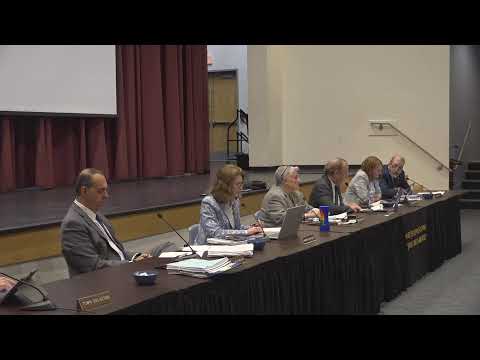
A packed North Kingstown council chamber on April 27 centered on a proposed sewage sludge (biosolids) pyrolysis facility at Quonset Business Park and efforts to stop it.
Town Manager Ralph Morris briefed the council and residents on the town's recent actions, saying he sent a letter to Governor McKee on April 15 expressing "strong opposition" to the facility being sited adjacent to neighborhoods, an affordable housing complex and within about two miles of three schools. He told the meeting that the governor had responded the next day, pledging to "stand shoulder to shoulder with the community." Morris said the town will submit written testimony supporting Representative Casimiro’s and Representative Craven’s House bill (read in the meeting as H 8 4 0 0) to place a pause on the facility while an oversight study commission reviews sludge management.
The governor, who attended and spoke to the crowd, said he does not support the project and that "if something comes to my desk that puts a hold on this project" he will sign it. Senators Bridget Valverde and DeMario described companion bills in the Senate (read in the meeting as Senate bill 3224 and Senate bill 3225) — one to establish a moratorium in Quonset and another to create a Sludge Management Study Commission to examine statewide sludge disposal, costs to ratepayers and environmental impacts. Both senators encouraged residents to submit written testimony and to attend hearings.
More than 40 residents provided public comment. Speakers outlined health, environmental and process concerns: potential emissions (including mercury and other toxic contaminants), proximity to a sole-source aquifer and schools, and lack of public notice or engagement during initial Quonset Development Corporation (QDC) approvals. Several commenters cited permit numbers and technical concerns, including one resident who quoted the DEM air permit’s authorized mercury emission of "83.43 pounds" per year and urged activated-carbon controls that DEM did not require.
The town used the meeting to report follow-ups: the town solicitor filed an administrative complaint with the Department of Environmental Management on March 25; Council President Mancini filed a separate complaint with DEM director Terry Gray on April 17 and posted Director Gray’s response on the town’s platforms. The council had previously authorized retention of outside environmental counsel, Desitell & Browning, which the town solicitor said had begun reviewing federal and state documents and would advise on administrative or court options.
After public comment, the council voted to authorize the town manager to "monitor and advocate the concerns of the community relating to the proposed facility, advocate externally and, in particular, before the joint legislative commission," empowering staff to act between meetings. The council also agreed to keep residents informed of hearing dates and encouraged participation at the State House and local QDC meetings.
The meeting closed with a reminder from senators that the proposed moratorium and study commission still require legislative action in both chambers and may be amended during committee hearings; dates and timelines remain subject to change and public input.
The town council moved next steps — retaining outside legal review, posting hearing information, and instructing the town manager to coordinate testimony — and emphasized that residents should submit testimony and attend hearings scheduled by the General Assembly.