Get Full Government Meeting Transcripts, Videos, & Alerts Forever!
Get email alerts on the Gaza Reconstruction topic
No spam. Unsubscribe anytime.
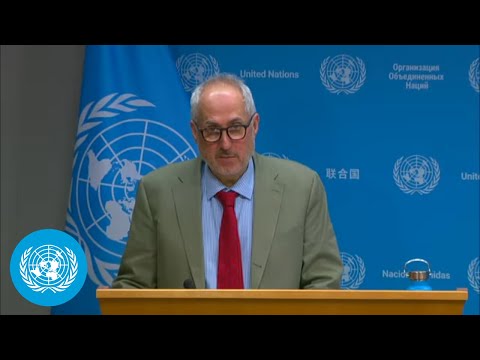
UN says Gaza reconstruction needs 'conditions' and clarifies which crossings it monitors
Summary
The UN reiterated that reconstruction in Gaza requires security conditions and donor confidence; the spokesperson said the UN only monitors certain crossings (Kerem Shalom and Zikim) and that Rafah remains closed for UN cargo, disputing wider claims that all crossings are open.
The UN spokesperson told reporters that strikes across the Gaza Strip continue to hit residential areas and damage basic services, and that a recent airstrike reportedly struck NGO workers at a Gaza City water well, killing one and injuring four. Two civilian truck drivers contracted by UNICEF at Al Mansour were also reported killed, and partners said the well was heavily damaged and on-site work suspended.
On aid access, a reporter said the Israeli ambassador told the Security Council that 600 trucks a day were entering Gaza and that all crossing points were open. The spokesperson responded that the UN can only confirm the crossings it uses for UN operations — in this briefing the Kerem Shalom and Zikim crossings — and that Rafah (transcript: "Rafa") remains closed for UN cargo. The spokesperson added that the ambassador may be referring to commercial or bilateral aid flows, which the UN does not monitor.
On reconstruction, the briefing addressed the EU-UN-World Bank Gaza Damage and Needs Assessment and a critique that the report was silent on an obvious prerequisite for reconstruction — an end to the occupation. The spokesperson said UNDP and UN colleagues stand by the assessment but said that for reconstruction to be sustainable there needs to be an end to recurrent cycles of "build, destroy, rebuild," the silencing of the guns, and conditions that give donors confidence to invest the massive sums required.
Why it matters: Reconstruction demands both security conditions on the ground and large donor commitments; the UN made clear it will not set donor conditions from the podium but signaled that prospects on the ground shape whether donors commit funds. The clarification on which crossings the UN monitors matters for tracking humanitarian access and separating UN-monitored aid from commercial or bilateral deliveries.
What’s next: The UN will continue to report on humanitarian access through its dashboard, coordinate with partners on critical repairs to water production and support medevac and convoy operations as permitted by access.