Get Full Government Meeting Transcripts, Videos, & Alerts Forever!
Get email alerts on the Abandoned Landfills topic
No spam. Unsubscribe anytime.
Senator Brown urges state authority and modest fee carve-out to study ownerless landfills
Summary
Senate Bill 1586 would give Missouri DNR explicit authority over abandoned, ownerless landfills, require written seller disclosures and redirect a modest share (proposed 10% of tipping fees) to fund environmental studies and early remediation. Supporters call the funding a start; district leaders warn of program cuts.
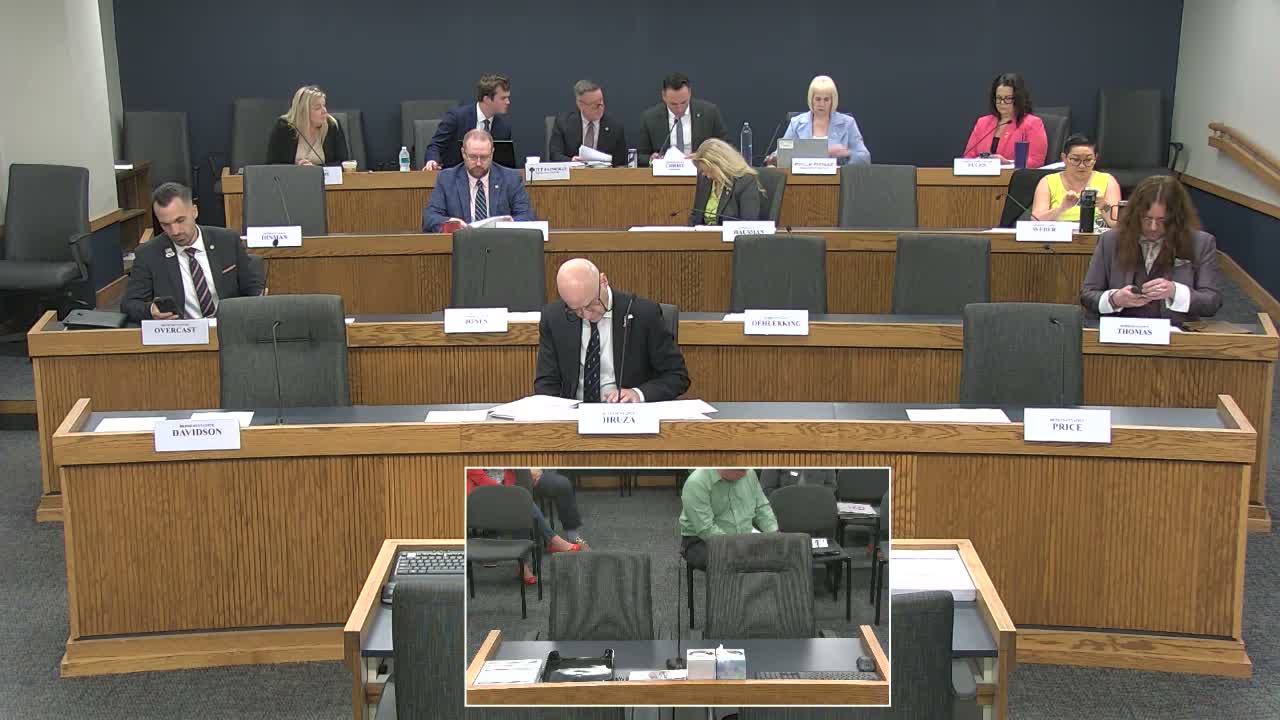
State Senator Ben Brown told the House Emerging Issues committee that Senate Bill 1586 is aimed at addressing a cluster of abandoned, ownerless landfills across Missouri and would give the Department of Natural Resources (DNR) explicit authority and a small dedicated funding stream to begin studies and limited remediation.
“It's aimed at addressing abandoned ownerless landfills throughout the state,” Brown said, describing a constituent’s discovery of an uncapped site and listing roughly 28–29 similar locations that he said pose risks to nearby streams and drinking-water sources. He said the bill has three components: clarify DNR’s statutory authority to act where there is no identifiable owner, create a modest funding mechanism drawn from tipping fees to pay for assessments and early work, and tighten property-disclosure rules for sellers.
Why it matters: Brown and an academic witness told the committee that the state currently lacks consistent funding and statutory authority to investigate ownerless sites and that environmental studies are required before cleanup plans or federal grants can be pursued. “If you have about $1,000,000 dollars a year, let's say, more or less, you can probably do something like 2 to 3 studies,” Marissa Crisocco, dean of engineering at the University of Missouri-Columbia, said in supporting the bill.
What the bill would do: The sponsor described a compromise that left the existing network of solid-waste districts intact rather than eliminating them. An earlier draft would have cut districts and freed roughly $4 million; the current version proposes a 10% transfer of tipping fees (Sen. Brown said that would generate roughly $1 million a year) for exclusive use on investigating and addressing ownerless landfills, while establishing an interim committee to solicit stakeholder input.
Opposition and concerns: Solid-waste district leaders testified that a 10% carve-out could translate into about $1.3 million in lost district revenue statewide and hit some local programs—household hazardous-waste collection, recycling services and sheltered-workshop grants—hardest. “A reduction of $300,000 is a significant amount,” Chris Bussin, chair of the Solid Waste Advisory Board, told the committee, arguing districts manage critical services and that DNR has been responsible for closed facilities historically. Diana Bridal, a district program manager, added that many district programs are funded from overhead and that carving out funds could impair services that keep hazardous materials out of landfills.
Questions raised by lawmakers included whether the state’s list of abandoned sites has been individually vetted, how the 10% would be split between DNR and districts, and whether the proposed funding would be sufficient to both study and remediate sites. Senator Brown acknowledged not all sites were personally vetted, said some localities may already be working on a few sites, and emphasized that the proposed transfer is intended to start studies that would inform larger cleanup plans and unlock other grant opportunities such as Brownfields funding.
Next steps: The committee concluded the hearing without a formal vote; the sponsor said he expects an interim committee and further conversations with stakeholders to refine funding splits and implementation details. No formal action on the bill was recorded at the hearing.
Ending note: Supporters cast the proposal as a first step to quantify public-health risks and cleanup costs; opponents urged more vetting of the site list and cautioned against damaging local recycling and hazardous-waste programs without clearer cost estimates.