Get Full Government Meeting Transcripts, Videos, & Alerts Forever!
Get email alerts on the Data Centers topic
No spam. Unsubscribe anytime.
Residents accuse Sunbury officials of secrecy, urge halt to data‑center plans
Summary
Hundreds of residents used the visitor/public-comment period at the April 29 Sunbury City Council meeting to press elected officials to stop industrial rezoning and data‑center proposals, citing NDAs, alleged back‑door deals and requests to rewrite the moratorium to block infrastructure build‑out.
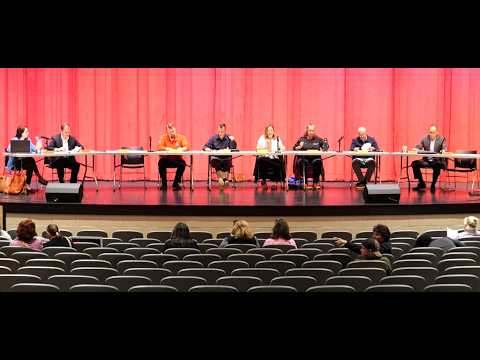
Sunbury residents packed the visitor portion of the April 29 council meeting to demand that council halt industrial rezoning and data‑center development and to press for greater transparency.
Speakers across three hours described a pattern of private meetings, nondisclosure agreements and rapid rezoning that they said has deprived the public of meaningful input. Franchesca Parker, who told the council she reviewed planning records, said a shell LLC applied to rezone 300 acres in August 2024 and that the council later approved the rezoning on third reading as an emergency in October 2024. "This council illegally revoked our right to a referendum," she said, citing Ohio Revised Code 7 31.3.
Multiple residents alleged the city has used paid consultants and confidential agreements to steer economic‑development discussions. One speaker said the city has paid the Montrose Group $4,000 a month since March 2023 to provide government relations and advocacy; she also noted the firm's principal had made campaign contributions to a local official. "At minimum, that raises serious concerns about independence, influence and judgment," the speaker said.
Public commenters pressed several specific requests: rewrite the moratorium so it also pauses infrastructure enabling work (power, water, wastewater and roads), provide public, topic‑specific meetings that accommodate residents' schedules, and set explicit caps for future build‑out (maximum megawatts, water allocations, acreage and traffic limits). "A pause that allows irreversible commitments is not a true pause," Rena Carver asked, urging the council to clarify whether the moratorium applies to enabling infrastructure.
Construction and safety professionals among the commenters described traffic and safety risks, projecting higher vehicle volumes if 900 acres of industrial zoning proceed and warning of worker‑safety problems on fast‑tracked large sites. Mike Moran presented planning‑level trip estimates derived from the Institute of Transportation Engineers and said the district could produce roughly 27,000 additional vehicle trips per day during build‑out.
Students and families told council they fear noise, air and water impacts and loss of rural character. "No one wanted a data center," said Chloe Swain, a seventh‑grade student, asking the council to consider the long‑term impacts on schools and children's health.
City staff and the council did not directly rebut the substantive claims during the public‑comment period. The council moved into committee reports and routine business after the visitors' portion; items tied to sewer flow monitoring and procurement proceeded to votes (see related article). Several residents asked for a formal community coalition and for more frequent direct communications from city leadership.
What happens next: council members said some items will be discussed at committee meetings next week and the council is scheduled to reconvene May 6. Residents told the council they will continue to attend meetings and seek formal changes to the moratorium and to the process by which rezoning and infrastructure decisions are made.
Provenance: The reporting for this article is grounded in public comment recorded April 29 (topicintro: SEG 188; topfinish: SEG 1650), including direct quotes and specific allegations about rezoning, NDAs, the Montrose Group contract and the Ohio Revised Code citation (see timeline entries).