Get Full Government Meeting Transcripts, Videos, & Alerts Forever!
Get email alerts on the Municipal Finance topic
No spam. Unsubscribe anytime.
Sequim finance director reports $27M in city investments and urges policy updates
Summary
Sequim Finance Director Sue Hagener told the mayor and council the city held about $27 million in cash and investments as of Dec. 31, 2025, that investments meet state-law requirements though returns fell below policy benchmarks, and that policies will be updated to reflect state-auditor guidance on multi-year subscriptions and leases.
Sue Hagener, Sequim finance director, presented the city's 2025 financial policy compliance review to the mayor and council, reporting that "As of 12/31/2025, the city had about $27,000,000 in cash and investments." She said the portfolio meets statutory requirements but that recent market conditions produced returns below the policy's benchmark band.
Hagener said the city's investment policy prioritizes legality, liquidity, safety and yield, and defines a fair-rate-of-return benchmark as the range between the 90-day Treasury bill and the two-year Treasury note. "The city's rate of return fell below benchmarks for the fair rate of return established by policy," she said, attributing the shortfall to recent short-term interest-rate movements that left older holdings earning less than newer market rates.
Hagener gave a breakdown of the portfolio and recent cash changes: about $2,600,000 is in the Washington state Local Government Investment Pool (LGIP); roughly $18,000,000 is in other investments such as Treasuries, local-government bonds and certificates of deposit; and total cash and investments were down about 4% from the prior year. She said capital project spending (including ARPA-funded shop and technology projects) reduced cash balances but that loans and grants helped fund many projects.
On debt, Hagener said Sequim holds only non-voted general-obligation debt (the Civic Center bond) and noted industry guidance that debt not exceed 4.5% of assessed value. "The city has $7,070,000 in general obligation debt," she said, calling that level considerably lower than legal limits. She also reported about $4,900,000 in water and sewer debt and said debt service for those funds measures roughly 6% of revenues (down from 11% in 2024), below the state-auditor's 12% guideline.
Hagener reviewed liabilities reporting (Schedule 9) and said the city had about $13,000,000 in total liabilities at year-end and roughly $1,000,000 in compensated absences. She said the debt policy needs revision to reflect recent state-auditor requirements that treat multi-year subscription IT contracts and leases longer than 12 months as liabilities; she noted about $400,000 in subscription-based IT arrangements are currently excluded from the schedule while staff completes the update.
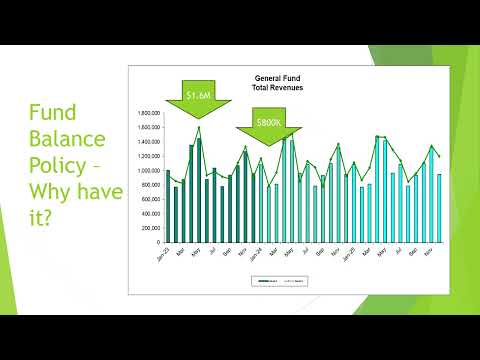
On reserves, Hagener explained the three-part required-reserve calculation (minimum operating reserve, economic uncertainty reserve and future-liabilities reserve) and the target bands for the general fund, streets, water and sewer operations. She said the general fund's minimum target is about $2,400,000, the maximum about $3,600,000, and the city's actual general-fund balance is about $3,300,000, which meets policy targets.
Hagener said she plans to bring a revised policy that incorporates the state-auditor guidance to the council this year and that she will attend the upcoming council meeting to answer questions.