Get AI Briefings, Transcripts & Alerts on Local & National Government Meetings — Forever.
House committee advances bill to bar climate-change damages suits
Summary
The House Natural Resources & Environment Committee on April 23 advanced HB 804, the "Louisiana Energy Protection Act," which would prohibit state civil claims for damages framed as caused by climate change while preserving claims based on statutory or permit violations. The measure was reported favorably as amended with broad industry support and vocal opposition from environmental groups and some citizens.
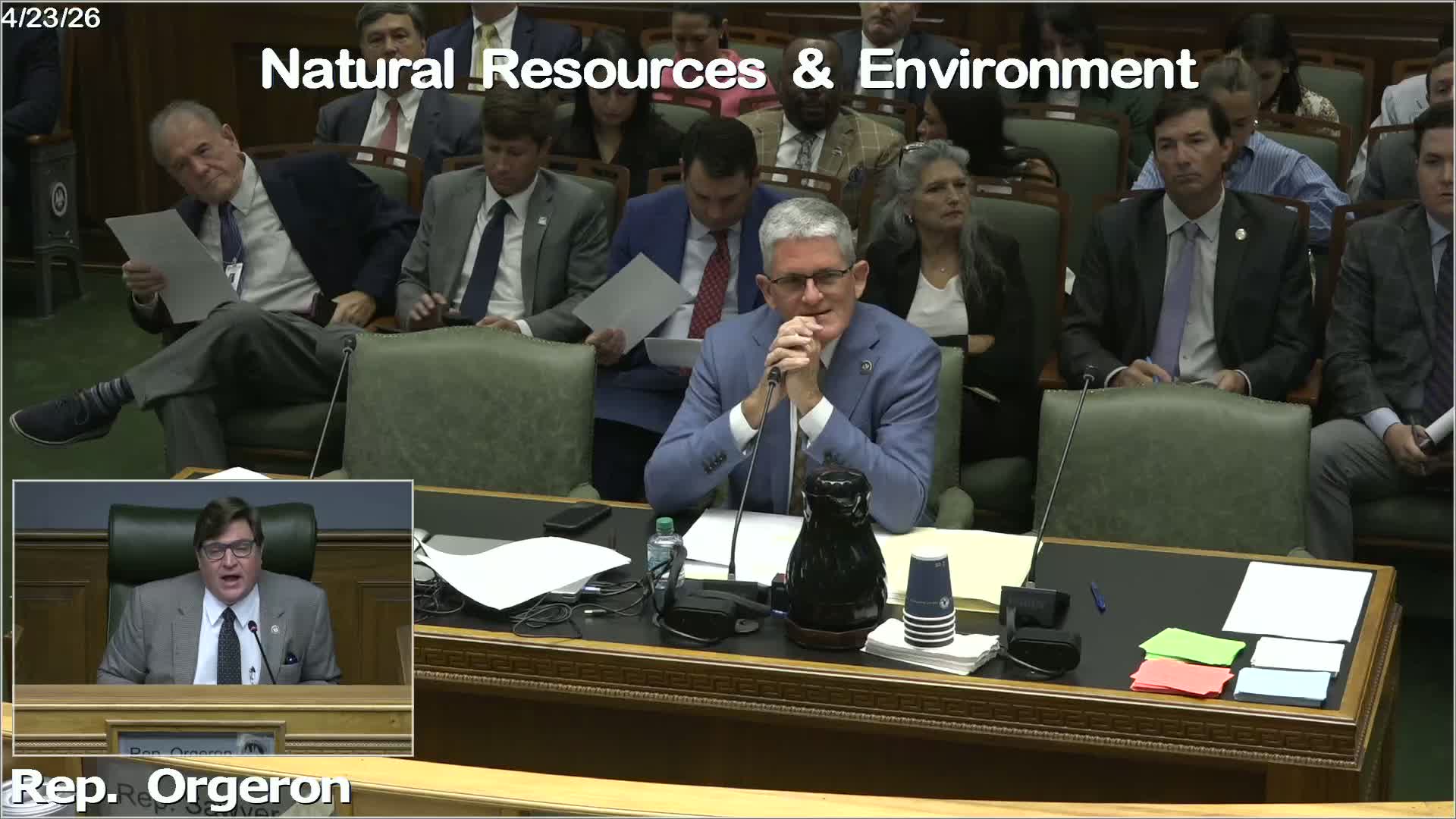
A Louisiana House committee on Thursday reported HB 804, the so-called Louisiana Energy Protection Act, favorably as amended, moving a bill that would bar civil liability claims framed as damages “caused by climate change.” The measure was advanced by voice vote after committee members accepted a technical amendment and heard hours of testimony.
Representative Guymon, the bill sponsor, told the committee the text is narrowly focused on suits that seek damages because of climate change and does not shield companies from liability for permits, releases or other statutory violations. “It is simply focused on claims for damages as a result of climate change,” the sponsor said, arguing the change counters what he described as a spate of speculative lawsuits filed around the country.
Supporters from the oil, gas, chemical and business sectors said the bill prevents what they described as ill-defined, nationwide litigation campaigns that could impose outsized costs on employers and consumers. Tommy Faucher of the Louisiana Mid-Continent Oil & Gas Association told lawmakers: “No one wants to operate in an environment where you are expected to have to spend millions of dollars in legal fees to defend yourself from frivolous litigation.” Witnesses from the American Petroleum Institute, the American Chemistry Council and the U.S. Chamber Institute for Legal Reform echoed that view.
Opponents said the prohibition would remove a tool for holding companies accountable for contributions to harms tied to climate change and that the bill’s language required careful review. JC Harmon, speaking for himself, said the measure as filed raised constitutional questions and initially produced significant public concern; he added he believed the sponsor’s amendment addressed some problems. Peter Robbins Brown of the Sierra Club warned the change would “remove one of the tools from the toolbox” for seeking climate action and urged lawmakers to weigh that cost.
Committee members pressed the sponsor on scope, exceptions and effects for property owners, municipalities and agricultural producers. The sponsor and witnesses repeatedly pointed to statutory exceptions in the bill for claims arising from violations of state law and federal statutes such as the Clean Air Act and Clean Water Act, and the sponsor said the bill would not be retroactive.
After debate the chair moved HB 804 favorable as amended. Hearing no objection, the committee reported the bill favorably as amended; the transcript records the action as voice approval with no roll‑call tally in committee minutes.
The bill will proceed to the next legislative stage as determined by House rules.