Get AI Briefings, Transcripts & Alerts on Local & National Government Meetings — Forever.
Committee hears broad support for state low-income housing tax credit to expand affordable housing
Summary
MSHDA, developers and investors told the House Regulatory Reform Committee a new state low-income housing tax credit paired with the federal LIHTC could unlock projects, expand development geography and help close an estimated 100,000-unit shortfall; witnesses described timelines, compliance and likely costs.
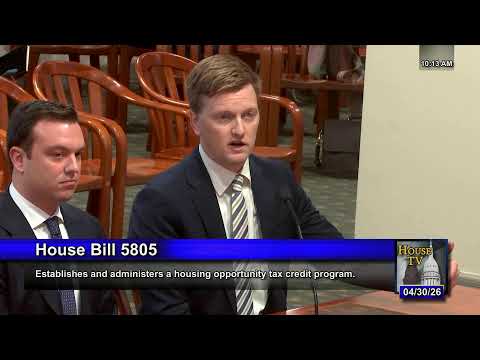
Michigan State Housing Development Authority officials, developers and private investors testified before the House Regulatory Reform Committee in support of a proposed state low-income housing tax credit (bills HB5805–HB5807) designed to pair with the federal Low-Income Housing Tax Credit (LIHTC).
Jennifer Bowman, director of federal and strategic initiatives at MSHDA, said the agency has continued to refine the draft with the chair, treasury and stakeholders and urged support, telling the committee "Michigan is in a housing crisis, and we are short a 100,000 plus units." She said a state credit would help leverage federal resources and produce additional units across the state.
MSHDA staff (identified in the hearing record) explained program mechanics and timelines, noting the federal LIHTC dates to the 1986 Tax Reform Act and that federal investor benefits typically run 10 years with an additional five-year compliance period. Agency witnesses described a potential state benefit spread over six years, said projects must already qualify for federal credits to receive a state companion credit, and outlined compliance and clawback authority.
Developers Mark Lockwood (Lockwood Companies) and Chris Potterpin (PK Companies/Michigan Housing Council) said higher interest rates and construction costs have slowed production and that a state credit would enable developers to pursue projects in smaller and rural markets. "This credit would build an ecosystem for efficient housing," Lockwood said, arguing the program would expand areas where projects are economically feasible.
Investor representatives explained the pay-for-success model: credits are claimed only after projects are complete and leased to income-eligible tenants, and the state can claw back credits if compliance fails. An investor representative estimated broader economic effects, telling the committee the construction activity could generate "close to 40 or up to $57,000,000 in new state tax revenue every year that would not have existed otherwise." The firms said awards under a new program could be issued in 2027 if the program is enacted and implemented in time.
Committee members pressed on implementation: how eligibility and rent-setting work (rents tied to percentages of area median income and typically tracked by county), application time and costs (agency staff estimated premier 9% applications may cost $20,000–$25,000 and standard agency fees around $5,000), and how long it takes from award to occupancy (agency staff said roughly a year to place financing, then 6–12 months construction is common depending on project scope).
David Northern, CEO of the Flint Housing Commission, urged that scoring for state credits place emphasis on distressed cities and preservation in hard-hit communities.
No final votes on the housing-credit bills were recorded in this session; the committee heard testimony, asked implementation questions, and received public comment cards before adjourning.
Why it matters
Michigan currently lacks a state low-income housing tax credit; witnesses said pairing a state credit with the federal LIHTC can attract private capital, leverage federal equity and increase affordable-unit production statewide, with potential impacts on rural and distressed communities.